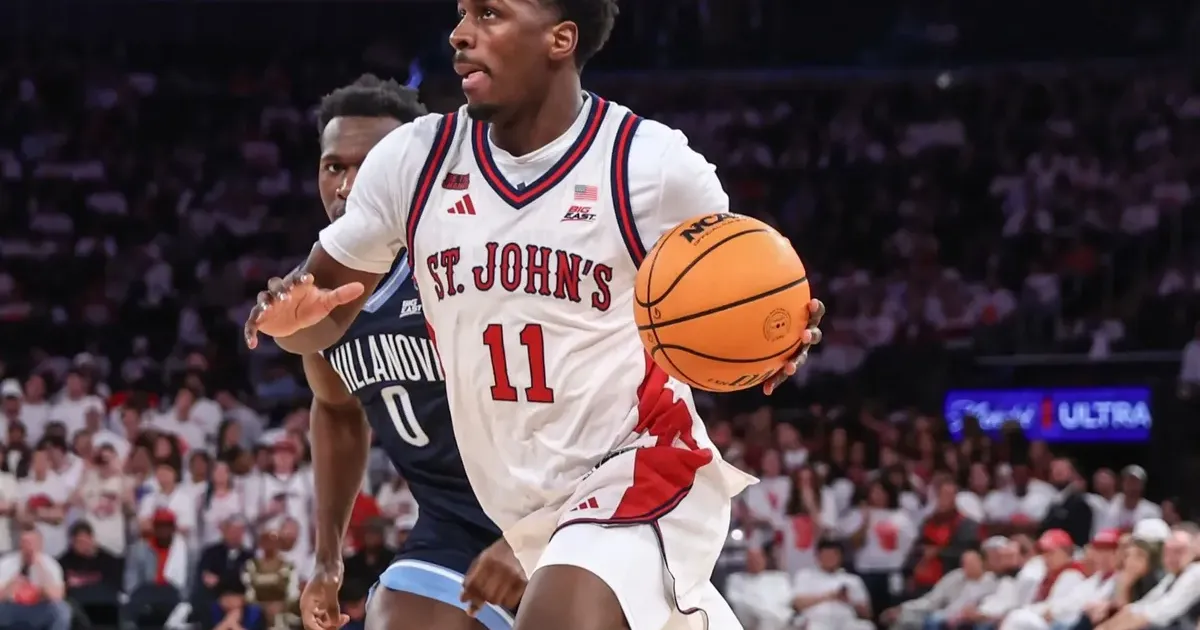
NBA scouts have made the Big East and Big Ten tournaments a concentrated evaluation stretch for prospects trying to prove they can handle pressure. Scouts had circled the tournament calendar early. Front offices were comparing live impressions with season-long data. A few prospects had narrow windows to change perception. The attention intensified on March 12, 2026 because conference tournaments offer something private workouts cannot: real stakes, hostile crowds, short rest and opponents with detailed scouting reports. A prospect can look smooth in drills. The harder question is whether he can solve a physical game when the other team is trying to take away his first option.
NBA scouts are descending on Big East and Big Ten tournaments, turning March games into a live evaluation lab for prospects trying to prove they can handle pressure.
Why Tournament Games Matter
Scouts do not watch conference tournaments only for box scores. They watch how players process pressure, defend through fatigue, respond to mistakes and adjust when the game becomes uncomfortable. That is why NBA draft evaluation becomes sharper in March. A guard's reads, a wing's defensive discipline or a big's screen coverage can reveal more in one tense game than in a controlled workout. The Big East and Big Ten are useful settings because they often feature physical defense, older players and coaching staffs that force prospects to think through possessions.
What Scouts Are Looking For
Shot-making still matters, but teams increasingly look for transferable skills. Can a scorer pass when trapped? Can a shooter defend his position? Can a big protect the rim without fouling? Decision-making under pressure is especially important. NBA teams want to know whether a player can make the second read after the first action is covered. Body language is also part of the evaluation. Scouts notice whether a player argues, drifts or competes harder after a missed shot or turnover.
The Danger of Overreacting
A great tournament can raise visibility, but teams know the sample is small. One hot shooting weekend should not erase months of concerns, and one bad matchup should not destroy a prospect with a strong season. The best front offices use tournament games as stress tests. They compare the moment to what film, analytics, medical information and interviews already suggest. That balanced view protects teams from chasing March emotion while still respecting what pressure can reveal.
Prospect Stakes
For players on the draft bubble, tournament games can be decisive because they may determine who gets invited to workouts, who earns deeper background checks and who becomes a priority for second-round or two-way consideration. For projected first-round players, the tournament can refine role questions. A player may not change tiers, but he can show whether he projects as a creator, connector, defender or specialist. The scouts in the building are not only looking for stars. They are looking for players whose games survive when the floor gets smaller and the stakes get louder.
Draft Translation
After the tournaments, teams will fold the evidence into a longer evaluation process. Workouts, interviews, measurements and medical reviews will still matter. But March leaves an impression because it shows prospects inside consequences. Coaches shorten rotations, opponents adjust and crowds turn every mistake into a test of nerve. Front offices also pay attention to role acceptance. A prospect who dominated usage all season may be asked to screen, defend, make quick passes or space the floor in the NBA. Tournament settings can reveal whether he can adjust without losing confidence. Medical and physical evaluation will follow, but live competition still matters because it shows how movement skills translate under contact. Scouts watch balance, second jumps, recovery speed and whether fatigue changes mechanics. The tournaments can also help older prospects. A junior or senior who may not have elite upside can improve his case by showing reliability, toughness and a clear role against high-level opponents. For younger prospects, the test is often decision speed. NBA teams can teach skill development, but they want evidence that a player sees the floor quickly enough to survive faster competition.
There is also a psychological piece. A player who responds to a bad first half with a composed second half may tell scouts something about resilience that a highlight reel cannot. That is why the buildings are crowded with evaluators. They are not hoping one game answers everything; they are looking for moments that either confirm or challenge months of work. Conference tournaments also reveal how prospects handle scouting pressure over multiple days. A player may surprise an opponent once, but the next staff will adjust quickly if the tournament bracket gives them fresh film overnight. The Big Ten can test physicality and positional size, while the Big East often tests toughness, guard play and half-court execution. Scouts value both because NBA roles demand different kinds of problem-solving. Teams will also examine how prospects communicate. Defensive calls, huddle presence and response to coaching can matter for players who may enter the league as role pieces rather than immediate stars. Analytics departments will add context to the live impressions. Shot quality, turnover rate, rebounding percentage, foul rate and lineup impact can either support what scouts saw or challenge a simple eye-test reaction. The tournament environment is especially useful for evaluating players who do not dominate the ball. A wing who defends, cuts, rebounds and makes the extra pass may be more valuable to an NBA team than a higher-scoring player with fewer transferable habits. That is why March evaluation is as much about fit as fame. Scouts are not only asking who looked best; they are asking whose game can survive a smaller role against better athletes.
International and G League comparisons will also enter the discussion. College tournament performance is valuable, but teams are comparing prospects across leagues, ages and roles, which makes context essential.
A player who thrives as a college star may need to project into a narrower NBA job, while another prospect with modest statistics may have the size, shooting or defensive versatility that fits a professional rotation.
That translation question is why scouts keep returning to habits. Shooting streaks come and go, but processing speed, defensive awareness and competitive consistency are harder to fake.
That is why Big East and Big Ten tournament games matter so much to scouts. They do not replace the draft process; they reveal which parts of a player's game are real when the easy conditions disappear.