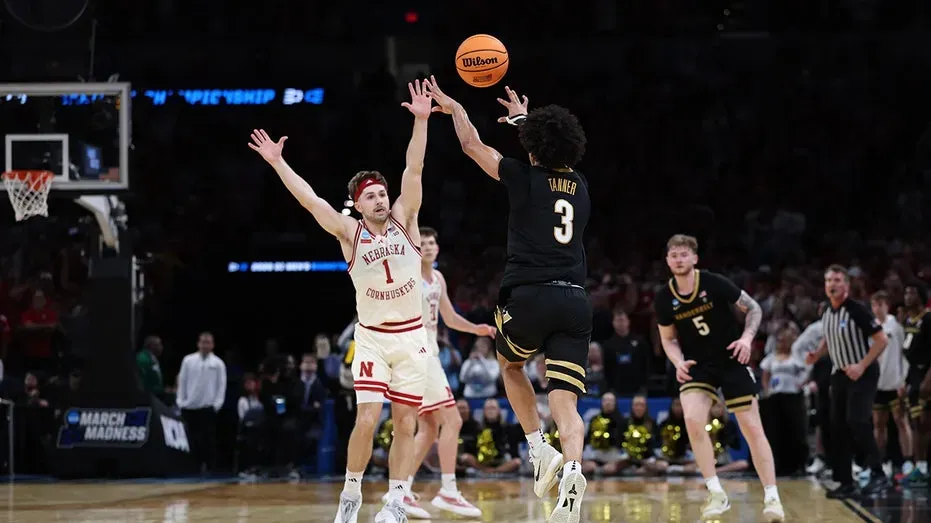
Nebraska basketball secured a place in program history on March 22, 2026, when a desperate Vanderbilt shot rimmed out in Oklahoma City. Tyler Tanner launched a shot from beyond the half-court line that seemed destined to change the narrative of the evening. Braden Frager had recently converted a layup with 2.2 seconds remaining to provide the final margin of victory. Tanner, who had already scored 27 points, caught the inbound pass and found air for a final heave. The ball struck the backboard, hit the front of the rim, and circled the iron before falling away. Tension gave way to pure celebration as the Cornhuskers escaped with a 74-72 victory.
Meanwhile, the atmosphere inside the arena shifted from silent apprehension to chaotic jubilation within the span of three seconds. Victory in this second-round NCAA tournament game marked a massive departure from Nebraska's previous post-season performances. Historically, the program had entered the national tournament eight times without recording a single win. This specific victory validates a season of reconstruction and high-pressure execution in the Big Ten. Frager and Pryce Sandfort each contributed 15 points to lead a balanced offensive attack. Mast dominated the interior during the final minutes to ensure the lead held firm.
Nebraska Secures First Sweet 16 Berth in Oklahoma City
Braden Frager became the focal point of the Nebraska offense during the closing seconds of the game. Sandfort navigated through a screen and located Frager, who drove to the basket for a contested layup that broke the tie. Vanderbilt had no timeouts left following the sequence and relied on the raw talent of Tanner to create a miracle. Nebraska defenders stayed back to avoid a foul, allowing the guard to reach the center logo before releasing his attempt. The flight of the ball mimicked the famous 2010 shot by Gordon Hayward against Duke. Fans watched as the ball defied gravity for a split second before gravity pulled it toward the floor.
Yet, the game had looked clearly different during the opening twenty minutes of play. Nebraska established a 39-32 lead by the halftime break through efficient perimeter shooting and dominant rebounding. Cornhusker players led by as many as ten points during the early stages of the second half. Vanderbilt struggled to contain the size of Rienk Mast, whose presence in the paint forced several early fouls. Nebraska appeared to be in total control of the pace and the scoreboard. The momentum changed only when Vanderbilt initiated a full-court press that forced three consecutive turnovers.
In fact, the Commodores utilized a 15-point swing to take a five-point lead with only 5:34 remaining on the clock. Vanderbilt found its rhythm through Tanner, who hit three consecutive jumpers from the top of the key. The Nebraska crowd fell silent as the lead evaporated under the pressure of the Vanderbilt surge. Coach-led adjustments on the sideline failed to immediately halt the scoring run. Vanderbilt players celebrated on the court while the momentum swung heavily in their favor. The Huskers faced the very real possibility of another early exit from the tournament.
Tyler Tanner Leads Vanderbilt Surge in Scoring Duel
Still, Rienk Mast refused to let the game slip away through sheer physical effort. Mast secured an essential putback with 37 seconds remaining to tie the score at 72. His presence on the glass neutralized the athletic advantage Vanderbilt had utilized during their mid-half comeback. Chandler Bing attempted to reclaim the lead for the Commodores but missed a difficult mid-range jumper. Nebraska recovered the rebound and transitioned into their final offensive set without hesitation. The execution of the Sandfort-to-Frager pass demonstrated a level of composure rarely seen in high-stakes tournament environments. Frager finished the play despite heavy contact at the rim.
By contrast, the statistical efficiency of Tyler Tanner kept the Commodores competitive throughout a volatile second half. Tanner finished with 27 points on 10-of-18 shooting, including four critical three-pointers. He single-handedly erased a double-digit deficit during a four-minute stretch of perfection. Vanderbilt relied on his individual brilliance as other starters struggled to find their range. Even so, the final shot will be the image that lingers in the minds of the Nashville faithful. Tanner nearly pulled off a feat that would have been discussed for decades in collegiate sports circles. He walked off the court in disbelief after the ball rimmed out.
Four Nebraska players finished the evening in double-digit scoring figures. Sandfort and Frager led the way with 15 points each, providing the perimeter threat necessary to space the floor. Mast added 12 points and double-digit rebounds to anchor the frontcourt. Nebraska shot 48 percent from the field as a team, reflecting a disciplined approach to shot selection. The bench contributed 18 points, providing relief for the starters during the physical Vanderbilt comeback. Every player on the court for the final possession contributed to the defensive wall that forced Tanner into a low-percentage heave.
Cornhuskers Overcome Decades of NCAA Tournament Struggles
To that end, the psychological weight of Nebraska’s tournament history cannot be ignored. Entering the 2026 tournament, the program carried the burden of eight prior appearances without a victory. Fans in Oklahoma City wore shirts referencing the drought, hoping this year would finally bring a breakthrough. The victory over Vanderbilt is a double milestone, providing both the first tournament win and the first Sweet 16 appearance. Statistics suggest that Nebraska has finally found a recruiting and development rhythm that translates to post-season success. The red-clad fans remained in the arena long after the final buzzer to celebrate with the team.
Separately, the coaching staff deserves credit for stabilizing a roster that nearly crumbled under the Vanderbilt press. Timeout management allowed Nebraska to reset their offensive sets during the final three minutes. According to post-game analysis, the Cornhuskers executed a 6-0 run to reclaim the lead after falling behind by five points. This late-game resilience has been a hallmark of the Nebraska season. The team avoided the panicky shot selection that plagued their previous tournament exits. Discipline in the final minute ultimately decided the outcome against a talented Vanderbilt roster.
Disbelief paralyzed the crowd for several seconds.
For one, the comparison to the 2010 national championship game is inescapable for basketball historians. Gordon Hayward’s miss for Butler against Duke remains the gold standard for heartbreaking buzzer-beaters. Tanner’s shot followed nearly the exact same path, hitting the same spots on the glass and the iron. The margin between a Sweet 16 appearance and a plane ride home was measured in millimeters. Vanderbilt players collapsed to the floor as the reality of the miss set in. Nebraska players sprinted to the opposite end of the court to celebrate with their traveling supporters.
Matchup Realignment Pits Nebraska Against Florida or Iowa
For instance, the path ahead for the Cornhuskers involves a high-stakes encounter with either Florida or Iowa. Both potential opponents offer unique challenges that will test the Nebraska defensive scheme. Florida brings a transition-heavy offense that mirrors the speed Vanderbilt used to erase the lead. Iowa presents a familiar Big Ten rival that understands Nebraska’s tendencies and sets. The Sweet 16 matchup will require another level of performance from Frager and Sandfort. Nebraska must address the turnovers that allowed Vanderbilt back into the game. Coaches will likely spend the next 48 hours dissecting the film from the Oklahoma City arena.
"Tyler Tanner's beyond-half-court heave to send the Commodores to the Sweet 16 went in-and-out to give No. 4 Nebraska a 74-72 win."
But the focus remains on the immediate joy of the breakthrough. Nebraska had never won an NCAA tournament game before this week. The program now enters the second weekend of the tournament with significant momentum and a proven ability to win close games. Relief outweighed the initial shock for the coaching staff as they shook hands at mid-court. Vanderbilt heads home after a season that saw them exceed most expectations. Nebraska moves forward to prepare for the biggest game in the history of the university basketball program.
Nebraska is still a focal point of the 2026 tournament narrative. The breakthrough in Oklahoma City has transformed the Cornhuskers from a historical footnote into a legitimate threat. Final scores often hide the tension of the process, but the image of Tanner’s shot will remain a part of this tournament’s legacy. Nebraska secured the win by staying aggressive when the score turned against them. The party in Lincoln will likely continue until the team takes the floor for their next game. Success has finally arrived for a program that waited decades for a moment of tournament glory.
The Elite Tribune Perspective
Relying on a 40-foot heave to salvage a season exposes the tactical fragility of modern collegiate offensive schemes. Vanderbilt allowed itself to fall into a ten-point hole through sluggish perimeter defense, then burned through its energy reserves just to regain a temporary lead. While the media will obsess over the "in-and-out" nature of Tyler Tanner’s final shot, the reality is that the Commodores lost this game in the first half. A team with Sweet 16 aspirations cannot concede 39 points in twenty minutes and expect a miracle to correct the deficit.
Nebraska, meanwhile, finally shed its reputation for post-season choking, but they did so by the narrowest of margins. The Cornhuskers are not a juggernaut; they are a disciplined unit that nearly let a double-digit lead vanish due to poor ball handling. If they encounter a more clinical opponent like Florida, these mid-game lapses will be punished more severely. This victory was less about a program-wide evolution and more about the sheer randomness of a leather ball bouncing off a steel rim.
Nebraska fans should celebrate the result, but analysts must acknowledge that the Huskers are still vulnerable to the same pressures that haunted them for decades.