Netflix's WrestleMania expansion moved sports streaming from experiment to major rights strategy. The deal matters because live events are becoming the hardest test of platform reliability. Allegiant Stadium hosted the commencement of WrestleMania 42 on April 18, 2026, where Roman Reigns defended his title in a broadcast environment increasingly defined by global streaming friction. Fans and analysts converged on Las Vegas to witness a shift in how professional wrestling reaches a worldwide audience. WWE leadership recently abandoned its proprietary streaming platform in favor of complex licensing agreements that vary wildly by country.
Domestic viewers in the United States face a different economic reality than those in Europe or South America. Accessing the two-night spectacle requires a subscription to ESPN Unlimited, which currently carries a $29.99 monthly price tag. Bundling options exist for an additional fee, incorporating services like Hulu or Disney+, but the base cost for wrestling fans remained much higher than previous years.
International markets operate under a distinct set of rules dictated by a $5 billion agreement with Netflix. This deal grants the streaming giant exclusive rights to broadcast major events like WrestleMania to subscribers in the United Kingdom, Canada, and various other regions. A user in London pays a fraction of what a viewer in Los Angeles pays for identical content.
Geographic lockdowns typically enforce these pricing tiers by detecting a user's internet protocol address. Modern consumers, however, frequently employ sophisticated software to circumvent these digital fences. By rerouting a connection through a secondary server located in a different country, fans can spoof their location to access the international Netflix feed.
Streaming Wars Shift to Allegiant Stadium
Allegiant Stadium provides a high-tech backdrop for what executives call the next era of sports entertainment distribution. The venue, known for its climate-controlled environment and large digital screens, mirrors the corporate transition from cable television to pure-play streaming services. This evolution is not without hurdles, as the technical infrastructure of ESPN Unlimited faces its biggest test to date during the heavy traffic of WrestleMania weekend.
ESPN Unlimited replaced Peacock as the domestic home for the event, aiming to centralize sports content under a single premium banner. The $29.99 entry point reflects a growing trend in the industry where specialized events carry a heavy surcharge. This pricing strategy assumes that the core fanbase possesses an inelastic demand for live wrestling content regardless of the platform shifts.
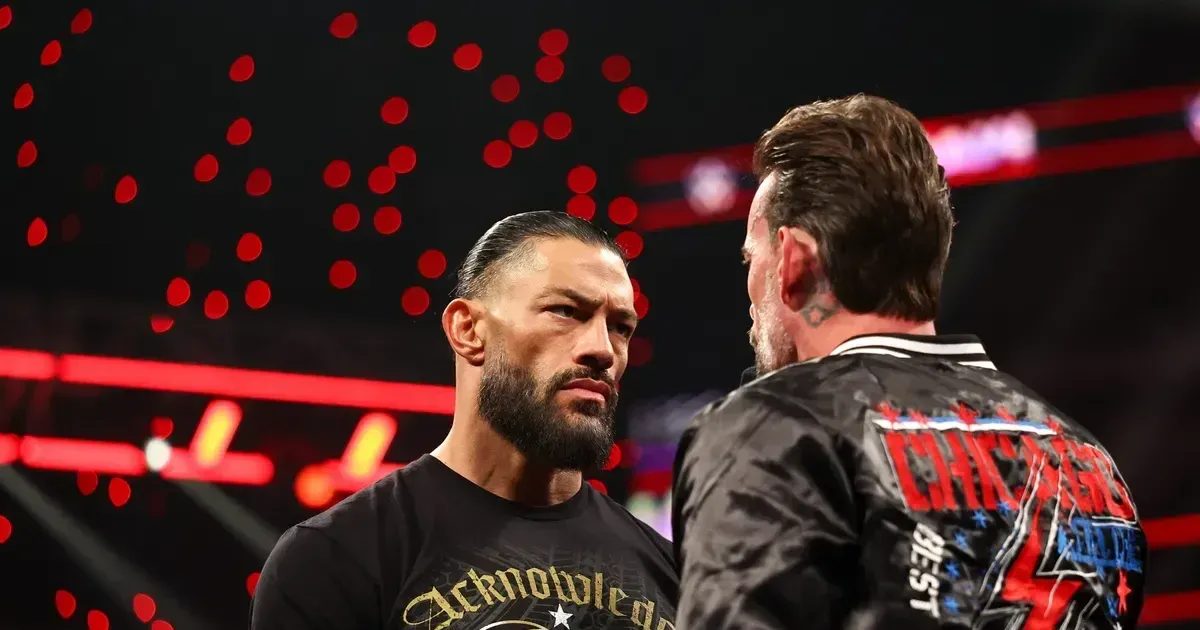
Roman Reigns and CM Punk represent the pinnacle of this era's athletic storytelling.
Broadcasters understand that the main event drives the majority of weekend subscriptions. While the match card includes dozens of athletes, the rivalry between Reigns and Punk is the primary engine for the ESPN Unlimited marketing machine. Executives expect a surge in sign-ups just minutes before the opening bell rings on Sunday night.
International Rights and the Netflix Strategy
Netflix views the wrestling industry as an essential gateway into the lucrative world of live sports. The company previously specialized in recorded content but now sees the value in capturing a live audience that watches together in real time. Outside the United States, the service has become the default destination for all premium WWE content, simplifying the experience for millions of global fans.
Subscribers in Canada and the United Kingdom benefit from this consolidation because they do not have to pay for an additional app or a specific pay-per-view fee. The inclusion of WrestleMania in the standard Netflix monthly price has created a substantial disparity in value between domestic and international markets. The gap fueled the rapid adoption of location-spoofing technology among American viewers.
"Netflix has extensive international rights to these major WWE events outside the USA," according to the Business Insider Markets report detailing the 2026 broadcast landscape.
Licensing deals of this magnitude often include strict clauses regarding geographic exclusivity. Netflix must ensure that its content is only visible to users in authorized regions, leading to a constant game of cat-and-mouse with VPN providers. Despite these efforts, the demand for unrestricted access continues to grow as fans seek the most affordable viewing experience possible.
Technical Bypasses and VPN Market Integration
Virtual private networks have transitioned from niche cybersecurity tools to mainstream media accessories. Services like NordVPN offer specific optimizations for streaming, promising to bypass the detection systems used by giants like Netflix and ESPN. These tools encrypt user data and change their virtual location, making them essential for travelers and international fans who find themselves on the wrong side of a digital border.
Security experts note that the use of a VPN does not just unlock content; it also provides a layer of privacy during high-traffic events. When thousands of users connect to the same stream, internet service providers sometimes throttle bandwidth to manage the load. Encrypted connections prevent providers from seeing that a user is streaming high-definition video, which can result in a more stable viewing experience.
NordVPN maintains an enormous network of servers in countries where Netflix holds the WWE rights. Users simply select a server in the United Kingdom or Canada, refresh their application, and gain access to the live stream. The process takes less than a minute and has become a standard part of the pre-show routine for thousands of tech-savvy wrestling enthusiasts.
Economic Pressure on Domestic Viewership
Market data indicates that the rising cost of domestic streaming services is hitting a ceiling. While the move to ESPN Unlimited offers a high-quality broadcast, the $30 price point exceeds the monthly budget of many casual viewers. The economic pressure drives the search for alternatives, whether those involve bundling services or using technical workarounds to access cheaper international feeds. Digital sovereignty remains a contested territory in the age of fiber-optic expansion. Corporations like Disney, which owns ESPN, must balance the need for revenue with the risk of alienating their audience. The current fragmented model forces fans to subscribe to multiple services to follow a single story arc throughout the year. WrestleMania 42 acts as a pressure test for this model, revealing whether fans will pay the premium or find ways to slip through the gaps of global licensing agreements.
Netflix WrestleMania Deal Tests Streaming
Licensing agreements often resemble antiquated colonial maps rather than reflections of a modern, interconnected digital economy. Media conglomerates persist in carving up the planet into profitable fiefdoms, yet they ignore the technical literacy of their most dedicated fans. Charging American viewers $30 for an event that is included in a $15 Netflix subscription in Canada is both a discrepancy and a provocation that encourages digital subterfuge. VPN companies are the real winners of these lopsided rights deals. They harvest millions in subscriptions from users who simply want to avoid being price-gouged by domestic broadcasters. If WWE and its partners were serious about maximizing long-term revenue, they would move toward a unified global price point. Instead, they choose to enable a black market of location-spoofing that undermines the very exclusivity they claim to sell to advertisers. The era of geographic lockdowns is dying. Consumers have the tools to cross borders at will, and the industry’s refusal to acknowledge this reality is a recipe for stagnation. Broadcasters must decide if they want to be service providers or digital gatekeepers, because the audience has already chosen the path of least resistance. Global price parity is inevitable.