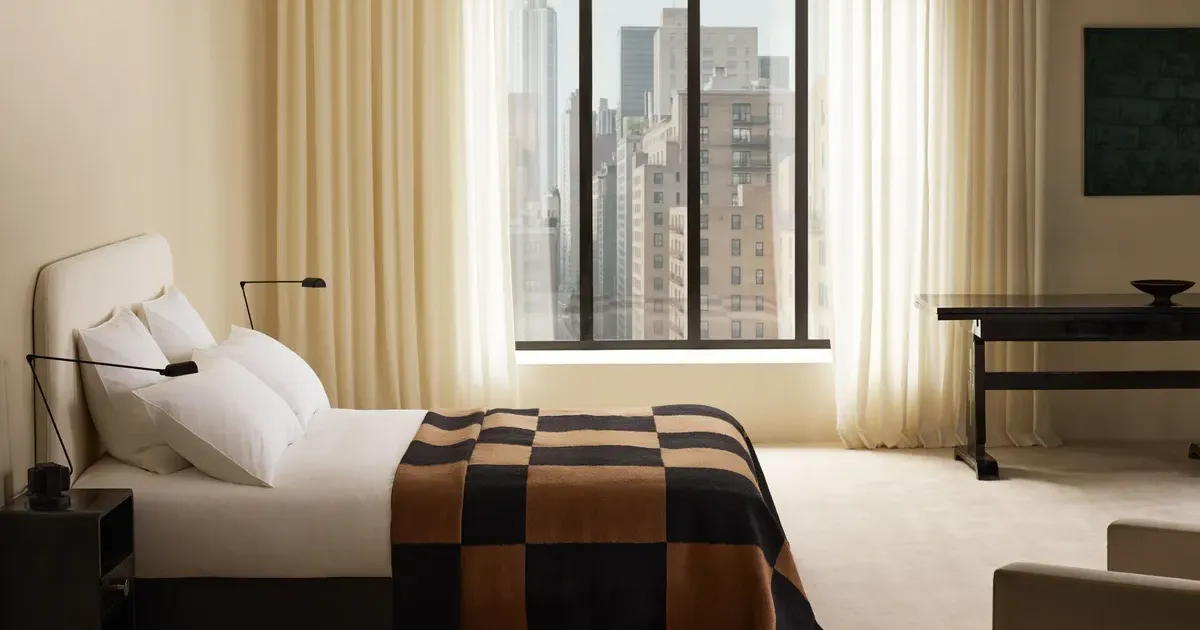
Bedrooms Transform Into High Performance Sanctuaries
Sleep quality transformed from a biological necessity into a premier luxury investment by early 2026. High-end consumers now treat their bedrooms as curated galleries rather than mere resting places, focusing on a blend of technical performance and aesthetic purity. Market shifts indicate that the era of generic, one-size-fits-all bedding has ended, replaced by a rigorous focus on material science and regional design influences.
Scandinavian minimalism is leading this charge. Nordic Knots recently introduced a collection that emphasizes heavy textures and muted tones, designed to create a visual calm that precedes physical rest. Designers at Architectural Digest noted that these pieces do not just decorate a room, they define its thermal and acoustic properties. Natural fibers like wool and organic cotton dominate the new catalogs, pushing synthetic blends further out of the premium market.
This preference for hybrid support is most evident in the latest mattress evaluations. Testing conducted by industry experts reveals that the best foam mattresses of 2026 have finally solved the heat retention issues that plagued previous generations. Modern foam delivers deep pressure relief without the quicksand sensation of early memory foam models. Such beds prioritize motion isolation, which remains a top priority for couples with different sleep schedules.
The math doesn't add up for those still clinging to old spring mattresses.
Brands like Saatva and Avocado are capitalizing on this shift by offering significant discounts on their flagship lines this season. These sales come as manufacturers streamline their shipping processes to handle heavier, more durable materials. While Avocado continues to lead the organic sector with its focus on latex and needle-tufted finishes, Saatva has gained ground by providing a white-glove delivery experience that appeals to the time-poor executive class.
Pillow selection has become equally specialized. Research from GQ suggests that the elusive just-right feeling is a result of calculated density rather than simple fluffiness. Sleepers are moving away from down-filled options in favor of adjustable shredded foam or solid latex cores. These materials maintain their height throughout the night, preventing the neck strain often caused by collapsing feathers. Finding the perfect balance between firmness and softness requires an understanding of one's own shoulder width and primary sleeping position.
Joon Loloi entered the fray this year with a cottagecore debut that contrasts sharply with the sleek lines of Nordic competitors. The brand uses intricate patterns and warm color palettes to evoke a sense of heritage and domestic stability. It is a calculated move to capture a demographic that finds minimalism too cold or clinical. By blending old-world aesthetics with modern manufacturing, Joon Loloi has carved out a niche for those who want their sleep environment to feel lived-in yet technologically advanced.
Success in the 2026 sleep market requires not merely comfort.
Manufacturing transparency has become a non-negotiable requirement for the modern buyer. Customers now demand to know the chemical composition of the flame retardants used in their foam and the ethical certifications of the wool in their duvets. This demand for accountability has forced even established players to overhaul their supply chains. Transparency is the new luxury, and brands that hide behind vague trade secrets are losing market share to those that publish third-party laboratory results.
This cottagecore aesthetic is psychological anchor in an increasingly digital world. Experts suggest that the tactile sensation of a heavy duvet or a textured rug can lower cortisol levels before sleep. When combined with a mattress that offers zoned support, the bedroom becomes a tool for recovery rather than just a place to lose consciousness. The industry calls this the total environment approach, where every element from the rug to the pillowcase contributes to a singular goal of physiological restoration.
The logic applies to pillows as well. A single-sentence declaration of quality is no longer enough to satisfy a skeptical public. Instead, consumers look for modular designs that allow them to add or remove filling. Such customization ensures that a side sleeper can get the loft they need while a stomach sleeper can thin the pillow out to avoid spinal misalignment.
Market analysts at Elite Tribune observe that the pricing for these premium goods has stabilized despite the complexity of the materials involved. Competition between the new Scandi-inspired startups and the legacy luxury brands keeps prices within reach for the upper-middle class. Yet, the true cost of a bad night of sleep is what ultimately drives the sales of three-thousand-dollar mattresses. People are beginning to realize that their productivity and health are inextricably linked to the surface they lie on for eight hours a day.
Choosing the right bedding in 2026 is an exercise in personal data analysis. Sleep trackers now provide insights into how different materials affect heart rate variability and deep sleep duration. If a certain foam type causes a user to wake up three times a night due to overheating, the data will show it. Brands are responding by integrating cooling gels and phase-change materials into the top layers of their foam beds, ensuring a consistent temperature regardless of the season.
The Elite Tribune Perspective
Why do we believe a five-thousand-dollar rectangle of polyurethane can fix a soul-crushing work schedule? The modern obsession with sleep technology is a frantic response to a culture that has systematically destroyed our ability to rest naturally. We buy Nordic Knots rugs and Saatva mattresses as if we are building a fortress against the digital noise that follows us into the dark. It is a lucrative delusion. The sleep industry has successfully rebranded a basic human function as a high-performance sport, complete with expensive gear and analytical metrics. While the material science of 2026 foam is undeniably impressive, it cannot compensate for a life lived at a frantic, unsustainable pace. We are purchasing the aesthetics of peace because we have lost the reality of it. A cottagecore duvet cover from Joon Loloi is a beautiful bandage on the wound of modern burnout. If you need a machine-tested, motion-isolating, temperature-regulated environment just to close your eyes, the problem isn't your mattress. The problem is everything you do when you are awake. We are sleepwalking into a future where rest is a product we buy rather than a state we inhabit.