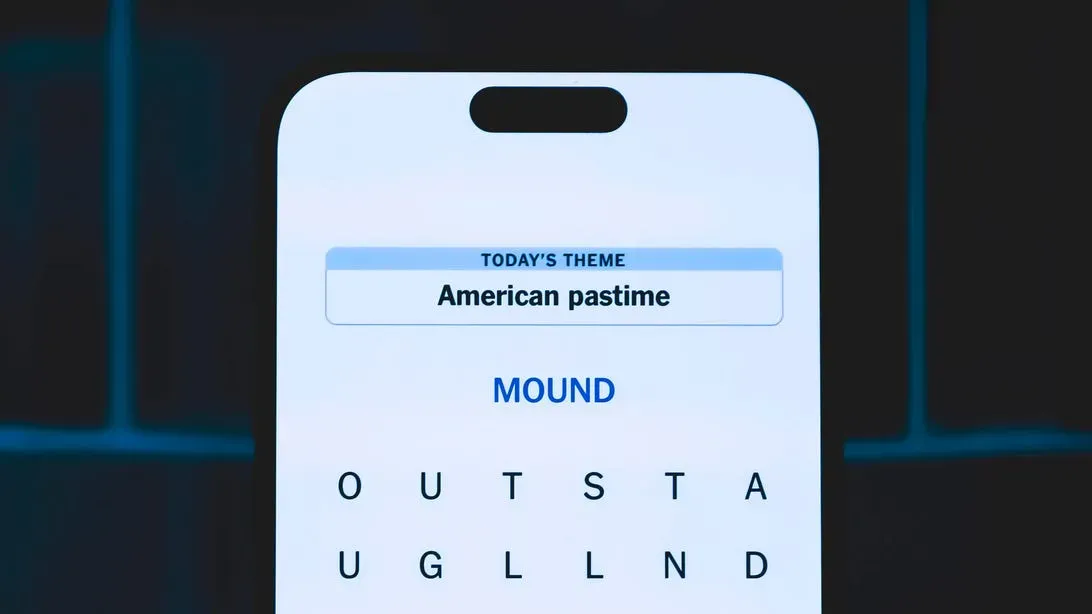
The New York Times puzzle boom shows how small daily games can become a serious subscription habit. The milestone was noted on March 12, 2026, and it made clear that daily games now sit inside the Times business model.
Games Are No Longer a Side Product
Sunrise across global financial hubs now triggers a synchronized digital reflex, as millions of subscribers reach for their devices to engage with the New York Times puzzle suite. The lineup reached a series of numerical milestones that underscore the staying power of short-form cognitive challenges in an increasingly fragmented media environment. Wordle 1727, Connections 1005, and Strands 739 launched at midnight, drawing the usual crowd of speed-solvers and casual participants alike. Millions of users have turned these games into more than casual diversions.
Data from recent digital media audits suggest that the New York Times Games app remains a primary driver for retention, often keeping users within the ecosystem long after they have finished reading the morning headlines. March 12 is a specific point of saturation where the cumulative history of these puzzles creates a deep sense of community and shared struggle. Digital strategist Sarah Jenkins notes that the longevity of Wordle, now well past its 1,700th iteration, defies the typical lifecycle of viral mobile sensations. While many expected the simple grid to fade into obscurity within a year of its acquisition, it has instead become a cultural anchor.
Wordle 1727 maintains the classic five-letter format, yet the increasing difficulty of the word bank suggests a subtle push to keep long-term players engaged without alienating newcomers. Wordle 1727 enters the record books as proof of linguistic simplicity.
Habit Is the Subscription Engine
Critics once claimed the game would run out of viable common nouns, but the editorial team has successfully integrated rarer vocabulary to maintain the challenge. Still, the core appeal remains the social sharing aspect, where green and yellow squares dominate social media feeds every morning before the first cup of coffee is cold. Connections 1005 arrives as a major landmark for the word-association game. Reaching four digits in the puzzle sequence is no small feat for a format that relies on linguistic misdirection and thematic cohesion.
The March 12 grid reportedly pushes the boundaries of the "Purple" category, often the most difficult tier, by utilizing homophones and obscure pop culture references from the late 20th century. This specific strategy ensures that the game remains a conversation starter in Slack channels and WhatsApp groups across the United Kingdom and the United States. Strands 739 offers a different kind of mental friction. As the newest member of the core puzzle trio, Strands has carved out a niche for those who find the spatial reasoning of word searches more satisfying than the deductive logic of Wordle.
The March 12 theme revolves around a cryptic clue that requires players to identify a "spangram" spanning the entire grid. Success in Strands often requires a broader lateral thinking capability, as words can twist in any direction, mirroring the complex interconnectedness of modern digital life.
The Puzzle Suite Became the Front Door
Is our collective obsession with these digital grids a sign of intellectual vitality or a symptom of a society desperate for a sense of order that our crumbling institutions no longer provide? Look closely at the March 12 puzzle milestones and you see more than clever wordplay. You see a population that has been conditioned to crave micro-doses of dopamine in place of actual achievement. We congratulate ourselves for finding a spangram in Strands 739 while the world burns and the economy fluctuates, convinced that our ability to navigate a linguistic maze somehow correlates with actual intelligence.
The New York Times has effectively turned its subscriber base into a colony of lab rats, rewarding us with green squares for our compliance and daily engagement. We are not just playing games; we are participating in a massive experiment in psychological retention that prioritizes the habit over the human. If even a fraction of the energy spent solving Wordle 1727 went into civic engagement, the political climate might look drastically different. Instead, we settle for the quiet satisfaction of a solved grid, a pathetic substitute for real agency in an increasingly complex and unyielding reality.
If we spent half the energy we use solving Wordle 1727 on actual civic engagement, the political climate might look drastically different.