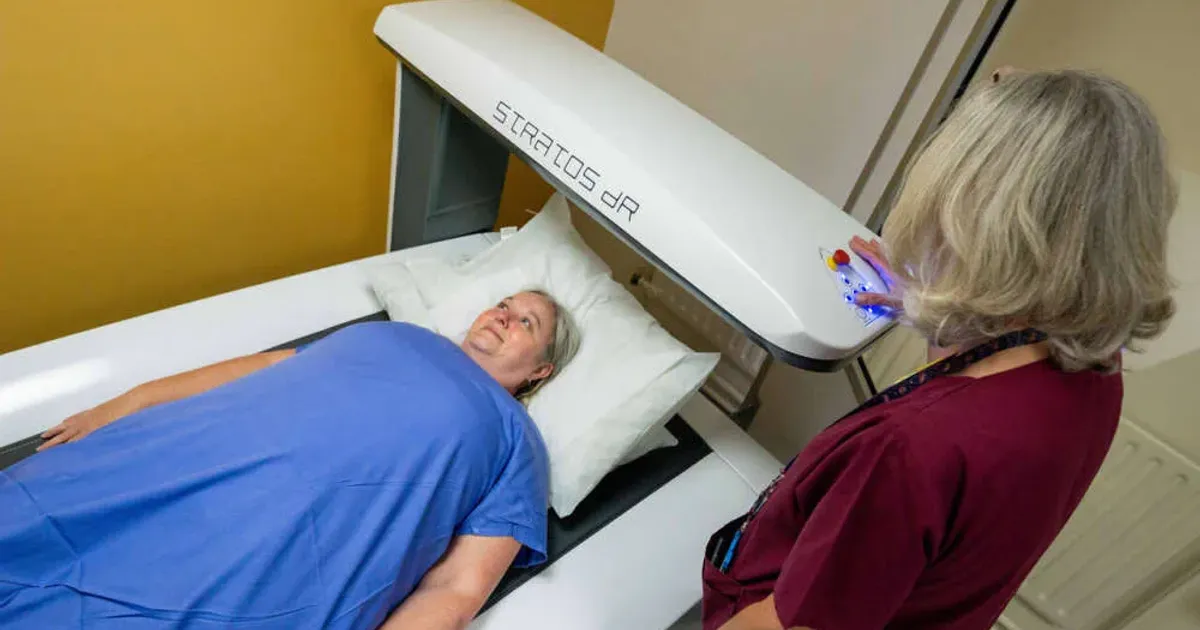
Health and Care Jersey recalled around 250 people for repeat bone-density scans after independent specialists identified concerns about reporting, diagnosis and treatment recommendations. The review covered just over 1,000 patient notes linked to scans performed at Jersey's hospital between January 2017 and January 2022.
This was a defined Jersey review, not an NHS-wide recall. Institutional precision matters because a national label can alarm patients whose scans were performed by unrelated services and obscure which organisation is responsible for contacting those affected.
The Review Identified Two Different Patient Groups
Specialist consultants advised around 250 patients to undergo another scan so clinicians could monitor changes in bone density. Health and Care Jersey arranged additional clinics and said it expected, subject to patient availability, to complete the recall scans by the end of May 2026.
A separate group of 20 received duty-of-candour letters because their treatment and care after a DEXA scan had fallen below the expected level. ITV reported that nine of those patients required no further treatment or scan, while 11 would be recalled and might receive lifestyle advice or medication after assessment.
The groups overlap in part but are not equivalent. Being invited for a repeat scan does not by itself show that a patient was harmed, misdiagnosed or treated incorrectly. Conversely, the 20 candour cases involve a specific finding about care and should not be diluted into a general appointment exercise.
The Recall Had Clear Time and Service Boundaries
Health and Care Jersey said potential accuracy problems in DEXA reporting came to light in September 2025 during work connected with its rheumatology review. It then commissioned the independent review of the earlier scans.
Patients whose bone densitometry scans occurred from January 2022 onward were told that there were no issues with the reporting of their results. The department also said anyone not contacted and offered a recall appointment by the end of April 2026 was not affected by this issue.
Medical director Simon West apologised to affected patients and said islanders could have confidence in the current service. That assurance is the department's position. Its durability depends on completing the recalls, reviewing any changed clinical decisions and showing that the reporting weakness has been corrected.
DEXA Is One Part of a Wider Risk Assessment
A DEXA scan uses low-dose X-rays to estimate bone mineral density. NHS patient guidance says the result is commonly considered with other risk factors when clinicians assess osteoporosis and the chance of a fracture.
The scan result does not predict with certainty whether someone will break a bone. Age, sex, previous falls and fractures, medicines and other clinical factors can change the overall assessment. That is why a reporting concern needs clinical review rather than a mechanical replacement of one number with another.
Health and Care Jersey advised patients to keep taking medicines prescribed by their current specialist or GP and to attend appointments as normal. The recall announcement did not support claims that patients should stop treatment while waiting for a new scan.
The Reported Cause Was Not a Scanner Specification
The public statements described potential deficiencies in reporting and concerns about diagnoses and treatment recommendations. They did not identify incorrect patient positioning, missing software updates or a particular machine defect as the cause.
They also did not attribute the problem to staffing shortages, volume targets or absent peer review. Those may be legitimate questions for a diagnostic-quality investigation, but they cannot be presented as findings without technical evidence.
No announced lawsuit, emergency-rescanning programme or legal liability finding accompanied the recall. Additional clinics and prioritised clinical contact are documented; predicting litigation or a hospital trust response is not, especially because Health and Care Jersey is the responsible body.
Candour Must Be Matched by Verifiable Closure
The recall arose in the wider context of serious concerns about Jersey's rheumatology service. That context raises the governance stakes, but it does not prove that every DEXA report contained an error or that all recalled patients received inappropriate care.
A credible closure should publish the number contacted, the number rescanned, how often new results changed diagnosis or treatment, and whether any additional candour cases emerged. It should also state what reporting controls now differ from those used before January 2022.
The hard lesson is narrower than a scandal headline. A service can act promptly once a concern is found and still owe patients evidence that the affected period has been fully bounded. Around 250 repeat appointments measure the work started. Changed decisions, completed reviews and demonstrated safeguards will measure whether the problem was actually closed.