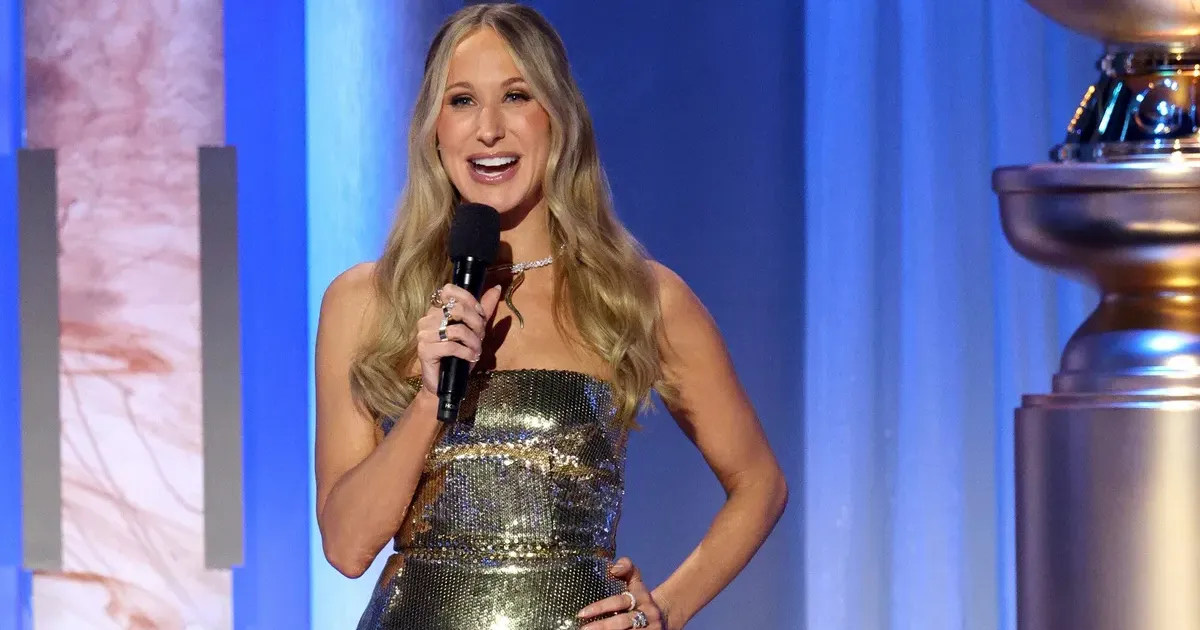
Nikki Glaser will return to host the 2027 Golden Globes, giving the ceremony a familiar face as it continues rebuilding its place in awards season. The decision, confirmed on March 20, 2026, makes her the emcee for a third consecutive show and signals that producers want continuity more than another reinvention. That choice was not accidental. The Globes spent years trying to move beyond controversy, ownership changes and questions about credibility. A host who can keep the room loose without turning the broadcast into a damage-control exercise has real value.
A Safe Bet With Edge
Nikki Glaser offers a useful combination for the Globes. She is sharp enough to satisfy viewers who expect celebrity jokes, but controlled enough to keep nominees, studios and network executives comfortable. That balance matters for a show that depends on stars agreeing to play along. Awards hosts face a narrow assignment. Too soft, and the show feels like a press release. Too harsh, and the room freezes. Glaser has built her appeal on roast timing, but the Golden Globes version of that skill requires restraint. The return booking suggests producers believe she found that line. The move also helps CBS and Dick Clark Productions sell the broadcast early. Viewers may not tune in for a host alone, but a known host reduces uncertainty for advertisers and talent teams. In a fragmented television market, predictability has become part of the product.
The Globes Still Need Strong Nominees
The host can stabilize the night, but the ceremony still depends on the films, television shows and speeches around her. The Globes work best when the room feels relaxed and the winners feel culturally relevant. No emcee can manufacture that by herself. Glaser returning for 2027 therefore reads as a practical decision rather than a grand creative statement. The Globes are choosing a proven tone while the broader awards business keeps fighting audience decline. If the night lands, the choice will look obvious. If it does not, the problem will likely be larger than the host. For now, the Globes have picked continuity, comic timing and a limited amount of risk. The assignment also reflects how the Golden Globes have changed. The ceremony used to trade heavily on looseness, table-side celebrity access and a sense that anything might happen. After several years of institutional repair, the producers now need the show to feel lively without seeming reckless. Glaser is a logical fit for that middle ground because her comedy is direct but not chaotic. She can make the room feel tested without making the broadcast feel hostile. For a network show that needs clips the next morning and advertisers the next year, that control is valuable.
The booking may also discourage the annual guessing game around whether the Globes will try to reinvent themselves again. A third consecutive host tells studios and viewers that the format is settling. That stability can be boring in theory, but awards shows often need boring decisions behind the scenes to look relaxed on camera.
The bigger challenge remains audience habit. Awards broadcasts have lost the automatic mass attention they once commanded, and no host can reverse that alone. Glaser can give the night a cleaner rhythm. The nominees, winners and unscripted moments still have to give viewers a reason to stay.
A returning host also gives writers more room to calibrate the material. They know Glaser's cadence, the kind of jokes she can sell and the tone that fits her on a live awards stage. That familiarity can make the monologue sharper because the production is not building a voice from scratch.
There is still a limit to what continuity can achieve. The Globes need categories people care about, speeches that travel online and a room that looks as if it wants to be there. Glaser can guide that atmosphere, but she cannot create the cultural stakes alone.
The third booking therefore works as a confidence signal rather than a guarantee. Producers are saying the show has found a usable voice after years of repair. The 2027 broadcast will show whether that voice still feels fresh or simply familiar.
That makes the 2027 show a practical stress test for the post-reset Globes. The production no longer needs to prove that it can survive scandal. It needs to prove that it can be entertaining enough to matter in a crowded awards calendar.
The safest version of the broadcast will still need bite. Glaser has to make the room laugh at itself without making the event feel like a scolding. That is a narrow lane, but it is the lane the Globes have chosen.
That is the practical promise behind the hire. The Globes are not asking Glaser to rescue awards television. They are asking her to make a fragile format feel confident for one more year.