Nvidia’s earnings beat answered the easy question; the harder one is whether the infrastructure race can keep paying for itself. The earnings reaction on March 12, 2026, showed that Nvidia now has to answer infrastructure questions even after beating forecasts.
The Beat Was Not the Whole Story
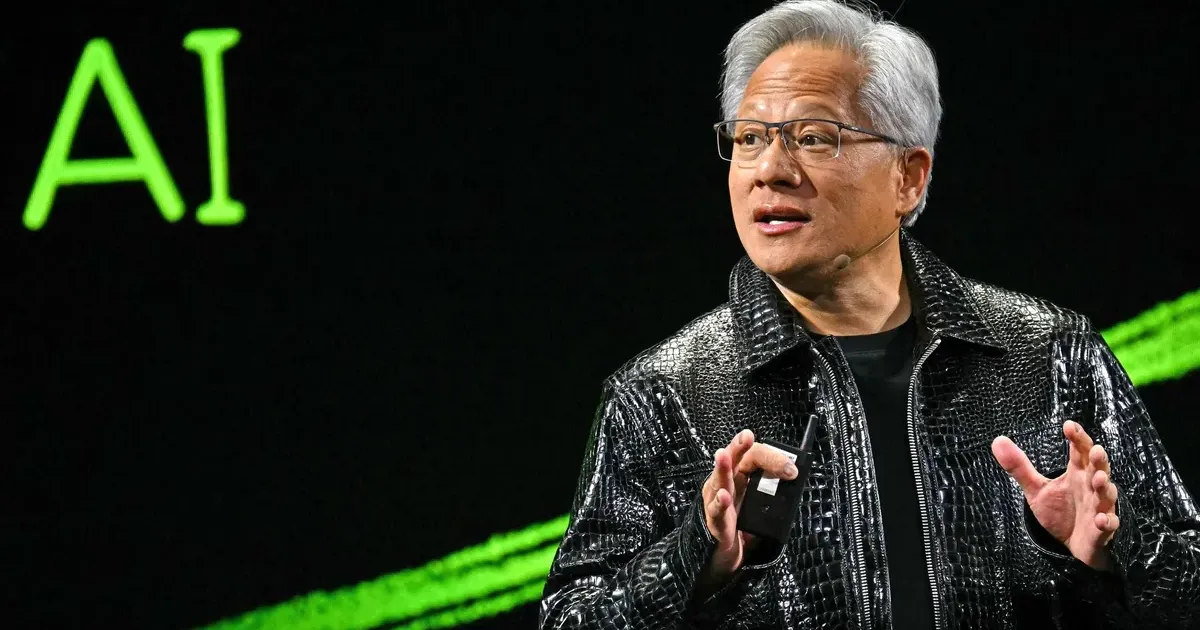
Jensen Huang paced the stage in Santa Clara on Wednesday morning, delivering a set of financial figures that would have seemed impossible just three years ago. Nvidia surpassed even the most aggressive analyst estimates for the first quarter of 2026, reporting revenue growth that continues to defy gravity. Revenue from the data center segment reached a new peak, driven by relentless demand for high-end accelerators. Still, the cooling reception from the Nasdaq suggests a change in the air. Investors are no longer satisfied with simple earnings beats. They are beginning to look at the long-term utility of the massive data centers being built across the globe. Wall Street spent most of 2025 rewarding Nvidia for its dominance in the Blackwell chip cycle. The current quarter shows that while Blackwell remains the gold standard, the market has shifted its focus to what comes next. Investors want to know if the trillion-dollar investments from Microsoft, Alphabet, and Meta will eventually yield a return on investment that justifies further spending.
Infrastructure Demand Carries the Valuation
While Bloomberg suggests that capital expenditure will remain high through 2027, internal memos leaked from several hedge funds indicate a growing concern that we have reached a plateau in generative AI efficiency. These multi-billion dollar clusters must eventually produce consumer software profits that do not yet exist at scale. Technological limitations are also forcing Nvidia to pivot its hardware strategy faster than previously anticipated. The physical constraints of traditional copper wiring within data centers have become a bottleneck for the massive throughput required by large language models. To address this, Nvidia is placing a massive bet on photonics. By using light instead of electricity to move data between chips, the company hopes to slash power consumption while doubling bandwidth. Such a move is more than an incremental upgrade. It represents an attempt to rewrite the laws of data center physics to keep the AI expansion alive. Vera Rubin architecture stands as the centerpiece of this survival strategy.
While Bloomberg suggests that capital expenditure will remain high through 2027, internal memos leaked from several hedge funds indicate a growing concern that we have reached a plateau in generative AI efficiency.
Margins Depend on Capacity
Named after the legendary astronomer who provided evidence for dark matter, the Rubin chips are slated for a late 2026 release. These processors will integrate advanced HBM4 memory and silicon photonics directly into the package. Analysts at Goldman Sachs noted that the Rubin cycle must be sharply more efficient than Blackwell to convince skeptical CFOs to keep writing checks. The transition from Blackwell to Rubin marks the shortest gap between major architectures in the company's history.
This rapid-fire release schedule suggests that Nvidia feels the breath of competitors like AMD and custom silicon projects from Amazon on its neck. Supply chain intelligence indicates that Nvidia is deepening its relationship with specialized cloud providers like CoreWeave to bypass the traditional gatekeepers of the tech world. By investing directly in these nimble players, Nvidia ensures a guaranteed buyer for its most expensive hardware. It also allows the company to exert influence over how AI capacity is distributed to startups.
Critics point out that this creates a circular economy where Nvidia's own capital helps fund the purchase of its own chips.
The Market Wants Proof
Such a strategy might inflate short-term revenue, but it introduces structural risks if those specialized cloud providers cannot find enough sub-tenants to pay the bills. Energy remains the ultimate arbiter of the AI race. Hyperscale data centers are consuming an ever-increasing share of the national power grid in the United States and Europe. The bet on photonics is as much about cooling costs as it is about speed.
Traditional electrical interconnects generate immense heat, requiring expensive liquid cooling systems that add layers of complexity to server racks. Light-based communication generates almost no heat by comparison. If Nvidia successfully commercializes photonics at scale with the Vera Rubin line, it could lower the total cost of ownership for AI clusters, potentially silencing the critics who argue that the AI boom is unsustainable due to power constraints. Reliable sources within the Taiwan Semiconductor Manufacturing Company suggest that the production yields for the early Rubin prototypes are higher than expected.
AI Euphoria Still Needs Physical Capacity
Can we stop pretending that Nvidia is a normal company subject to normal market cycles? We are looking at a hardware monoculture that has successfully convinced the world's largest corporations to bet their entire futures on a single proprietary architecture. The recent earnings beat is a distraction from the reality that the AI industry is currently a massive shell game. Nvidia sells to Microsoft, who gives credits to startups, who then spend those credits on Nvidia chips hosted on Microsoft's cloud.
It is a closed loop of speculative capital that would make a 1990s dot-com executive blush. The pivot to photonics and the Vera Rubin architecture is a brilliant engineering feat, but it is also a desperate attempt to move the goalposts. If you cannot make the software profitable, you make the hardware faster and hope no one notices the lack of utility. We should be deeply skeptical of any market that requires a complete overhaul of the laws of physics just to maintain its growth rate.
The Vera Rubin chip might be a marvel of human ingenuity, but it cannot solve the problem of a business model that lacks a paying customer at the end of the line. The hardware bubble is reaching its limit, and no amount of light-speed data transfer will change the fact that the business model simply does not work for the long term.