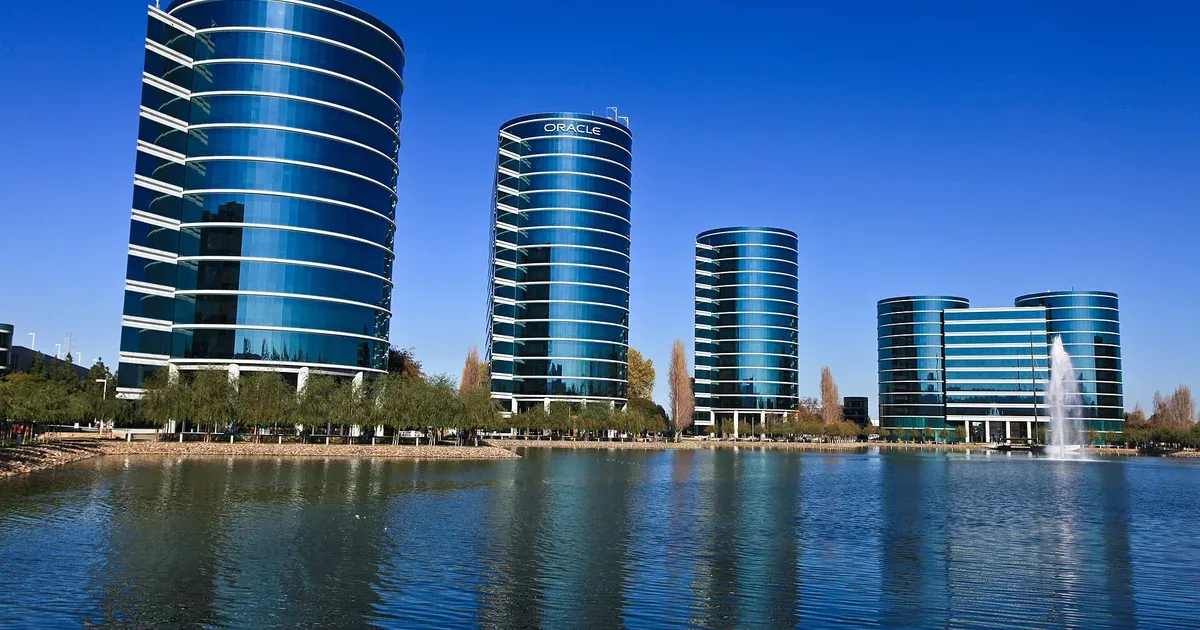
Oracle shares jumped after investors focused on a surging cloud backlog that suggests the company's artificial-intelligence infrastructure bet is gaining traction. The March 2026 rally reflected a shift in how Wall Street views Oracle: less as a legacy database name and more as a supplier of computing capacity for AI workloads. The stock move matters because backlog is a forward-looking signal. By March 12, 2026, revenue showed what had already been recognized. Remaining performance obligations and cloud contracts show what customers have committed to buy, even if the revenue arrives over time.
AI Demand Changes the Oracle Story
Oracle has spent years trying to convince investors that its cloud infrastructure can compete with larger rivals. AI demand gives that argument new force because companies need data centers, chips, networking and database services at scale. A large backlog suggests customers are reserving capacity before it becomes available. Oracle cloud growth also benefits from the company's existing enterprise relationships. Many customers already depend on Oracle databases and business software, making cloud migration a practical extension rather than a complete vendor switch.
Backlog Is Promise, Not Proof
Investors still need to watch execution. A backlog does not guarantee smooth delivery, high margins or enough power and chips to meet demand. Cloud infrastructure is capital intensive, and AI data centers require large upfront spending before revenue fully arrives. That is why the market reaction, while strong, should be read carefully. The rally shows confidence that demand is real. It does not remove questions about buildout costs, competition from Amazon, Microsoft and Google, or whether AI spending will stay at current intensity.
Conversion Becomes the Test
Oracle now has to convert contracted demand into recognized revenue without eroding profitability. That means delivering capacity on time, keeping utilization high and proving that AI customers will deepen their commitments rather than treat Oracle as a temporary overflow provider. The company's advantage is focus. It does not need to win the entire cloud market to change its valuation. It needs to show that a meaningful slice of AI infrastructure demand can flow through its platform at attractive margins. For now, the share move signals that investors are willing to give Oracle credit for a stronger cloud future. The coming earnings cycles will show whether the backlog begins a durable rerating or turns into another moment of AI enthusiasm priced ahead of proof. A second question is whether the backlog is concentrated in a few very large customers. Large AI contracts can impress investors, but concentration can create volatility if one customer delays a project or negotiates harder on price. Oracle will need to show that demand is broad enough to support the capital spending required for new capacity. Power availability is another constraint. AI data centers require enormous electricity supply and cooling, and local permitting can slow construction. A company can win a contract faster than it can build the infrastructure needed to serve it. Investors will therefore watch capital expenditure guidance almost as closely as revenue growth. Oracle also has to defend its margins. Cloud infrastructure can grow quickly while still weighing on profitability if buildout costs run ahead of utilization. The strongest version of the bull case is not simply that Oracle sells more cloud. It is that the company fills capacity with high-value workloads that make the spending worthwhile.
The rally shows that Wall Street is willing to reconsider an older enterprise software company when AI demand changes the capacity market. The burden now shifts back to Oracle. It has to turn backlog into durable revenue before investor enthusiasm becomes impatience.
The company's database business remains part of the story. AI applications still need structured data, security and enterprise integration, not only raw computing power. Oracle can argue that its cloud pitch is stronger because it connects infrastructure with software customers already embedded in its ecosystem.
Competition will remain severe. Microsoft, Amazon and Google can bundle AI tools, cloud credits and developer services at enormous scale. Oracle has to win by being useful in specific enterprise workloads, not by pretending it can outspend every larger cloud rival.
Investors will also watch whether the AI demand cycle changes customer behavior. Some companies may reserve capacity aggressively because they fear shortages, then slow usage later if projects do not produce returns. That would make backlog less valuable than it looks today.
The next phase is therefore about evidence. Contract wins moved the stock. Revenue conversion, margin discipline and capacity delivery will decide whether the move lasts.
The company will also have to show that its AI momentum is not limited to investor language. Customers need reliable capacity, predictable pricing and tools that fit existing systems. Those ordinary enterprise concerns will decide whether the cloud backlog becomes a lasting advantage.
That is a higher bar than a one-day share-price jump, and it is the bar Oracle now has to clear.