A one-week course of the antibiotic rifampicin was followed by a near doubling of sex hormone-binding globulin, or SHBG, across four small studies involving 61 healthy adults. Laboratory work using human liver cells supported the proposed route: rifampicin activated the pregnane X receptor, known as PXR, which then increased production of the hormone-carrying protein.
The findings identify a plausible connection between a receptor that senses many foreign compounds and the way sex hormones circulate in blood. They do not establish that ordinary exposure to environmental chemicals damages fertility or causes reproductive disease.
SHBG is made mainly in the liver. It binds testosterone and estradiol, affecting how much of each hormone remains unbound and available to tissues. PXR is best known for switching on liver systems that process medicines and other compounds. The new paper, published in Basic & Clinical Pharmacology & Toxicology, places SHBG among the proteins that PXR can regulate.
Rifampicin Doubled SHBG After One Week
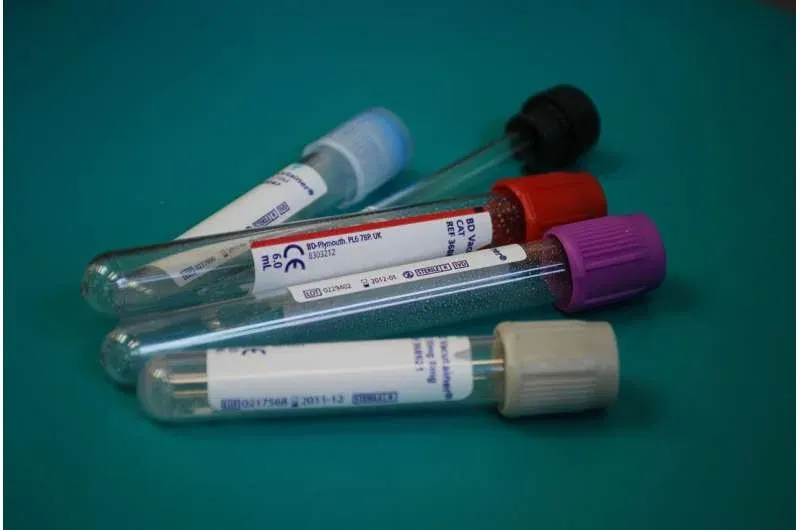
The researchers combined measurements from four earlier clinical pharmacology trials. Three used randomized crossover designs with placebo periods, while one had a single treatment arm. Participants were healthy, generally young adults, and most were men. They took 600 milligrams of rifampicin daily for one week, a regimen chosen because rifampicin is a strong PXR activator.
Average SHBG rose from 36.1 to 70.5 nanomoles per liter after rifampicin. The increase occurred in all but one participant and was statistically strong. Pooling the four trials gave the researchers a consistent biochemical signal, but it did not turn them into one large trial designed around reproductive or clinical outcomes.
Among male participants, total testosterone increased while the free androgen index fell by about 36%. That combination is biologically coherent: more SHBG can bind more circulating testosterone, so a higher total measurement does not necessarily mean that more unbound hormone is available. Estradiol did not change significantly, although the small and predominantly male sample limits what can be concluded about effects in women.
Liver Experiments Support a PXR-SHBG Link
The team then tested the proposed mechanism in three-dimensional human liver-cell spheroids and in a liver-derived cell line. Rifampicin increased SHBG expression. When researchers added SPA70, a compound that blocks PXR activity, both baseline and rifampicin-induced SHBG expression were reduced.
Chromatin immunoprecipitation experiments also identified a putative PXR-binding region near the SHBG gene. This result strengthens the case that PXR participates directly in the response, but the authors said the binding site requires further characterization. Cell models can establish molecular plausibility; they cannot by themselves determine what a chemical exposure does to a whole person over months or years.
The convergence of the volunteer data and liver experiments is the paper's strongest feature. Rifampicin produced the same directional SHBG signal in blood and in laboratory models, and blocking PXR weakened that signal in the cells. The mechanism is therefore more than a correlation, while still remaining short of proof for every compound capable of interacting with PXR.
The Study Did Not Test Everyday Exposure
PXR can respond to medicines, food-derived compounds and some environmental chemicals. That broad sensitivity makes the pathway relevant to toxicology. It does not mean every PXR-active substance produces the same response at the doses people encounter outside a laboratory or clinic.
Rifampicin is a potent medicine used here for seven days. The studies did not expose participants to pesticides, flame retardants or plastic additives, and they did not test low-dose mixtures, lifelong exposure or vulnerable groups. They also did not measure conception, sperm quality, menstrual function, pregnancy outcomes or diagnosed endocrine disease.
The participant pool creates further limits. The trials involved 61 healthy volunteers, were not originally built as a single endocrine study and contained relatively few women. Short-term biochemical changes in that group cannot establish reproductive decline in a population, predict an individual's susceptibility or quantify the safety of thousands of marketed chemicals.
A Mechanism Is a Starting Point for Safety Testing
The paper gives researchers a specific pathway to investigate, not a casualty count. Future drug and chemical studies can now ask whether a candidate activates PXR at realistic concentrations, whether SHBG changes follow, and whether those changes alter unbound hormones or patient outcomes. That sequence is more useful than treating receptor activity alone as proof of harm.
Medicines already known to activate PXR may deserve closer endocrine monitoring when there is a clinical reason to suspect an effect. Environmental compounds require exposure data and dose-response testing before the rifampicin result can be extended to them. Sex, age, liver function, other medicines and baseline hormone status may all affect the result and should be examined directly rather than assumed.
The regulatory lesson is not that previous safety testing has failed across the board. It is that a newly described mechanism can sharpen what future testing measures. Evidence should move from receptor activation, to SHBG change, to altered free-hormone levels, and finally to outcomes that matter to patients. Skipping those steps would replace one unknown with a larger claim the study never tested.