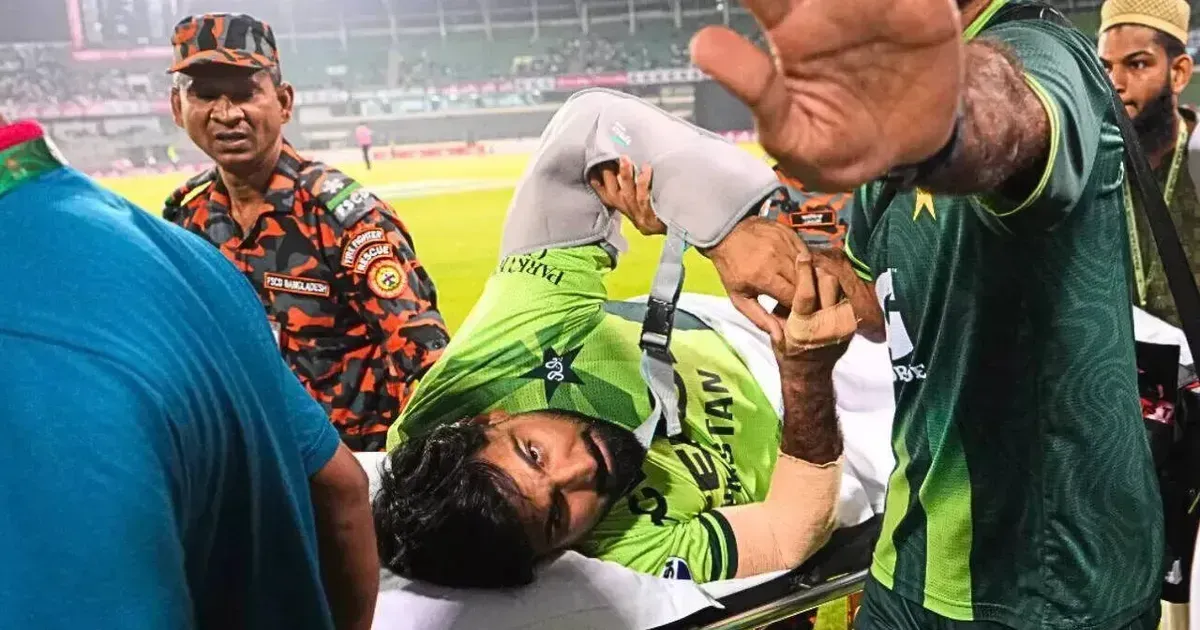
Mirpur's Shere Bangla National Stadium provided the backdrop for a series leveling performance by Pakistan on Friday. Rain clouds gathered early over Dhaka, forcing officials to rely on the DLS method to determine the final margins of a contest defined by bowling aggression and a serious medical emergency. Pakistan secured a 128-run victory to even the three-match series at one win apiece, but the result was overshadowed by the sight of a Pakistan fielder leaving the ground in an ambulance. The result was reported on March 13, 2026, after Pakistan used a dominant performance to level the series. Physical safety in modern stadiums remains a flashpoint for debate within the sport. Maaz Sadaqat spearheaded the defensive effort with a clinical display of spin bowling that left the Bangladesh middle order unable to find a rhythm. He was joined by Haris Rauf, who used his raw pace to exploit the moisture in the surface. Both bowlers finished with three wickets each, systematically dismantling a chase that never truly found its footing. The home side struggled to adapt to the adjusted targets required after multiple weather delays shortened the available overs. Precision in length and line gave the visitors a decisive advantage on a pitch that offered variable bounce.
Pakistan Levels the Series
Control of the match shifted firmly toward Pakistan during the middle overs. Maaz Sadaqat varied his pace with deceptive ease, drawing errors from experienced batsmen who typically thrive in Mirpur conditions. His first wicket came via a mistimed sweep that found the safe hands of midwicket, a moment that stalled a promising opening partnership. Haris Rauf complemented this by bowling short and directed at the body, forcing the Bangladeshi tail to play defensive strokes against deliveries exceeding 145 kilometers per hour. The scoreboard pressure mounted as the run rate requirements climbed into double digits. Spectators watched as the Bangladesh batting lineup collapsed from a stable position to a desperate state within the span of forty minutes. Still, the statistical dominance of the Pakistan attack does not tell the full story of the day. Tactical shifts by the captain allowed the bowlers to maintain an aggressive field even as the ground became slippery under a light drizzle. Each wicket seemed to reinforce the psychological edge Pakistan had established early in the afternoon. The final wicket fell with more than ten overs remaining in the revised schedule. Drama of a different nature unfolded during the sixth over of the second innings. Hussain Talat pursued a ball toward the cover boundary following a powerful punch from Litton Das. In his attempt to prevent a four, the fielder sprinted at full speed and could not arrest his momentum before reaching the perimeter. He crashed violently into the advertising boards, a sound that was audible to the spectators in the lower tiers of the grandstand. Teammates immediately signaled for the medical staff to enter the field as Talat clutched his shoulder in visible pain.
The Pakistan Cricket Board said he received treatment and was taken for further medical evaluation.
Emergency protocols were activated with surprising speed.
Weather patterns in the capital city of Bangladesh often dictate the flow of international fixtures during the spring months.
Cricket statisticians often point to the complexity of rain rules as a point of contention for fans. Yet, the logic of the system held firm as the moisture on the outfield made it difficult for the home side to find boundaries. In fact, the ball began to skid through the surface at a pace that favored the Pakistani seamers. The toss proved to be a significant factor, even though the final result turned on the quality of execution in the powerplay. Humidity levels remained high throughout the evening, adding another layer of difficulty for the batsmen trying to grip the bat.
Victory in the second ODI sets the stage for a high-stakes finale in the coming days. Pakistan has found a winning formula that balances the explosive power of its top order with the discipline of a varied bowling unit. But the potential absence of Hussain Talat creates a vacancy in the middle order and a gap in the fielding unit that will be difficult to fill on short notice. Team management must now decide whether to fly in a replacement or rely on the reserve players already traveling with the squad. The series momentum has shifted, but the cost of the win remains high.
Bangladesh faces a period of internal review before the final match. Their inability to handle the short ball from Haris Rauf suggests a technical vulnerability that Pakistan will likely target again. Separately, the condition of the Mirpur pitch for the third match will be a closely guarded secret by the local curators. Historically, the ground provides more assistance to spin as a series progresses. This trend may influence the selection choices for both captains as they look to secure the trophy. The series is tied at one game each.
Cricket Momentum Turns Quickly
Why are we still allowing professional athletes to sprint full tilt toward rigid, unyielding advertising boards in 2026? The injury to Hussain Talat was not an act of God; it was the predictable result of a stadium infrastructure that prioritizes sponsorship visibility over the skeletal integrity of the players. Mirpur is a world-class venue, yet the proximity of electronic hoardings to the boundary rope remains a hazard that the International Cricket Council refuses to address with meaningful regulation. We see the same pattern across the subcontinent, where tight stadium footprints lead to compressed outfields and dangerous perimeters.
While the 128-run victory provides a statistical high for Pakistan, the image of a player being carted off to a Dhaka hospital should be the only data point that matters. The DLS method might calculate the scores, but it cannot calculate the career cost of a shattered shoulder. It is time for a cold, hard look at the commercial field of cricket. If a board cannot provide a safe work environment for its employees, it should not be hosting international fixtures.
Marketing revenue must never be bought with the blood and bone of the athletes who make the game profitable. The board must change, or the players must refuse to dive.