Anderson’s Long Oscar Wait Shapes the Race
Paul Thomas Anderson entered the 2025 awards season as a figure of persistent cinematic excellence who remained curiously unrewarded by the Academy of Motion Picture Arts and Sciences. Eleven nominations across three decades had failed to yield a single statuette for the writer and director. By March 13, 2026, the screenplay races had become a test of career recognition and category risk.
Industry experts now suggest that his long wait for a trophy may conclude in the Adapted Screenplay category. Variety chief awards editor Clayton Davis identified Anderson as the frontrunner in his final projections for the year. Such a shift in momentum reflects more than simple overdue sentiment among the voting body.
It signifies a collective recognition of a filmmaker who has consistently pushed the boundaries of narrative structure without alienating the core sensibilities of the Hollywood establishment. Academy voters frequently demonstrate a preference for veteran auteurs when their body of work reaches a certain critical mass. Anderson’s career includes masterpieces like There Will Be Blood and The Master, yet he has seen peers like Quentin Tarantino and the Coen brothers secure the writing honors that have eluded him. His latest project has carved a distinct path through the precursor awards, gaining traction among regional critics' circles and guild members alike.
Data from previous seasons indicates that a sweep of these preliminary honors usually secures the eventual Oscar win. Will the 2025 ceremony finally break the streak of losses that has defined Anderson’s relationship with the Dolby Theatre? Critics argue that the Adapted Screenplay category serves as the perfect vehicle for this long-awaited validation.
Coogler Tests Genre Bias
Writing serves as the foundation of Anderson’s reputation, characterized by dense dialogue and expansive character arcs that require meticulous structural planning. His transition from original narratives to adapted material has allowed him to showcase a different facet of his craftsmanship.
Variety’s circuit analysis places him at the top of a competitive field, suggesting that the industry has reached a consensus regarding his contribution to the year’s cinematic output. The number of nominations he has amassed without a victory is a statistic that voters are increasingly aware of during the balloting process.
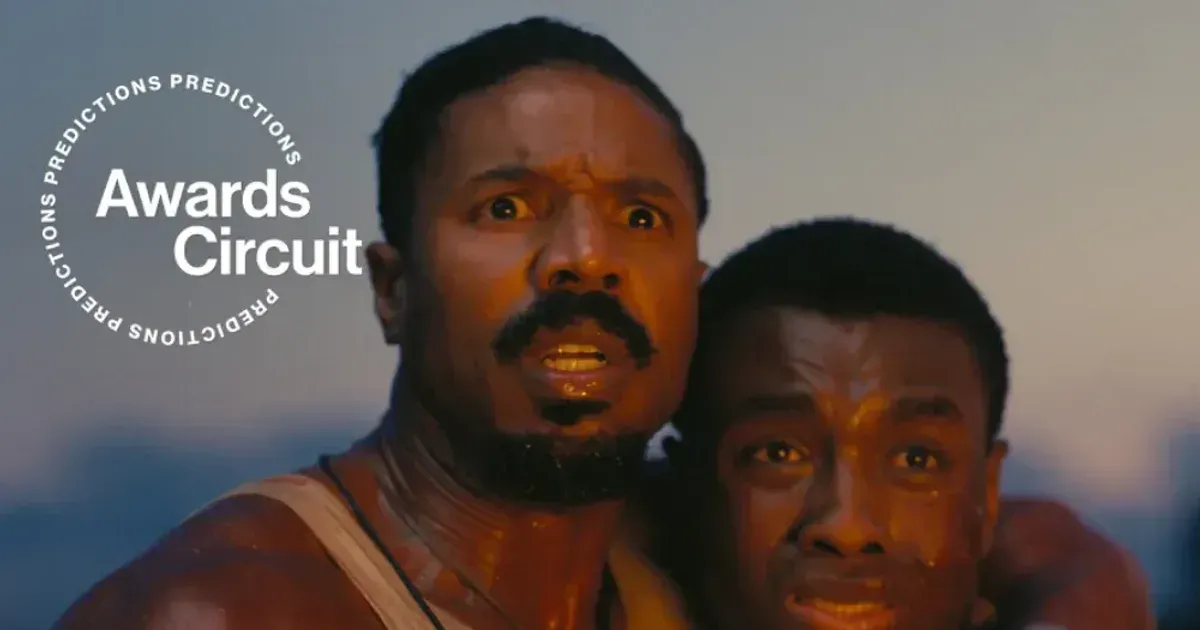
Ryan Coogler stands on the verge of making history in the Original Screenplay category with his supernatural thriller Sinners. Only one Black screenwriter, Jordan Peele, has ever won the Academy Award for an original script in the organization’s century-long history. Coogler’s potential victory would shatter a glass ceiling that has remained remarkably resilient despite the Academy’s recent efforts to diversify its membership.
Sinners is a departure for Coogler, moving away from established intellectual property like Creed and Black Panther to deliver a standalone vision. Warner Bros. has invested heavily in the campaign, treating the film as a prestige entry rather than a standard genre offering. Success for Coogler in this category would validate his status as a premier architect of modern American cinema.
Screenplay Categories Reward More Than Dialogue
His ability to blend high-concept genre elements with profound social subtext has made Sinners a favorite among younger Academy members who prioritize innovation over traditional tropes. Clayton Davis notes that Coogler is currently positioned to become the second Black winner in this specific category, a fact that highlights the historical scarcity of such recognition. Records from the last decade show that Original Screenplay often serves as the category where the Academy takes its greatest risks. Whether that risk-taking extends to a supernatural horror film remains a central question of the season. Winning is often a matter of logistics rather than pure art. Variety Awards Circuit is a barometer for industry sentiment, utilizing a methodology that ignores personal preference in favor of statistical probability. These predictions are curated through extensive consultation with anonymous voters and analysis of historical voting patterns. Clayton Davis has built a reputation for identifying late-season surges that often bypass more obvious candidates. His final projections for the 2025 Oscars emphasize a return to traditional filmmaking values while acknowledging the shifting demographics of the voting pool. This structural change in the Academy’s makeup has led to more unpredictable outcomes in the writing categories than in previous generations.
That makes the final voting period unusually narrative-driven. Anderson benefits from a career-recognition argument that voters understand immediately, while Coogler benefits from the sense that genre work has outgrown the category limits once placed around it. The race is therefore not simply adapted versus original craft; it is about what kind of writing the Academy wants to reward now. Screenplay categories often become release valves for broader Academy sentiment. Voters can honor a film’s architecture even when they are divided over directing, acting or best picture. That makes these races especially sensitive to reputation, campaign timing and whether a script feels like the clearest expression of a film’s achievement.
The screenplay races also reveal how the Academy processes change. A veteran such as Anderson can be framed as overdue without seeming like a sentimental choice, because the writing itself remains central to his reputation. Coogler’s case is different but equally powerful: a genre film can win if voters decide its structure, voice and ambition are impossible to separate from its cultural force.