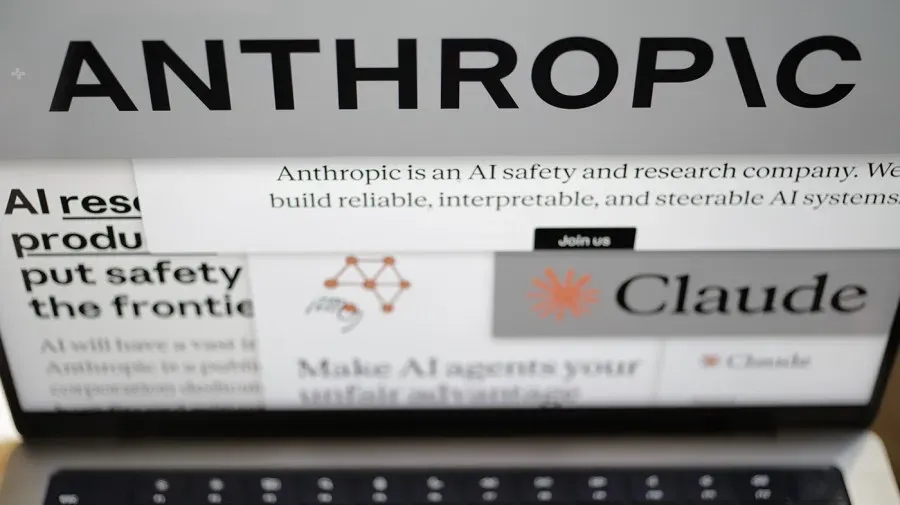
The Pentagon’s order to remove Anthropic AI products has turned a security decision into a legal and procurement fight. The order became public on March 11, 2026.
Pentagon Blacklists Anthropic Tools
The Pentagon order began with an internal memo that sent tremors through the highest echelons of the American defense establishment. Senior Pentagon leadership and military commanders received a direct mandate to purge all Anthropic AI products from their systems within 180 days. Defense Department officials justified the sweeping order by labeling the company's technology stack an unacceptable supply chain risk, a designation that effectively blacklists one of the world's most prominent artificial intelligence developers from the United States military infrastructure. Defense officials haven't specified the exact nature of the vulnerability, yet the March 6 memo suggests the risk extends to all systems and networks. This directive, issued under a shroud of procedural urgency, marks a departure from previous years of collaborative experimentation between Silicon Valley and the Department of Defense. Transitioning away from these tools involves a complex extraction process for units that have integrated Anthropic Claude models into their daily logistics, intelligence analysis, and predictive maintenance protocols. Military commanders now face a logistical countdown. Every instance of an Anthropic large language model must be identified, decommissioned, and replaced by August. Such a massive undertaking requires far more than deleting software. It necessitates re-evaluating the security of every data pipeline that once fed into these models. Lawyers for Anthropic didn't wait long to strike back. Michael Mongan, an attorney representing the AI firm, appeared before a federal judge during a Tuesday status conference to argue that the Pentagon's decision is inflicting irreparable injury on the company.
The 180-Day Removal Clock Starts
The order turned a procurement dispute into a wider AI security fight.
Mongan argued that the supply chain risk label carries a weight that transcends a single contract loss, essentially poisoning the well for any future government or private sector partnerships. This legal posture reflects a company fighting for its commercial survival in a market where government trust is the ultimate currency. Anthropic warns that the Pentagon decision puts billions of dollars in revenue at stake. Beyond the immediate loss of defense contracts, the firm fears a domino effect. If the Department of Defense deems a technology unsafe, civilian agencies and international allies often follow suit.
The reputational damage could be terminal for a firm that has marketed itself as the safe and ethical alternative to its competitors. Judges rarely overrule military security designations, but Mongan is banking on the argument that the Pentagon failed to provide a clear rationale for its sudden reversal. He described the move as arbitrary. This specific designation remains the central point of contention in what is becoming a historic legal battle over the state's power to pick winners and losers in the AI race. Replacing an integrated AI system is not as simple as swapping a hard drive.
Military analysts have spent years fine-tuning prompts and workflows around specific model architectures. Removing these tools creates an immediate capability gap.
Anthropic Fights the Security Label
Intelligence officers rely on these systems to parse massive datasets from satellite imagery, signal intercepts, and open-source reports. A 180-day window is, in the eyes of many operational commanders, a dangerously short timeline to find and vet alternatives. National security experts suggest the supply chain risk might stem from the hardware level or foreign investment ties. While Anthropic is a US-based company, the global nature of semiconductor manufacturing and data center ownership creates a web of potential vulnerabilities. If a single component of the AI's physical or digital infrastructure is traced back to a hostile actor, the entire stack is compromised.
The Pentagon is clearly prioritizing systemic integrity over operational convenience. Critics of the ban argue the military is shooting itself in the foot. They worry that while the US military purges effective tools, adversaries will continue to use them without such stringent ethical or security constraints. But security hawks in Washington argue that the risk of a backdoor or a data leak is far more dangerous than a temporary dip in analytical speed. Security must come first.
A quiet resolution now looks unlikely. Investors are already reacting to the news.
AI Investors See the Warning
Tech stocks saw a sharp dip following the public disclosure of the Pentagon's memo, as the market realized that no AI firm is truly safe from the government's sudden policy shifts. Anthropic's valuation, which had climbed steadily through 2025, now faces a period of extreme volatility. Venture capital firms that poured billions into the company are now questioning the long-term viability of AI business models that rely heavily on public sector spending. Silicon Valley executives are watching this case with a sense of dread. If the Pentagon can de-platform a major player like Anthropic without public evidence of a breach, every other AI developer is at risk.
That creates a chilling effect on innovation. Companies might hesitate to tailor their products for military use if they believe those same products could be banned on a whim by a future administration or an internal security board. Bloomberg reports suggest that competitors like OpenAI and Google are already moving to capture the vacuum left by the Anthropic ban. Yet even these giants are not immune to the same scrutiny.
Why Opaque Bans Damage Trust
Why should we trust a bureaucracy that cannot define its own dangers? The Pentagon's sudden execution of Anthropic's defense career reeks of industrial gatekeeping rather than genuine security concern. By labeling a premier American AI firm as a supply chain risk without providing a shred of public evidence, the Department of Defense is engaging in a form of regulatory theater that serves only to consolidate power among a few preferred contractors. We are expected to believe that a company founded on the principle of AI safety is suddenly a Trojan horse, while other platforms with far more opaque data practices remain in the military's good graces. It isn't a strategy; it is a purge.
If the military continues to alienate the most innovative minds in Silicon Valley through arbitrary and opaque mandates, the United States will find its technological edge blunted not by foreign adversaries, but by its own internal paranoia. A 180-day deadline is a death sentence for integration, and the legal battle to follow will likely reveal that the only thing at risk was the Pentagon's ability to control a technology it barely understands. Transparency is not a luxury in national security; it is a requirement for legitimacy.