The Minab school strike has turned a Pentagon targeting failure into a wider indictment of outdated intelligence. The probe sharpened on March 11, 2026.
The Pentagon probe into the Minab school strike turns a targeting failure into a wider indictment of outdated intelligence.
Minab Strike Becomes an Intelligence Scandal
Dust had barely settled over the ruins of an elementary school in Minab when the political maneuvering began. The day started as a typical morning for dozens of Iranian children before a Tomahawk cruise missile tore through the structure, ending at least 175 lives. Early reports from the ground painted a scene of absolute devastation, with local residents digging through concrete and rebar to recover the remains of students. Photos from the site showed a small boy waving to his mother moments before the impact, an image that quickly circulated across global social media networks as a symbol of the conflict's human cost. While the White House initially attempted to deflect blame, a mounting internal investigation now points a finger directly at the United States military. Pentagon officials, speaking on the condition of anonymity, revealed that a preliminary probe identifies outdated targeting data as the primary cause of the disaster. The Defense Intelligence Agency provided coordinates for what was supposed to be a naval base utilized by the Islamic Revolutionary Guard Corps. Instead, the missile struck a civilian educational facility situated dangerously close to the military installation. Intelligence officers failed to verify these coordinates against current satellite imagery or local ground intelligence before the offensive began. Such a failure raises serious questions about the safeguards in place during the opening hours of President Donald Trump's renewed military campaign against Tehran. Precision can become a myth sold to the public to sanitize slaughter. Reports from the New York Times and Bloomberg suggest a deep rift within the administration regarding the disclosure of these findings.
Outdated Targeting Data Takes the Blame
Officials traced the school strike back to a failed target cycle. President Trump insisted in the days following the strike that Iran, or perhaps a third party, was responsible for the explosion. He claimed the weapon was not American, despite the fact that the United States remains the only actor in the current theater employing Tomahawk cruise missiles. Video footage released by the Iranian Mehr news agency tells a different story. The high-resolution clip shows the distinct silhouette of a cruise missile impacting the target area with terrifying accuracy, though the accuracy was directed at the wrong building entirely. Targeting cycles in modern warfare rely on a process known as 'mensuration,' where analysts confirm the exact latitude, longitude, and elevation of a desired point of impact.
In the case of the Minab strike, investigators believe the DIA relied on maps and facility descriptions that were several years old. Since those records were last updated, the footprint of the neighboring naval base had shifted, and the elementary school had been constructed on land previously designated as part of a military buffer zone. Analysts neglected to cross-reference the strike package with updated humanitarian registries that list schools, hospitals, and mosques as off-limits. Military protocol requires a final check by a target validation authority before a launch order is executed. This process is designed to prevent exactly the kind of catastrophe that occurred in Minab.
Somewhere in the chain of command, that final check was either bypassed or performed with such negligence that the presence of a school went unnoticed. Investigators are currently focused on identifying the specific officers who signed off on the strike.
Washington's Narrative Starts to Fracture
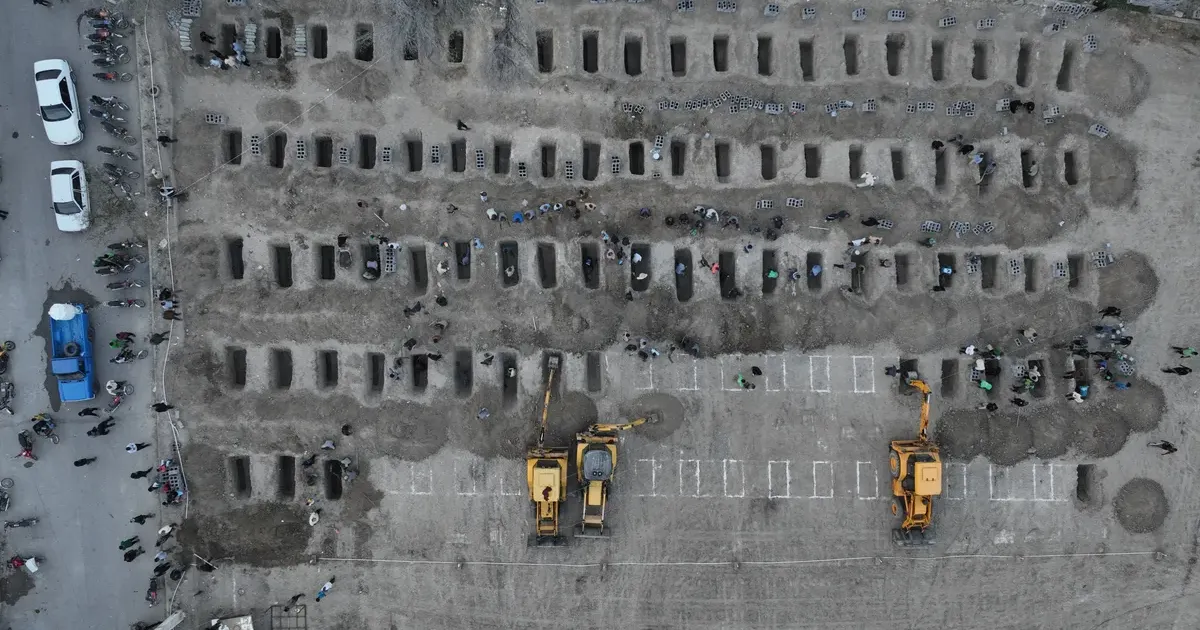
The Pentagon probe must determine whether the error was a simple clerical oversight or a result of the immense pressure to produce results during the initial surge of the war. The math of war rarely accounts for children. Grief in Minab has transformed into a powerful wave of anti-American sentiment that threatens to complicate diplomatic efforts for decades. Funerals for the 175 victims saw thousands of mourners lining the streets, chanting slogans against both Washington and Jerusalem. Open graves in the local cemetery stand as a silent indictment of the intelligence failure.
Iranian Foreign Media Department officials have been unusually permissive with Western journalists, ensuring that the imagery of the destruction reaches every corner of the globe. They recognize that the moral high ground has shifted, at least in the eyes of the international community. International observers have noted a sharp contrast between the official US narrative and the evidence gathered by independent investigators. While Reuters sources within the military acknowledge the mistake, the public-facing statements from the State Department remain non-committal. This discrepancy creates a vacuum of accountability that Tehran is eager to fill with its own propaganda.
By refusing to admit the error immediately, the United States has allowed the Iranian government to frame the strike as a deliberate act of terror rather than a tragic technical mishap. European allies have expressed private outrage, with some diplomats suggesting that intelligence sharing with the US may be curtailed until stricter targeting protocols are established.
Allies Demand Targeting Safeguards
Economic markets reacted to the escalating tension with predictable volatility. Oil prices surged as traders weighed the possibility of a prolonged conflict fueled by this specific atrocity. Shipping lanes in the Strait of Hormuz remained on high alert, with many firms fearing that Iran would use the Minab strike as justification for retaliatory attacks on commercial tankers. Investors are looking for any sign of a de-escalation, but the domestic political climate in both Washington and Tehran makes such a move unlikely in the short term. The rhetoric remains heated, and the ghosts of Minab continue to haunt the halls of the Pentagon.
Accountability remains the central theme of the ongoing investigation. If the Pentagon concludes that the DIA acted with gross negligence, it could lead to the most significant disciplinary actions within the intelligence community in a generation. Some members of Congress are already calling for public hearings to examine the targeting process. They argue that if the US cannot guarantee the accuracy of its most advanced weaponry, the entire justification for 'surgical' warfare collapses. The military must now decide whether to protect the individuals responsible for the error or to offer them up as a sacrifice to appease international fury.
Why Clean War Was Always a Myth
Surgical warfare is the most successful marketing campaign of the twenty-first century. We are told that our missiles are smart, our drones are precise, and our intelligence is infallible. The charred remains of 175 children in Minab prove that these are lies designed to help a domestic audience sleep at night while the government conducts state-sanctioned violence. When the Pentagon blames 'outdated data,' it is attempting to dehumanize a catastrophic failure by turning it into a software glitch. Data does not kill people; the people who refuse to verify that data kill people.
President Trump's attempt to blame 'somebody else' for a Tomahawk strike is not just a lie, it is a pathetic insult to the intelligence of the global community. Only one nation is firing those missiles in this conflict. To pretend otherwise is to abandon even the pretense of national honor. If the United States wants to maintain its status as a global leader, it must stop hiding behind 'preliminary findings' and admit that its thirst for a quick military victory led to the slaughter of innocents. True strength is found in the courage to admit a mistake, not in the cowardly denial of a video-recorded reality.
Minab should not be a footnote in a war report; it should be the moment we stop believing the myth of the clean war.