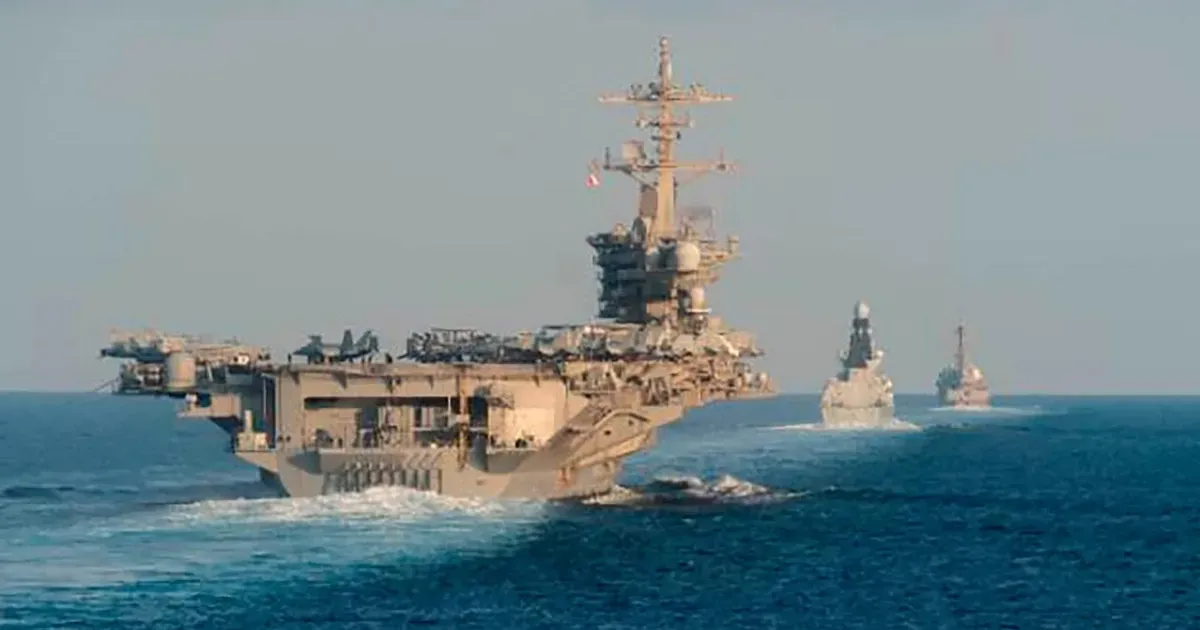
Operation Epic Fury has moved from military briefing rooms into hospital wards, where the count of wounded U.S. troops is forcing a harder debate about the cost of escalation with Iran. The casualty count changed how Washington talked about the Iran campaign. By March 11, 2026, the report had become part of a broader public record. Pentagon officials confirmed Tuesday that 140 American service members have suffered wounds since the commencement of Operation Epic Fury. Defense Department reports describe the current phase of the campaign against Iran as the most intense bombardment to date. These casualties represent a significant increase in the human cost of a conflict that President Donald Trump previously suggested would be swift and decisive. Medical units in the region are operating at full capacity to stabilize soldiers injured during missile exchanges and drone incursions. By March 2026, the issue had moved into a wider public debate. Washington had anticipated some resistance, yet the sheer volume of ballistic missile strikes targeting regional hubs surprised several high ranking planners. Military hospitals in Germany and Kuwait have begun receiving the most severely injured personnel. Most of the 140 wounded individuals were caught in kinetic exchanges within the first week of the surge. Some suffered shrapnel wounds, while others were treated for traumatic brain injuries resulting from near-miss explosions at forward operating bases. Operation Epic Fury aims to dismantle the command and control infrastructure of the Islamic Revolutionary Guard Corps. Nevertheless, the tactical success on the ground has not yet translated into the strategic capitulation that the White House expected.
Defense Secretary Lloyd Austin stated that the air campaign has successfully neutralized dozens of hardened facilities.
Tehran has not blinked.
Strategic Miscalculations in the West Wing
President Trump and his closest advisers downplayed the potential for a prolonged engagement during the lead-up to the joint U.S.-Israeli assault. Reports from the New York Times indicate the administration viewed risks to global energy markets as a short-term inconvenience. This decision prioritized the decapitation of the Iranian leadership over the preservation of global economic stability. Trump argued that the mission to remove the threat of a nuclear-armed Iran outweighed the temporary pain of fluctuating gasoline prices. Critics within the intelligence community now suggest that the administration fundamentally misunderstood how Tehran would retaliate. Internal memos revealed that White House officials expected Iran to retreat once the first wave of precision strikes hit. Instead, the Iranian military launched a coordinated swarm of low-cost drones that have managed to penetrate sophisticated defense umbrellas. This miscalculation has left the administration scrambling to explain why the conflict is expanding rather than concluding.
Intelligence assessments from Bloomberg suggest that the Iranian regime had spent years preparing for this exact scenario. While the U.S. focused on high-tech stealth capabilities, Iran invested in asymmetric warfare tools designed to inflict maximum pain on American personnel. Such a strategy appears to be working given the rising casualty count reported by the Pentagon.
Global Energy Markets and the Strait of Hormuz
Crude oil prices spiked to their highest levels in five years as news of the escalating violence reached London and New York. Traders are particularly concerned about the security of shipping lanes in the Persian Gulf. The Pentagon is currently weighing the possibility of escorting civilian oil tankers and merchant vessels through the Strait of Hormuz. Such a move would require a massive reallocation of naval assets from the Indo-Pacific theater.
Rising energy costs have already begun to impact domestic logistics and consumer goods pricing in the United States. President Trump dismissed these concerns as manageable during a press briefing earlier this week. He insisted that the long-term benefit of a regime change in Iran would eventually stabilize the region. Yet the immediate reality for global markets is one of profound uncertainty.
Shipping insurance premiums have tripled for vessels operating in the region. Most major logistics firms have diverted their fleets around the Cape of Good Hope, adding weeks to delivery schedules. This reality clashes with the optimistic projections shared by the National Security Council before the first shots were fired.
Washington now faces a choice between total war or a humiliating retreat.
Escalation Without an Exit Strategy
Israeli officials have remained in lockstep with the White House, conducting their own series of sorties against Hezbollah positions in Lebanon. The coordination between Washington and Jerusalem is the closest it has been in decades. Still, the lack of a clear endgame for Operation Epic Fury has caused anxiety among European allies. Leaders in London and Paris have called for a ceasefire, but the Trump administration remains committed to the total destruction of Iranian military capacity.
Logistics officers at the Pentagon warn that the current tempo of operations is unsustainable for more than a few months. Munition stockpiles for certain precision-guided systems are depleting faster than they can be replaced. If the conflict enters a second month of high-intensity strikes, the U.S. may need to rely on less accurate conventional weapons.
Iranian officials have vowed to turn the Persian Gulf into a graveyard for American ships. While such rhetoric is common, the recent damage to U.S. assets suggests that Tehran is willing to expend its entire arsenal to resist the invasion. The conflict shows no signs of the quick victory promised by the White House in the winter of 2025.
Casualty Pressure on the Iran Campaign
History will likely judge the architects of Operation Epic Fury as victims of their own hubris. It is one thing to draw up a plan for regime decapitation on a whiteboard in the Situation Room, but it is quite another to execute it against a motivated adversary with its back against the wall. The Trump administration ignored clear warnings about the volatility of energy markets and the inevitable rise in American casualties. They traded a stable, albeit tense, status quo for a chaotic war with no discernible exit strategy. By focusing solely on the military objective, planners neglected the economic and political fallout that is now coming home to roost. The idea that Iran would simply fold under the pressure of air strikes was a fantasy born of outdated intelligence and partisan echo chambers. Now, 140 American families are dealing with the consequences of a war that was supposed to be easy. If the White House does not find a way to de-escalate, the casualty list will only grow, and the global economy may suffer a blow from which it will not recover for a decade. The time for bravado has passed. Washington needs a dose of realism before this localized fire becomes a global conflagration.