The first-week price tag of the Iran war has turned military strategy into a budget, oversight and civilian-harm argument. The cost estimate drew scrutiny on March 12, 2026, because the first week alone already looked like a test of political appetite.
The First Week Is Already Expensive
The Shahran school strike will likely remain etched in the memory of survivors for decades. A strike on an elementary school in the district left at least 175 people dead. Most victims were children. Initial reports from the Washington Post indicate the site appeared on a primary U.S. target list despite its status as a civilian educational facility. Military officials may have mistaken the building for a high-priority command center or a weapons depot. Internal investigations now center on the role of AI-enabled targeting systems used to select strike locations at high speeds. These automated tools are designed to identify threats by processing vast amounts of satellite and surveillance data. Yet the results on the ground suggest a catastrophic failure in data verification or a lack of human oversight. Blood and treasure are flowing in equal measure. Donald Trump recently stood before cameras to declare a definitive triumph.
Munitions Burn Faster Than Politics
"We won," he told reporters on March 11. "Never want to say we won too early, but we won." His rhetoric suggests a conflict that has already reached its conclusion. His administration continues to insist on operations to "finish the mission" required to secure American interests across the region. A new philosophy of "lethality" over restraint defines this military strategy. Prior to the commencement of hostilities, officials scrapped a long-standing Pentagon blueprint designed to minimize civilian casualties. Critics in the Independent report that the removal of these safeguards was a deliberate choice to increase the speed and impact of air operations. This decision has sparked intense debate regarding the ethical boundaries of modern warfare. Confidential briefings to Congress reveal the Pentagon spent $11.3 billion in just the first week of the conflict. Much of that expenditure occurred during an initial two-day bombardment of Iranian infrastructure. High-end munitions like the AGM-154 glide bomb carry a price tag of up to $836,000 per unit. The Navy utilized thousands of these older, expensive assets before pivoting to more cost-effective options.
Congress Faces the Bill
Even a "cheap" Joint Direct Attack Munition (JDAM) kit costs nearly $38,000 when paired with a standard $1,000 warhead. None of these figures account for the massive mobilization of fleets and personnel in the weeks prior to the first strike. The New York Times suggests the true cost of the deployment remains obscured by classified budget lines. The math does not add up. Capitol Hill has largely fallen in line behind the executive branch. A three-word mantra now echoes through the halls of Congress: "finish the job." Republicans who once expressed deep skepticism about Middle Eastern entanglements are now vocal supporters of the air campaign. Their primary concern involves the risk of a premature withdrawal. They fear a repeat of previous historical conflicts where U.S. forces exited a theater before achieving a permanent strategic outcome. This unity provides the White House with the political capital needed to sustain a high-intensity campaign despite the mounting bills. Some legislators argue that spending billions now prevents a trillion-dollar conflict later, though evidence for this claim remains scarce among independent economists.
Deterrence Has a Price Tag
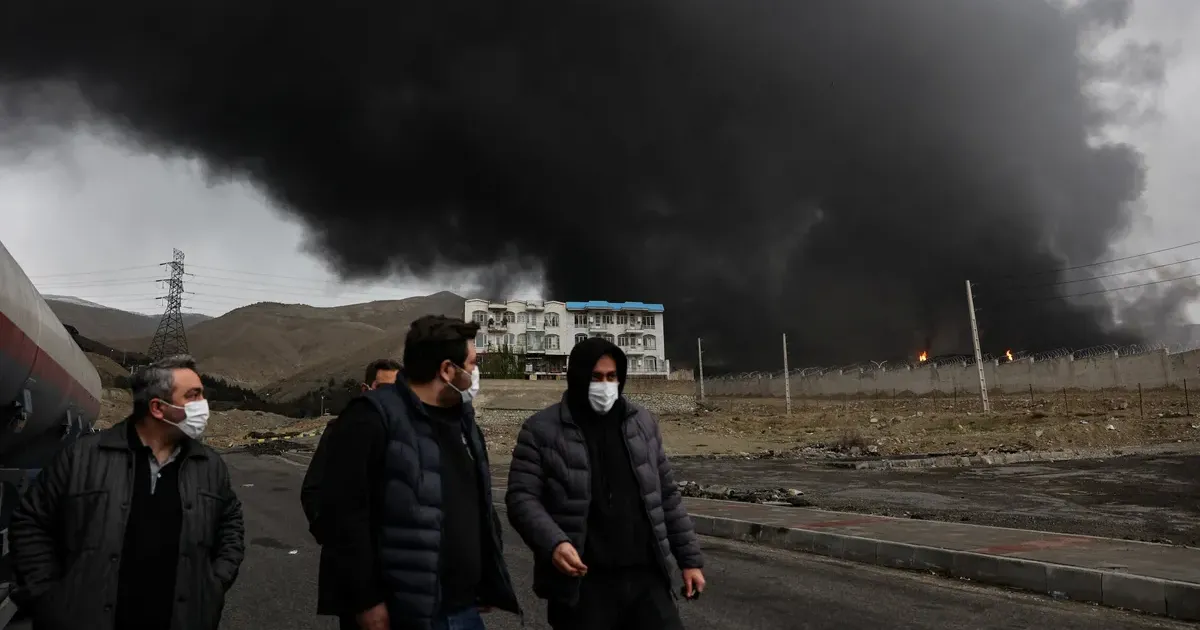
Control of the Strait of Hormuz remains the ultimate prize in this escalation. Iranian forces responded to the initial air strikes by targeting Israeli territory and U.S. bases with missile volleys. Fumes and smoke billowed from fuel tanks in Shahran, a direct consequence of the March 8 bombing recorded by Reuters.
Global markets watch these developments with intense anxiety. Supply chains for crude oil are under direct threat as both sides vie for dominance over the narrow shipping lanes. While the administration claims the war ended almost as soon as it began, the reality of a grinding war of attrition is setting in. Military analysts suggest that "finishing the job" may take months or even years of sustained presence.
Conflict dynamics are shifting as Iranian air defenses adapt to the initial wave of stealth operations.
War Planning Is Also Fiscal Policy
When does victory become indistinguishable from a fiscal and moral bankruptcy? Imagine a CEO celebrating a merger while the company's headquarters burns and the treasury bleeds dry. Such is the absurdity of Donald Trump's declaration of victory in Iran. Officials keep describing a short war, but the first seven days already produced a staggering $11.3 billion bill.
We are told the war ended before it truly began, yet the bill for the first seven days stands at a staggering $11.3 billion.
If this is winning, American taxpayers might prefer a loss. The administration's decision to scrap civilian protection protocols is not a strategic refinement; it is a regression into a style of warfare that creates two enemies for every one it kills. Using AI to target schools is a grotesque parody of technological advancement. It reveals a military leadership more enamored with the speed of its algorithms than the accuracy of its intelligence.
The Republican mantra to "finish the job" is an empty vessel designed to carry the pressure of a conflict without a defined exit strategy. We have traded precision for lethality and fiscal responsibility for a blank check. History will not judge this campaign by the flags planted or the speeches given. It will judge the hollowed-out treasury and the graveyards of children.
True power does not declare victory over the smoldering ruins of a schoolhouse while begging Congress for another ten billion dollars to keep the lights on in the cockpit.