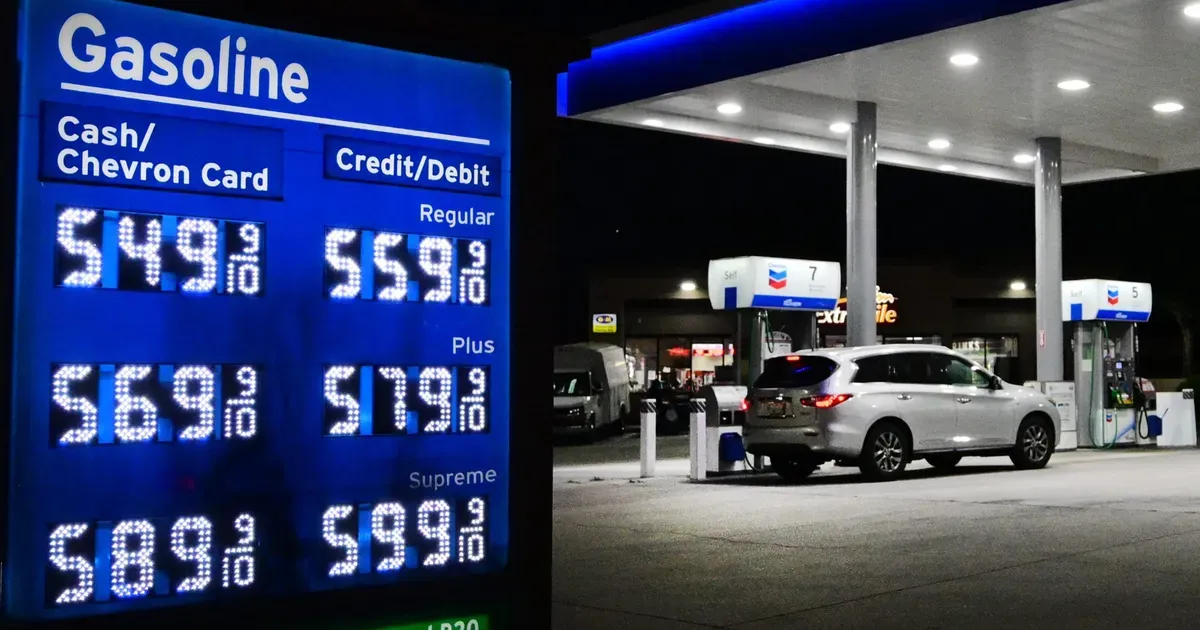
The Persian Gulf conflict is no longer only a military crisis; it is becoming a direct threat to the global economic order. The shock became harder to contain on March 11, 2026
Hormuz Turns Into an Inflation Machine
The latest phase marks a period of extreme volatility in global energy markets. Persian Gulf waters have become the center of a geopolitical storm that threatens to upend decades of economic stability. Oil tankers remain anchored or diverted as the blockade of the Strait of Hormuz enters its third week. Traders on the New York Mercantile Exchange watched in silence Monday as West Texas Intermediate crude briefly touched $120 a barrel. Markets are pricing in the very real possibility of a prolonged disruption that could reshape the fiscal outlook for the remainder of the decade. Energy traders are treating Hormuz as a global inflation trigger. Diane Swonk, chief economist at KPMG, views this volatility through the lens of chaos theory. She draws a parallel to the butterfly effect, suggesting that a single disruption in this narrow waterway can trigger a chain reaction felt in every American household. Swonk warns that the global economy cannot easily contain the fallout from a sustained conflict in Iran. Her Economic Compass report outlines two distinct paths for the coming months. One scenario, which Swonk labels the base case, assumes the war lasts only a few weeks. Under this projection, President Donald Trump relents by late March, allowing shipping lanes to reopen. Even then, a risk premium would persist. Production facilities across the region face potential damage that could take months to repair. Such an outcome would likely see inflation rise 3.3 percent by the final quarter of 2026.
Petrochemicals Carry the Shock Beyond Gasoline
A second, more dire scenario envisions a conflict dragging on for three to six months. If regional infrastructure suffers heavy damage, Swonk expects oil to soar past $130 per barrel. Prices would remain elevated for at least a year. Such a spike would drive core inflation to 4.1 percent. Experts have not seen numbers like that since the post-pandemic surge of 2023. Higher energy costs act as a regressive tax, hitting the lowest-earning households hardest while slowing industrial output across the globe. Petroleum serves as more than a source of transportation fuel. It acts as the fundamental chemical building block for the modern world. Crude oil contains a complex mixture of hydrocarbons that refineries transform into petrochemicals like ethylene, propylene, and benzene. These molecules are the DNA of the global manufacturing sector.
Refineries and chemical plants work in a delicate balance to separate these hydrocarbons. Ethylene is essential for producing polyethylene, the most common plastic in the world, found in everything from milk jugs to medical tubing. Propylene is the precursor to polypropylene, used in automotive parts and consumer packaging. Benzene provides the base for synthetic fibers and detergents.
Reserve Releases Cannot Fix a Physical Shortage
Disruptions at the source of these raw materials cause a cascade of rising costs throughout the supply chain. Plastics, fertilizers, and synthetic fibers all originate from these carbon-based chains. If the supply of crude remains constrained, the price of life-saving medicines and consumer electronics will inevitably climb. Farmers rely on oil-based fertilizers to maintain crop yields. Without affordable energy, the global food supply chain faces its own set of pressures.
Nitrogen-based fertilizers, produced largely using natural gas and petroleum derivatives, are the single most important input for global grain production. A shortage in the Persian Gulf effectively becomes a shortage on the dinner table in Chicago, London, and Tokyo. Jeff Currie, a prominent commodities strategist at Carlyle, remains skeptical that government intervention can fix the supply gap. The International Energy Agency recently announced a massive release from global strategic reserves. Currie argues this move will fail to halt the upward trajectory of prices.
He believes the market is pricing in a physical shortage that paper barrels cannot resolve. While Bloomberg suggests that strategic releases can provide temporary relief, Reuters sources claim that the volume currently being released is insufficient to offset the daily loss of exports from the region. Market participants are increasingly concerned that these reserves are being depleted without a clear plan for replenishment. Political leaders in London find themselves in a similar bind.
Manufacturing Learns the Price of Interdependence
The UK government is currently reviewing plans to raise fuel duties, a move that seemed certain just a month ago. Conservative leadership now faces accusations of planning a humiliating U-turn on the policy. High energy costs make any additional tax burden politically toxic for the Prime Minister. Public anger is mounting as utility bills and petrol prices reach record highs. The political cost of sticking to fiscal orthodoxy is becoming too high for a government already trailing in the polls.
Inflationary pressures are already weighing on consumer confidence. Families are feeling the pinch at the pump and in the grocery store aisle. The math simply does not work for those on fixed incomes. If energy costs stay at these levels, the broader economy faces a period of prolonged stagnation. Financial markets are reacting with predictable anxiety.
Defense stocks have surged while airlines and logistics companies see their valuations tumble. Investors are searching for safe havens, yet few assets provide protection against a global energy shock. Gold and certain tech stocks are seeing inflows, but the general sentiment remains cautious. Regional stability in the Middle East has always been the linchpin of global trade.
Why Energy Security Was Never Optional
Western leaders have spent the last decade indulging in the fantasy that they could legislate away their dependence on fossil fuels. They ignored the cold reality of geography and chemistry. While politicians in London and Washington pat themselves on the back for green energy subsidies, the actual physical infrastructure of the modern world still runs on carbon. You cannot build a hospital, manufacture a ventilator, or fertilize a field with a press release about net-zero targets. The blockade in the Strait of Hormuz is not just a geopolitical friction point, it is a brutal education in how the world actually functions.
We are seeing the inevitable consequence of a decades-long failure to prioritize energy security over political theater. Jeff Currie is right that reserve releases are a gimmick. They are a short-term sedative for a systemic illness. If the conflict in Iran persists, the global economy will face a reckoning that no amount of central bank tinkering can fix. We have traded reliable, affordable energy for a sense of moral superiority, and now the bill is coming due at $130 a barrel.
The middle class will pay that price in the form of ruined savings and a lower standard of living while the elites who designed this fragile system remain insulated in their boardrooms.