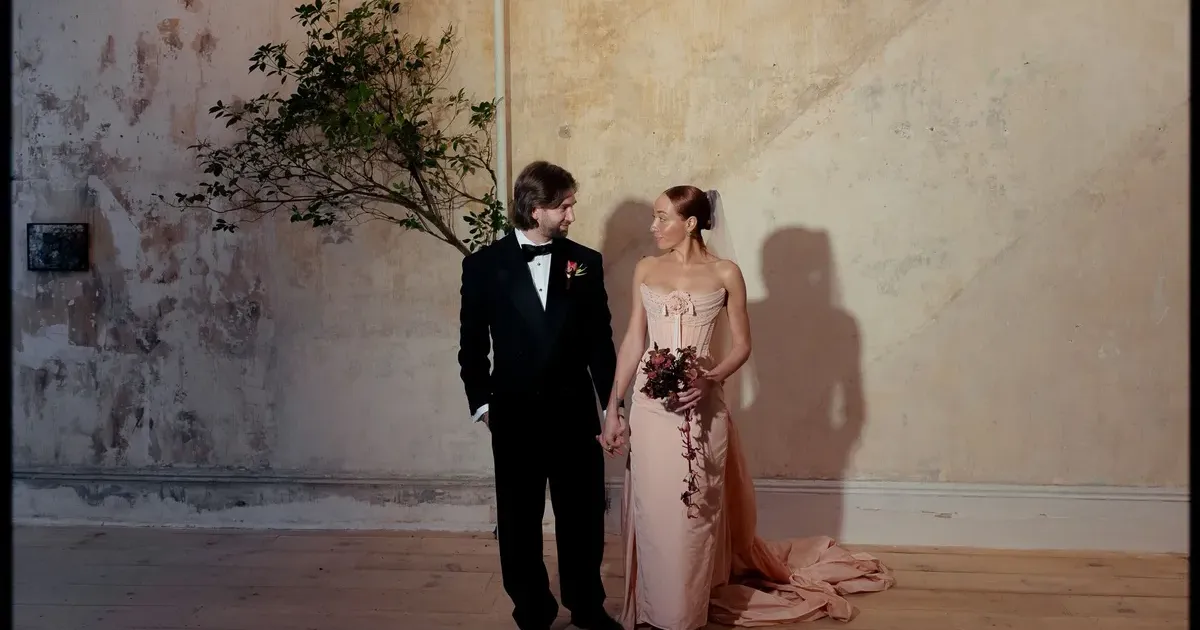
Olivia-Jene Fagon and Joshua Moses turned a Manhattan wedding into a moving fashion set piece, with a pink Wiederhoeft gown carrying the visual story from a downtown gallery to Rockefeller Center. The gown made the ceremony legible as a city story, not just a fashion image. The public timeline reached this point by March 28, 2026. The event unfolded in late March 2026 and drew attention less for celebrity excess than for how deliberately it rejected the standard white-dress, single-venue wedding formula. The gown gave the day its center of gravity. Wiederhoeft's corseted construction brought theatrical shape without treating the bride as static. That mattered because the wedding was designed around movement: guests, photographers and the couple shifted between New York backdrops that each offered a different frame.
Fagon and Moses also used the city in a way that felt specific rather than generically luxurious. A downtown gallery carries a different social code from Rockefeller Center, and the movement between them created a narrative of intimacy expanding into public spectacle. The wedding was therefore not only about a dress color. It was about how a couple edits the city around a private ritual.
Pink Bridal Design
The choice of pink was not a novelty color added for attention. It placed the wedding inside a broader bridal shift toward personal identity, editorial styling and independent designers. White remains dominant, but luxury clients increasingly want garments that read as character studies rather than inherited symbols.
Wiederhoeft's strength is construction. The corset, boning and silk gave the dress enough architecture to hold its line across a long day of travel, photographs and venue changes. That technical discipline kept the gown from becoming just a social-media object. It was fashion engineered for a city itinerary. The color also changed the photographic language of the day. Pink interacts differently with stone, glass and gallery light than traditional bridal white, softening some frames while standing out against Midtown's harder architecture. That made the garment useful across several settings, which is exactly what a multi-venue wedding requires.
The quote that best explains the label's appeal is the idea of the bride as protagonist. Fagon's gown worked because it gave the wedding a clear lead image without requiring every other element to compete with it.
Manhattan as Venue
Multi-site weddings are difficult in New York because the city does not pause for private milestones. Traffic, elevator schedules, sidewalk access and photography permissions all become part of the production. Fagon and Moses used that complexity as part of the design, moving from a contemporary gallery setting to the Art Deco weight of Rockefeller Center. The shift created contrast. The gallery gave the dress a clean modern field; Midtown gave it scale, height and public theatricality. Guests were not simply transported from ceremony to reception. They were moved through a curated version of Manhattan.
That kind of event carries real costs. Planners must duplicate staffing, coordinate transport and protect timing across multiple venues. The result can feel effortless only when the logistics are strict. In this case, the city functioned as both setting and collaborator.
The fashion value of the wedding also came from restraint around the central image. A colored bridal gown can easily turn every surrounding choice into competition, but the strongest multi-venue events usually work by establishing one visual lead and letting the rest of the production support it. In this case, the gown gave photographers continuity while the city supplied changing texture.
That coherence is why the event avoided feeling like a costume exercise. The dress, route and venues were not separate statements; they kept explaining one another as the day moved.
What the Wedding Signals
The deeper trend is the rise of the wedding as visual authorship. Couples with the means to do so are building ceremonies that resemble editorial shoots, brand campaigns and private performances. That can look excessive, but it also reflects a real change in how personal rituals are documented and remembered. There is a useful critique here. A wedding can become so optimized for images that the emotional center is crowded out by the production. Yet dismissing every nontraditional ceremony as vanity misses the point. Color, venue movement and designer choice can also be ways for a couple to reject a format that never felt like theirs.
Fagon's pink gown succeeds because it gives the day a coherent language. The risk is not that the dress was too theatrical. The risk is that the luxury wedding market will copy the surface of that theatricality without the specificity that made this one legible.
The most interesting part of the wedding is that it treats bridal tradition as material rather than instruction. The corset nods to history, the color breaks from the modern white-gown default and the Manhattan route turns geography into staging. None of those choices is radical on its own. Together, they show how a ceremony can borrow from convention while refusing to be governed by it.
That is why the event reads as a lifestyle story rather than only a fashion image. It reflects how affluent urban couples now think about memory, image, movement and hospitality. The dress mattered, but so did the route, the guest experience and the decision to let the city create friction instead of hiding it. A single-venue wedding can be elegant, but it rarely produces the same sense of narrative movement. Fagon and Moses used that movement to make the ceremony feel like a sequence rather than a tableau, which is why the pink gown became a thread connecting each location instead of a standalone image.