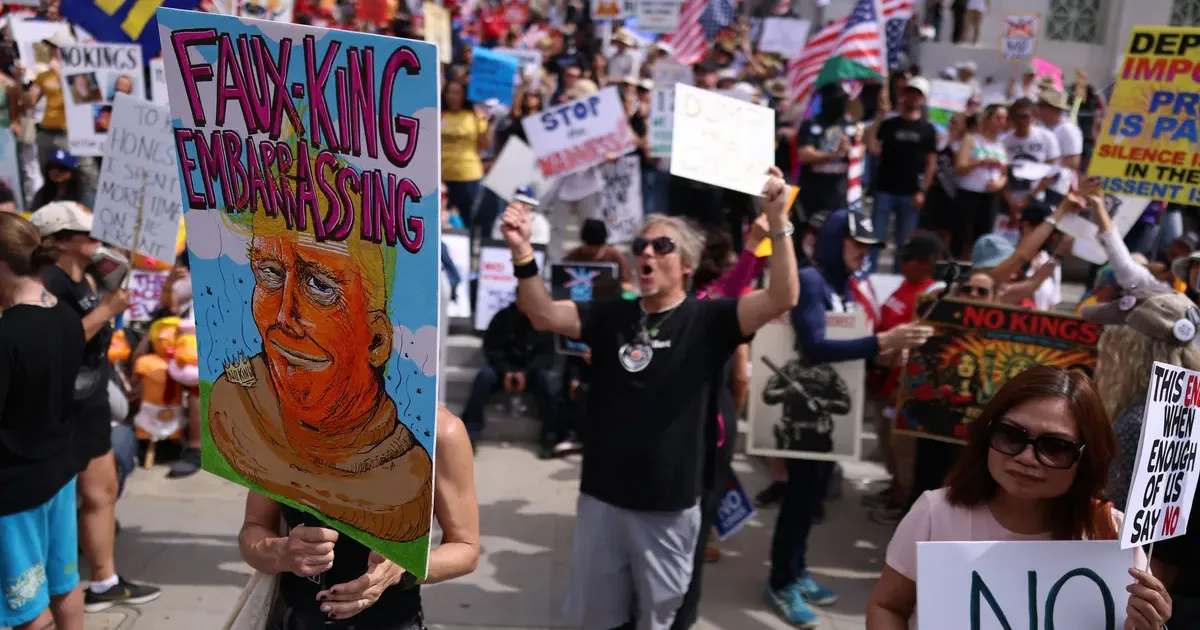
No Kings protests brought arrests, tear gas and renewed debate over crowd control after demonstrations spread across several U.S. cities. The most visible clash came in Los Angeles on March 29, 2026, near the Metropolitan Detention Center.
Police said the march began peacefully before a smaller group moved toward the federal facility perimeter. Commanders declared an unlawful assembly after warnings to disperse, while legal observers and protesters questioned whether the police response escalated the confrontation too quickly.
Los Angeles Clash Centers on Federal Facility
The Los Angeles Police Department deployed chemical agents after officers said protesters blocked access and some participants threw objects or damaged property. The existing internal link to broader Los Angeles police oversight remains relevant because use-of-force decisions are likely to face local review.
At least several people were taken into custody, with possible charges ranging from failure to disperse to assault-related allegations. Federal authorities may also review footage because protests near prisons, courthouses and detention centers can implicate specific obstruction statutes.
The location made the response difficult. Streets around federal buildings can create bottlenecks, limiting safe exit routes once police lines form. That geography can turn a disorderly protest into a more dangerous scene even when most participants are not directly involved in violence.
Other Cities Report Escalation
Portland and Dallas also reported unrest tied to the same movement. Portland police described property damage and used crowd-control tools near the justice center, while Dallas authorities said demonstrators blocked intersections and disrupted downtown activity. Arrest totals and charges may change as agencies review body-camera footage and social media video.
A demonstration near Mar-a-Lago unfolded differently. The West Palm Beach gathering was more theatrical than violent, with performance art, counter-protesters and a small boat presence in the Intracoastal Waterway. The contrast showed how the No Kings label can cover a wide range of protest styles, from street confrontation to symbolic spectacle. That variety makes broad claims risky. Some events remained mostly peaceful, while others produced clashes with police. The most accurate reading is that a decentralized movement created different outcomes depending on location, police posture, crowd behavior and proximity to sensitive sites.
Legal and Political Fallout
The legal aftermath will depend on evidence. Prosecutors will look for specific acts, not only the movement's rhetoric. Protesters accused of damaging property or trying to breach security lines face a different situation from those who were present but dispersed when ordered.
Civil liberties groups will focus on warnings, dispersal routes, proportionality and whether chemical agents were necessary. Police supporters will argue that federal facilities require a stronger perimeter, especially when crowds move toward entrances or detention infrastructure.
The political effect may be broader than the criminal cases. Images of tear gas and arrests can energize activists, but they can also alienate voters who see disorder rather than protest. Law enforcement agencies face the reverse problem: decisive action may protect property, yet heavy tactics can deepen distrust.
The No Kings protests therefore leave two questions. First, whether specific participants broke the law. Second, whether cities can manage high-tension demonstrations without turning every confrontation into a national symbol of either repression or chaos. Real-time video will shape both questions. Police body-camera footage, livestreams, drone images and cellphone clips can clarify sequences that were chaotic on the ground. They can also distort events when isolated moments circulate without the warnings, crowd movements or earlier confrontations that came before them.
After-action reviews should therefore look beyond arrest totals. Useful reports identify where march routes failed, whether dispersal orders were audible, how much time people had to leave and whether less intrusive tactics were available. Those details matter because protest rights are protected most effectively when cities plan for disorder without assuming every participant is a threat.
The court process will likely move more slowly than the politics. Some charges may be dropped, others may be reduced and a smaller number could become serious cases if prosecutors can tie defendants to violence or property damage. Until that evidence is sorted, the most responsible account is narrow: several cities saw escalation, the causes differed by location and the legality of individual conduct still has to be proven. That caution matters because protest stories often harden into symbols before facts are stable. Activists may use arrests as proof that dissent is being suppressed, while officials may use damaged property as proof that the entire movement is dangerous. Both claims can contain fragments of truth and still erase the differences between people, places and moments. The durable record will come from charging documents, oversight hearings and independent review, not only from the most dramatic video shared on the day of the march. The same standard should apply to police statements and activist claims. Both can describe part of the scene while omitting timing, location and behavior that change the legal meaning of what happened. A careful account keeps those distinctions visible until the record is complete. That patience is difficult in a polarized environment, but it is necessary if protest rights and public safety are both going to be judged honestly. The final record should be specific enough to separate peaceful presence, civil disobedience and criminal conduct.