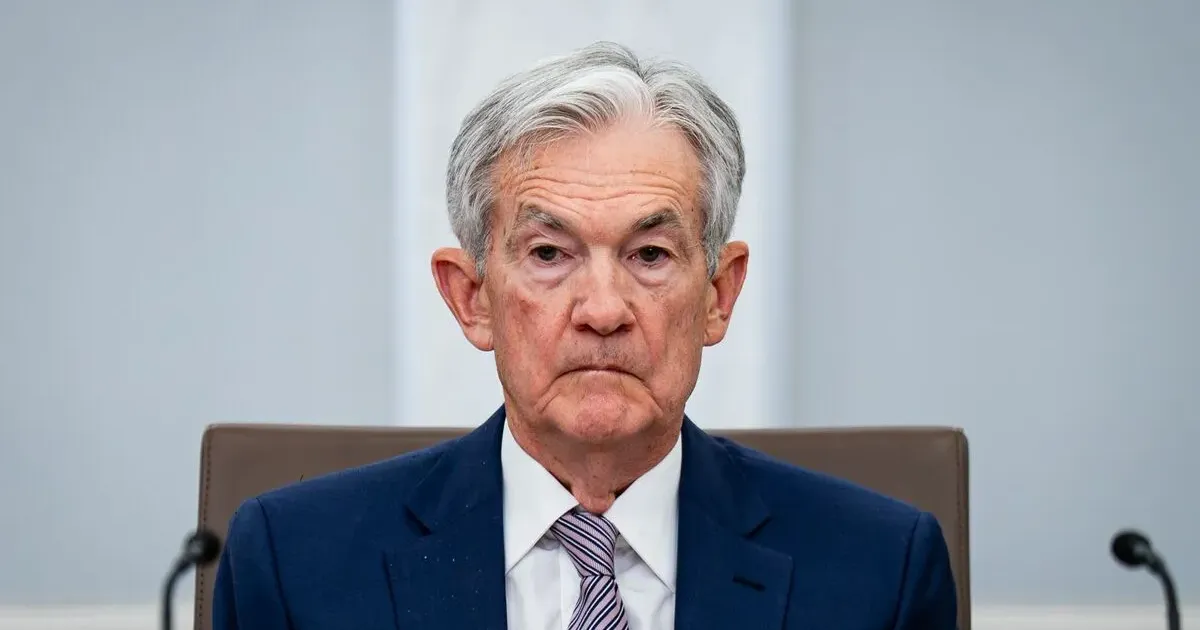
Jerome Powell addressed a crowded Washington ballroom on March 21, 2026, to mount a vigorous defense of the Federal Reserve against intensifying executive branch interference. Accepting an award for public service named after the late Paul Volcker, Powell used the platform to highlight the necessity of shielding monetary policy from the volatile cycles of national elections. The event took place during a period of renewed friction between the central bank and political leaders over interest rate paths.
Volcker remains the ultimate archetype of the stoic central banker.
Economic history is the primary backdrop for this confrontation. During the late 1970s and early 1980s, Volcker famously pushed interest rates to 20 percent to break the back of stagflation, a move that triggered a severe recession but eventually stabilized the American economy for decades. Powell noted that such decisions require a level of institutional autonomy that is currently under siege by populist rhetoric. Public service, in Powell’s view, requires the courage to be unpopular in the short term to secure long-term prosperity.
Volcker Award Ceremony in Washington
Bloomberg Economics reported that Powell spent much of his address detailing the specific policy victories of the Volcker era. By drawing a direct line between 1979 and 2026, the current chair sought to legitimize his own restrictive policy stance. While Bloomberg focused on the technical aspects of the Volcker record, the Financial Times noted the sharp contrast between Powell’s calls for integrity and the recent social media broadsides from the campaign trail. The Federal Reserve chair made no attempt to hide his disdain for the notion that interest rates should be used as tools for political expediency.
Institutional integrity requires a firewall between those who print the money and those who spend it. Powell argued that the removal of this firewall would lead to a loss of market confidence and a permanent increase in inflation expectations. He cited the 1951 Treasury-Fed Accord as the foundational moment that granted the central bank its modern mandate. Without that separation, the US dollar risks losing its status as the global reserve currency.
"The Federal Reserve's ability to make decisions based on long-term economic facts rather than short-term political considerations is essential for national prosperity," Powell said.
For instance, the Fed currently faces a delicate balancing act as it attempts to bring inflation back to its 2 percent target without crushing the labor market. Political actors frequently demand immediate rate cuts to stimulate growth, ignoring the risk of a secondary inflationary spike. Powell pointed to the mid-1970s as a cautionary example of what happens when a central bank capitulates to executive pressure. Prices spiraled out of control because the Fed, under Arthur Burns, lacked the resolve to maintain high rates in an election year.
Trump Escalates Attacks on Interest Rate Policy
Donald Trump has recently intensified his criticism of the central bank, frequently posting on his social media platform that the current rate environment is a deliberate attempt to sabotage his economic platform. These attacks have moved beyond simple disagreement over data and into the area of institutional delegitimization. Trump has suggested that the president should have a direct say in the setting of the federal funds rate, a proposal that has unsettled global bond markets. Yields on 10-year Treasury notes fluctuated following these statements as investors priced in the risk of a politicized Fed.
Yet Powell remains steadfast in his refusal to engage directly with the former president’s rhetoric. Instead, he uses historical proxies like Volcker to communicate his message. By praising a man who was hated by both parties during his tenure but revered by history, Powell is signaling his willingness to endure a similar period of public vilification. The 1980s recession saw farmers driving tractors to the Fed’s headquarters in protest, yet Volcker did not blink. Powell’s speech suggests he is prepared for a similar level of domestic discord.
Meanwhile, Congressional oversight is still a secondary front in this struggle for autonomy. Several lawmakers have introduced bills that would subject the Fed’s interest rate decisions to immediate audits or legislative review. Such measures would effectively end the independence of the FOMC. Powell’s defense of the Volcker legacy is a pre-emptive strike against these legislative efforts. He maintains that a central bank subject to the whims of a 435-member body cannot provide the stability required for capital investment.
Central Bank Independence and Institutional Integrity
Independence is not a privilege for the bankers but a protection for the public. Powell emphasized that an independent Fed is the only entity capable of taking the "punch bowl" away just as the party gets going. This analogy, first used by William McChesney Martin Jr. Remains the standard definition of the Fed's counter-cyclical role. When politicians demand lower rates during a boom, they are effectively asking the Fed to fuel an eventual crash. The current board appears determined to resist this pressure regardless of the electoral consequences.
In fact, the credibility of the central bank is its most valuable asset. If the public believes the Fed will always focus on the next election over the next decade, inflation expectations will become unanchored. Once that happens, the cost of bringing inflation down increases exponentially. Powell’s speech on March 21, 2026, was designed to reassure the markets that the "Volcker moment" is not just a historical curiosity but a living principle of the current regime. He described the central bank as an anchor in a sea of fiscal volatility.
Still, the pressure is not coming only from one side of the aisle. Both parties have shown an increasing appetite for using the Fed’s balance sheet to fund social or industrial projects. From green energy initiatives to infrastructure bonds, the calls for the Fed to move beyond its dual mandate of price stability and maximum employment are growing louder. Powell’s focus on Volcker serves to narrow the scope of the Fed’s mission back to its core functions. He is rejecting the idea of the central bank as a Swiss Army knife for all of society’s problems.
Historical Precedents for Executive Interference
Historical records indicate that the relationship between the White House and the Fed has always been one of managed tension. Richard Nixon famously pressured Arthur Burns to keep rates low ahead of the 1972 election, a move that many economists believe set the stage for the Great Inflation. Burns, despite his brilliance, eventually succumbed to the pressure. The result was a decade of economic misery that was only solved when Volcker was appointed by Jimmy Carter and later supported by Ronald Reagan. Powell is positioning himself as the successor to the latter tradition rather than the former.
Separately, the international community is watching this American drama with mounting concern. Central bank independence is a hallmark of developed economies, and any erosion of that norm in the United States would likely trigger a domino effect across the G7. The European Central Bank and the Bank of England both operate under mandates that focus on price stability above all else. If the Fed becomes a political arm of the White House, the coordinated global effort to maintain financial stability would collapse. Powell alluded to this international responsibility during his closing remarks.
The cost of failure is a return to the erratic volatility of the 1970s.
To that end, the Federal Reserve continues to reduce its balance sheet through quantitative tightening while maintaining a restrictive federal funds rate. This policy remains unpopular with homeowners facing high mortgage rates and small businesses struggling with credit costs. But Powell’s March 21, 2026, appearance was a reminder that he views these costs as a necessary price for a stable currency. He ended the night not with a promise of relief, but with a reaffirmation of duty. The 1970s taught the world that there are no shortcuts to a healthy economy.
The Elite Tribune Perspective
Democracy and technocracy have reached a friction point that no amount of central bank jargon can lubricate. Jerome Powell’s canonization of Paul Volcker is more than a history lesson; it is a calculated act of institutional defiance against an executive branch that views every independent body as a personal obstacle. While the Fed prides itself on being above the fray, its monkish isolation is an increasingly fragile fiction at a time of total political warfare.
The central bank's claim to be a neutral arbiter of the economy is a convenient myth that only survives as long as both political parties agree to believe it. That consensus has evaporated. Donald Trump is not wrong to observe that the Fed has immense power over his political fortunes; he is simply the first modern leader to say it out loud without shame. However, the alternative to a flawed, independent Fed is a catastrophic return to the days when the money supply was a campaign donation in disguise.
If the public must choose between the cold, data-driven austerity of Jerome Powell and the whimsical, self-serving volatility of a politicized Treasury, the choice remains clear. Independence is the only barrier between the American dollar and the fate of the Argentine peso.