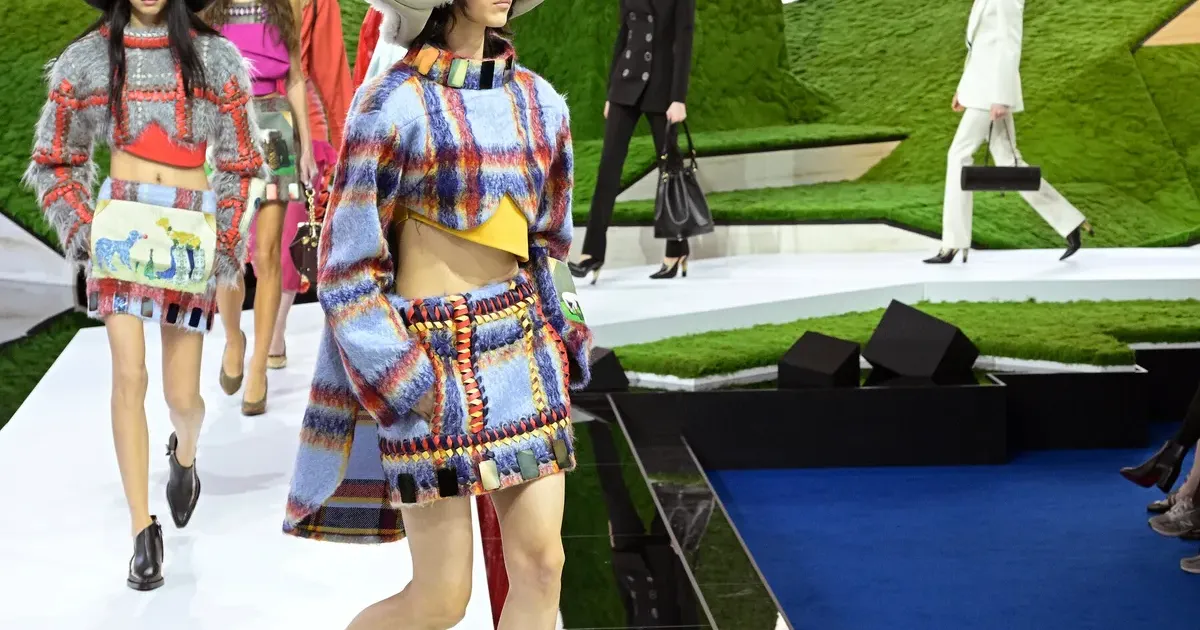
Miuccia Prada's Miu Miu show made ease feel powerful in Paris while Louis Vuitton leaned into a more complex, heavier kind of fashion argument.
The Tale of Two Paris Runways
Rain slicked the cobblestones outside the Palais d'Ina as the fashion elite gathered for the final act of Paris Fashion Week. The report was published March 11, 2026, as the issue drew renewed attention. Miuccia Prada understood the assignment. Nicolas Ghesquire, her counterpart at the world's largest luxury house, seemingly ignored the syllabus. Every season, the industry looks for a North Star to guide the wardrobes of the global wealthy, yet this year provided two wildly divergent paths. Prada offered a collection for Miu Miu that felt like a long-awaited exhale. Ghesquire, conversely, presented a Louis Vuitton show that felt like a geometry exam. Critics noted the immediate difference in the room's energy. Miu Miu has spent the last three years climbing to the top of the Lyst Index, fueled by a relentless focus on what women actually want to wear while walking their dogs or attending board meetings. Prada's genius lies in her ability to take mundane items, such as a gray cardigan or a simple nylon skirt, and imbue them with enough intellectual curiosity to justify the four-figure price tag. Her Fall/Winter 2026 collection doubled down on this accessibility. Models walked with hands in pockets, wearing layers that looked thrown together with the confident indifference of a woman who has more important things to do than check a mirror. Innovation often demands friction, but Prada suggests that true luxury should remove it. Vuitton took the opposite route. Ghesquire has always been a futurist, a designer obsessed with the intersection of 19th-century silhouettes and 22nd-century technology.
His latest effort featured rigid, structured bodices that looked more like carbon-fiber plating than clothing. Shoulders were exaggerated to the point of absurdity, creating a silhouette that felt trapped between a suit of armor and a satellite dish. While the craftsmanship remained undeniable, the utility was nowhere to be found. A woman cannot sit comfortably in a car while wearing a Ghesquire exoskeleton, nor can she easily move through a crowded airport lounge.
The Burden of Intellectual Fashion
Fashion serves many masters, including art, commerce, and ego. Ghesquire seems to be serving the latter two with increasing intensity, often at the expense of the first. His work at Louis Vuitton has become a sanctuary for the over-engineered. He uses stiff leathers and neoprene blends that resist the natural movement of the human body. One specific look featured a skirt so heavily embroidered with metallic shards that the model appeared to struggle with each step.
Such designs look spectacular in a glossy magazine spread or a curated social media post, but they fail the reality of the sidewalk. Buyers looked on with a mix of awe and exhaustion. A collection that requires a manual to put on is a hard sell in an era where time is the ultimate luxury. Prada's Miu Miu, meanwhile, relied on soft wools, breathable cottons, and silhouettes that hugged rather than constrained. She embraced the messy reality of 2026.
Her models wore mismatched buttons and slightly rumpled collars, a nod to the fact that perfection is a boring, outdated goal. She made dressing look easy because she allowed the clothes to be secondary to the person wearing them. Some called the Vuitton collection a triumph of imagination, but imagination without wearability is just a costume. The complexity also appears to be a deliberate attempt to push Vuitton away from the quiet-luxury uniform that has dominated the market. By creating clothes that are difficult to wear, he creates an elite tier of fashion that is also difficult to mimic.
Ghesquire's insistence on complexity may stem from a desire to distance Vuitton from the sea of quiet luxury that has dominated the market.
Still, the gap between his vision and the consumer's needs has never felt wider. When a jacket has sixteen zippers and a collar that obscures the wearer's vision, the design has transitioned from a garment to an obstacle. Prada, by contrast, uses her Miu Miu platform to simplify the lives of her clientele. She understands that a high-net-worth individual is often the most stressed person in the room. Why would they want their clothing to add to that tension?
Sales figures from the previous fiscal year indicate that the "ease movement" is more than a fleeting aesthetic. Brands that prioritize comfort and intuitive dressing have seen consistent growth, while those pushing for structural experimentation have plateaued. Prada's personal brand has become synonymous with a specific type of effortless intellectualism. She does not ask her customers to sacrifice their comfort for her art. Instead, she makes her art comfortable.
This strategy has paid off, as Miu Miu continues to capture the Gen Z and Millennial markets with products that feel authentic rather than manufactured. Louis Vuitton remains a behemoth, buoyed by its massive leather goods division, but the ready-to-wear line feels increasingly isolated. Ghesquire's tenure has lasted over a decade, an eternity in the modern fashion cycle. During this time, he has built a loyal following of enthusiasts who love his sci-fi aesthetic. Yet, the broader audience seems to be drifting toward the Prada camp.
They want the oversized coats and the lived-in leather boots that Miu Miu offers. They want clothes that look better as they age and wrinkle. Ghesquire's clothes do not wrinkle, they simply break. Every garment tells a story, and Ghesquire's story is getting too long and complicated for the average reader. Prada's success at Miu Miu also highlights a generational shift in how luxury is perceived.
Younger collectors value the ability to move through different spaces, from a coffee shop to a gallery to a late-night dinner, without needing a wardrobe change. Miu Miu facilitates this fluidity. Vuitton, with its rigid structures and heavy materials, demands a specific context that rarely exists in a busy life. The friction in Ghesquire's work is intentional, but it is also alienating. When fashion becomes a chore, it loses its magic.
Why Ease Beat the Puzzle
Why do we still pretend that fashion must be a puzzle to be profound? The obsession with Ghesquire's "difficulty" is a lingering symptom of an industry that confuses complexity with quality. We have been conditioned to believe that if a dress is hard to wear, it must be art, and if it is easy to wear, it is merely a commodity. This is a lie designed to protect the fragile egos of designers who have lost touch with the human form. Miuccia Prada is currently the most important designer in the world because she is the only one brave enough to be simple.
She treats her customers like adults with lives to lead, while Ghesquire treats them like mannequins for his futuristic fantasies. The luxury market is at a crossroads where the consumer is finally demanding utility alongside their status symbols. If Louis Vuitton continues to prioritize the runway spectacle over the reality of the wardrobe, it will eventually become a museum piece rather than a living brand. Fashion should be a tool for living, not a cage. Prada has unlocked the door, while Ghesquire is still busy adding more locks.