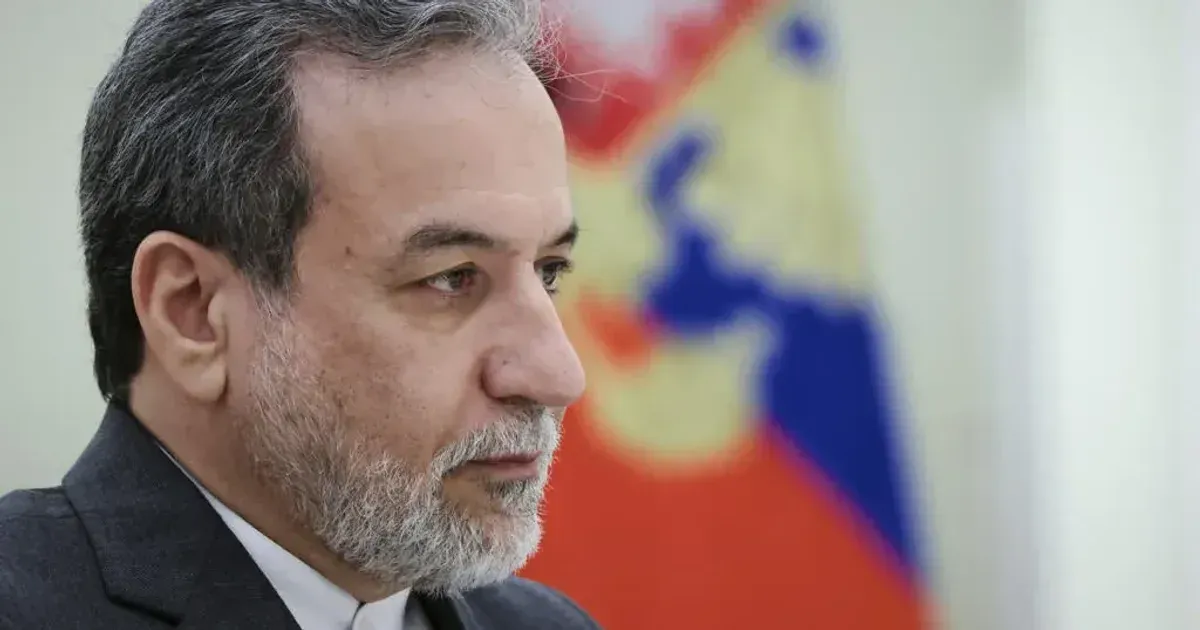
The St. Petersburg meeting between Vladimir Putin and Abbas Araghchi placed Iran diplomacy inside Russia’s security calendar. Moscow is presenting itself as a power broker while the Gulf conflict strains Western alliances. For Tehran, the visit offers a way to show it still has high-level channels beyond the immediate battlefield. Abbas Araghchi reached St. Petersburg on April 27, 2026, to engage in high-level security consultations with Russian President Vladimir Putin. This diplomatic mission by Iran's foreign minister signaled a deliberate effort to synchronize the geopolitical strategies of two nations increasingly isolated by Western financial restrictions. Moscow and Tehran have deepened their logistical and military cooperation over the last three years, creating a parallel economic system that bypasses traditional dollar-denominated trade. Iranian state media indicated the discussions prioritized maritime security and the acceleration of the International North-South Transport Corridor. Araghchi arrived at the Pulkovo Airport under heavy security and moved immediately to the summit venue in the historic city center.
Kremlin Spokesman Dmitry Peskov confirmed the schedule during a brief press conference, noting that the Russian leader intended to review the specific mechanics of regional defense pacts. Russia and Iran currently share a common objective in reducing American influence across the Levant and the Persian Gulf. Their bilateral trade reached a record high of $20 billion in the previous fiscal year, driven largely by energy swaps and agricultural exports. Military analysts suggest the meeting also touched on the finalized delivery of Sukhoi Su-35 fighter jets to Tehran. Iranian officials have sought these advanced air assets to modernize an aging fleet that has faced maintenance challenges due to the enduring arms embargo.
Russian state media reported that the two leaders spent several hours discussing the current stalemate in nuclear negotiations and the shifting alliances within the Shanghai Cooperation Organization. Both nations have used their mutual grievances with the G7 to form a bloc that promotes a multipolar world order. Diplomatic cables recently leaked from the region suggest that Moscow has increasingly relied on Iranian drone technology to replenish its stockpiles. Tehran, in exchange, has received technical assistance for its domestic satellite program and cyber-security infrastructure. The resilience of the Russo-Iranian partnership has surprised some Western observers who predicted the alliance would crumble under the weight of competing oil interests.
St. Petersburg Summit and Sanctions Coordination
Sanctions coordination formed a central foundation of the dialogue between Abbas Araghchi and the Russian leadership on Monday. Moscow's expertise in navigating the SWIFT banking ban has provided a blueprint for Iranian financial institutions looking to stabilize the rial. Both capitals are currently working on a unified digital currency pilot program to enable cross-border transactions without Western oversight. Looking back at the 2024 economic summit, the progress on these integrated payment systems has accelerated sharply. Financial data show that over 40% of their trade is now conducted in rubles or rials. Central bank officials from both countries met in a separate session to finalize the integration of the Russian Mir payment system with the Iranian Shetab network.
Energy cooperation beyond simple extraction dominated the afternoon session between the technical delegations. Russia has committed to investing in Iranian gas fields located in the South Pars region, a move that directly challenges the dominance of European energy majors. Such investments involve complex technology transfers that Iran cannot source from the West. Beyond the immediate financial gains, these projects secure Russia’s role as a primary arbiter in the global gas market. Intelligence reports indicate that the two nations are also exploring a joint venture for a liquefied natural gas facility on the coast of the Gulf of Oman. Every diplomat present at the summit emphasized that these projects are designed to withstand any future changes in the American political climate.
Security was tightened across the northern capital as the talks expanded to include intelligence sharing on non-state actors in the Middle East. Moscow maintains a delicate balance with various regional powers, but its tilt toward Tehran has become more pronounced since the onset of the conflict in Ukraine. Western intelligence services have monitored increased cargo flights between the two countries, often carrying sensitive dual-use components. These logistics networks have proven strikingly resistant to interdiction. Iranian drones continue to play a role in global conflicts, showcasing the effectiveness of the joint production facilities established in the Tatarstan region of Russia.
Military exports from Tehran to Moscow have provided the Iranian treasury with an essential stream of hard currency during periods of intense domestic inflation.
Abbas Araghchi Addresses Regional Ceasefire Prospects
Araghchi used the St. Petersburg platform to articulate Tehran's stance on the escalating violence across the Middle East. He emphasized that any lasting peace must involve the total withdrawal of foreign forces from sovereign territories. Russia has positioned itself as a mediator in these conflicts, though its neutrality is frequently questioned by Israeli and Arab officials. Tehran views the Russian presence in Syria as a necessary buffer against Western-backed groups. Consultations on Monday included a detailed review of the ceasefire conditions currently being debated in international forums. Araghchi insisted that regional security must be managed by regional actors, a recurring theme in Iranian foreign policy for decades.
Iranian Foreign Minister Abbas Araghchi used the consultations with Russian authorities to address the current talks, ceasefire efforts and broader developments around the conflict in the Middle East.
Consultations between the two sides also addressed the humanitarian crises emerging from the protracted fighting in Lebanon and the Gaza Strip. Moscow has frequently hosted delegations from various Palestinian factions, attempting to broker a unified front that aligns with Iranian interests. Araghchi’s visit follows a series of stalled negotiations in Cairo and Doha where US-led efforts failed to produce a breakthrough. Tehran’s delegation presented a plan for regional de-escalation that involves specific guarantees for non-state allies. This strategy seeks to preserve the influence of the Axis of Resistance while avoiding a direct confrontation with American naval assets in the Red Sea. Moscow's role in this plan involves providing diplomatic cover at the United Nations Security Council.
St. Petersburg officials noted that the visit coincided with a period of heightened tensions between Iran and the International Atomic Energy Agency. Araghchi sought Russian support to prevent a censure resolution at the upcoming board of governors meeting in Vienna. Moscow has historically used its veto power and diplomatic influence to shield Tehran from the most severe consequences of its nuclear program expansion. The two nations are currently discussing a new framework for technical cooperation that would allow Iran to continue its enrichment activities under Russian supervision. Several analysts believe this arrangement is a preemptive move to counter any "snapback" of sanctions. Cooperation on civil nuclear energy remains an essential component of their long-term strategic plan.
Trump Offers Direct Communication Line to Tehran
Across the Atlantic, Donald Trump commented on the growing proximity between Russia and Iran during a press event in the United States. He suggested that the current diplomatic vacuum has pushed Tehran further into Moscow's orbit, a development he claims could have been avoided. Trump stated that Iranian leaders could call him directly if they wished to negotiate a new deal. This offer of direct communication stands in contrast to the rigid, multi-layered diplomacy favored by the current administration. Tehran has reacted with skepticism to such overtures, citing the 2018 withdrawal from the JCPOA as a reason for their lack of trust. Araghchi did not publicly respond to Trump's comments during his meetings in St. Petersburg.
Trump told reporters that his previous "Maximum Pressure" campaign was designed to bring Iran to the table on his terms. He argued that the lack of direct dialogue has allowed Russia to gain a strategic foothold in the Persian Gulf. Within the Republican Party, opinions on this approach are divided, with some hawks demanding stricter enforcement of existing sanctions. While Al Jazeera reported that the phone call offer was a tactical move to destabilize the Russia-Iran alliance, the Kremlin has dismissed such suggestions as political theater. Russian officials believe their relationship with Tehran is now institutionalized beyond the reach of individual Western leaders. The Iranian leadership continues to prioritize its Eastern pivot as a safeguard against American electoral volatility.
International observers note that the prospect of a direct Trump-Tehran channel could fundamentally alter the calculations of the Russian foreign ministry. Putin has benefited from being the primary intermediary for Iran on the world stage. If Tehran were to engage in direct talks with Washington, Moscow's leverage would diminish. Despite this possibility, Araghchi’s presence in St. Petersburg reinforces the idea that the Iran-Russia axis is the current priority for the Islamic Republic. Iranian officials have consistently argued that Western promises are unreliable and that permanent alliances must be built with neighboring Eurasian powers. The summit concluded with the signing of a comprehensive partnership agreement that formalizes cooperation across twelve distinct sectors of the economy.
Moscow and Tehran Are Building a Shadow Order Beyond Western Reach
Does the St. Petersburg summit represent a genuine strategic alliance or a desperate union of the sanctioned? The reality is more cynical than the official communiqués suggest. Russia is not an ally of Iran in the traditional sense; it is a transactional partner that views Tehran as a useful disruptor of Western interests. By hosting Araghchi, Putin sends a message to Washington that he controls the keys to Middle East stability. It is a game of leverage where Iran is the primary pawn. Tehran, by contrast, is using Moscow as a shield to buy time for its nuclear program. They are not building a new world order so much as they are constructing a fortress for their own survival.
Trump’s offer of a phone call is a classic disruptive tactic that preys on Iranian internal divisions. There are elements within the Iranian reformist camp that would jump at the chance for direct talks to ease economic pressure. However, the hardliners in the Revolutionary Guard are now so deeply integrated with the Russian military apparatus that a pivot back to the West seems nearly impossible. The $20 billion in trade and the Su-35 deal are anchors that tether Tehran to Moscow. Any attempt by Trump to break this bond with a phone call underestimates the depth of the structural integration currently taking place in the Eurasian heartland.
The West is losing its ability to dictate terms through financial isolation alone. When two sanctioned powers decide to build a shadow economy, the traditional tools of statecraft become obsolete. Moscow and Tehran have realized that as long as they have each other, they don't need the West. It is the new reality of the 21st century. The era of the single superpower is over.