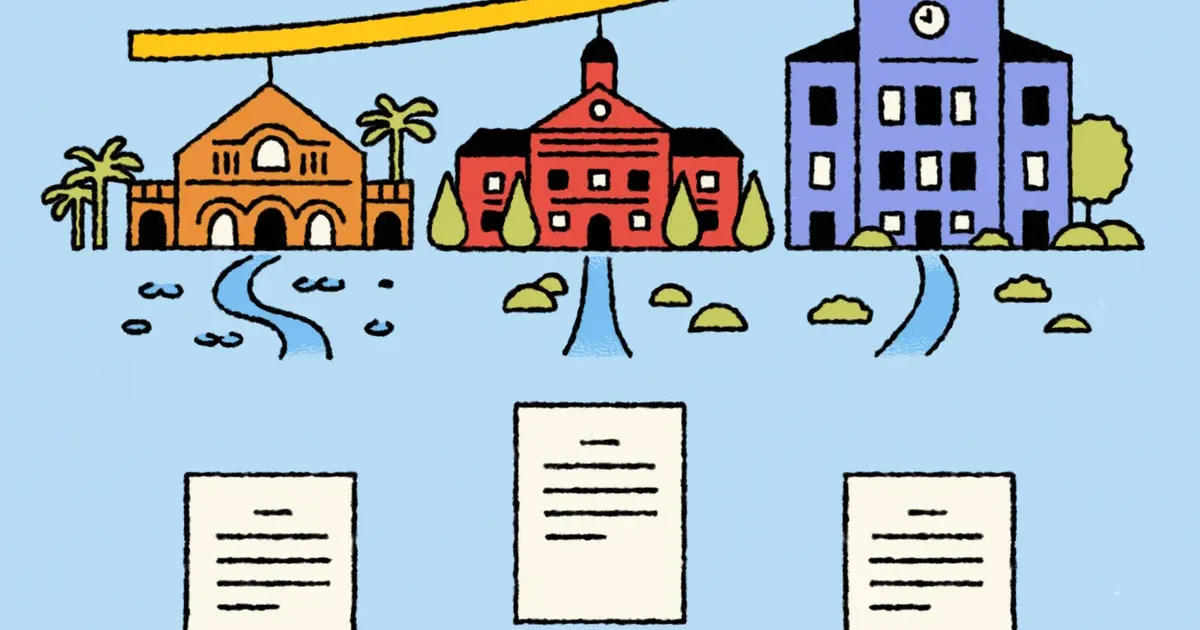
Record application volume is challenging the claim that universities are dying while showing why smaller campuses cannot catch the same momentum. The admissions split became harder to dismiss on March 11, 2026.
Applications Surge at the Top
The admissions cycle began like any other spring morning for high school seniors across the United States, yet the tension in suburban living rooms reached a fever pitch. Acceptance notifications from the nation's most prestigious institutions began flooding inboxes, revealing a statistical reality that many pundits failed to predict. Even as news cycles remain dominated by stories of declining enrollment and the supposed death of the four-year degree, the actual numbers tell a different story. Elite colleges are seeing their highest application volumes in history, creating a bottleneck that has pushed acceptance rates into the low single digits. Critics who claimed the American university was a relic of the past are now forced to reckon with a surge of interest that defies economic logic. Enrollment managers at top-tier schools describe an environment of hyper-competition that seems disconnected from the closing of small liberal arts colleges in the Midwest. Federal data and recent reports from the Common Application confirm that students are not abandoning higher education. Rather, they are concentrating their bets on a handful of winners. Some analysts believe this concentration is a defensive move against an uncertain labor market. Many families view a degree from a recognized brand as the only surviving form of social insurance, while elite demand rises and weaker campuses fight for oxygen.
Ivy League schools, along with their selective peers in the Public Ivy category, have seen double-digit increases in unique applicants compared to five years ago. Still, the disparity between the haves and the have-nots in the education sector has never been wider. Applications are pouring into schools with multi-billion-dollar endowments, while tuition-dependent regional colleges face an existential threat.
Prestige Becomes an Insurance Policy
One could argue that the university system is not dying, but undergoing a violent consolidation. These elite institutions are no longer just places of learning. Every application is bid for a place in a global network of prestige and influence. When Harvard or Stanford releases its data, the numbers often show that for every student admitted, twenty others with near-perfect credentials were turned away. Wealthy families view these applications as a necessary gamble.
Scarcity has become the ultimate marketing tool. Smaller colleges that lack a national profile are the ones bearing the brunt of the narrative of decline. Private institutions in rural areas have struggled to maintain their student bodies as the demographic cliff of 2026, a sharp drop in the college-aged population resulting from the 2008 financial crisis, finally arrives. Public state systems are also feeling the pinch, though they remain the primary destination for the majority of American students. While the total number of individuals attending college has dipped slightly on a national level, the intensity of the application process at the top of the pyramid has increased exponentially.
This tension defines the modern educational experience: a race to the top for the few and a struggle for survival for the many. Schools like Northeastern University or the University of Southern California have mastered the art of driving up application numbers to lower their acceptance rates, a tactic that improves their standing in various rankings. Selective admissions have become a self-fulfilling prophecy.
The Middle of Higher Education Hollows Out
If a school is hard to get into, students believe it must be valuable, which leads to more applications, which makes it even harder to get into. Technology has played a significant role in this surge. Common Application platforms make it possible for a student to apply to twenty schools with a few clicks. One student in New Jersey recently documented her journey of applying to 45 different colleges, a feat that would have been physically and financially impossible twenty years ago. Since most of these schools require an application fee, the process has also become a massive revenue generator for the institutions themselves.
Financial aid remains the elephant in the room. Families are increasingly skeptical of the sticker price of a degree, which can now exceed $95,000 per year at some private institutions. Debt is a primary concern for the Gen Z and Gen Alpha cohorts who are now entering the system. Why, then, do they continue to apply in record numbers? Economic data suggests that the wage gap between those with a degree and those without has remained stubbornly large.
Despite the rise of skills-based hiring in the tech sector, major employers still use a college degree as a baseline filter for entry-level white-collar roles. Wages for college graduates continue to outpace those of their peers by a wide margin over a lifetime.
Why College Is Not Dying Evenly
Stop pretending that a university degree is merely an educational tool. The current surge in applications is not a vote of confidence in the quality of American instruction, but a desperate scramble for the last remaining lifeboats in a sinking economy. We have allowed our educational system to devolve into a high-stakes lottery where the prize is an entry ticket to the dwindling middle class. The obsession with prestige and brand-name institutions is a rational response to an irrational market that no longer values labor unless it is stamped with a seal of approval from a four-year finishing school. That is not the death of college.
It is the birth of an educational aristocracy where the barrier to entry is either extreme academic performance or extreme wealth. We are watching the consolidation of intellectual and social capital into a few dozen zip codes. If we continue to treat the degree as a mandatory prerequisite for a dignified life, we will only ensure that the application frenzy grows more frantic and more exclusive every year. The tragedy is not that colleges are dying, but that they have become too important to fail, yet too expensive to sustain for the average citizen.