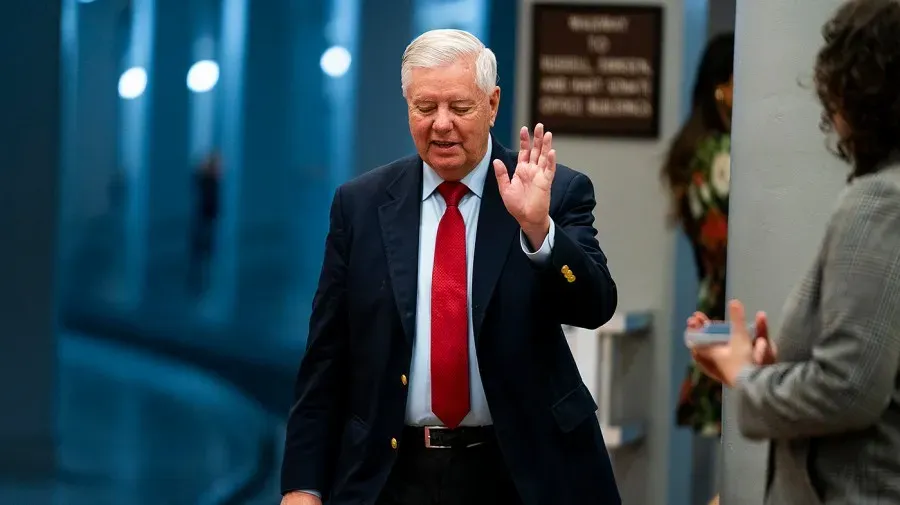
The Middle East bombardment exposed the widening crack inside the Republican Party between foreign-policy discipline and pressure from the base. The split became harder to hide on March 11, 2026.
GOP War Consensus Starts to Crack
Senator Lindsey Graham found himself isolated within his own party as the offensive in Iran entered its most volatile phase. Republican colleagues who once stood in lockstep on foreign policy now voice sharp dissent. Pressure from the populist wing of the party has turned a long-standing hawkish consensus into a battlefield of ideological contradictions. Senator Graham, a perennial advocate for military intervention, faced a barrage of criticism from lawmakers who see this latest conflict as a departure from the non-interventionist promises made during the last campaign cycle. Critical shipping lanes remain blocked, and the domestic political price is rising. Washington remains gripped by the realization that military action carries consequences far beyond the immediate tactical objectives. Oil markets reacted with predictable volatility. Analysts point to the closure of the Strait of Hormuz as the primary driver of global economic anxiety. While the administration insists the blockade is temporary, the reality on the water suggests a much longer period of disruption for global trade. Anthony Scaramucci, the former White House communications director, offered a surprisingly optimistic take on the economic fallout. He suggested that gas prices could see a significant drop within weeks of the bombardment ending. Scaramucci, often a vocal critic of the current administration, noted that a swift de-escalation could restore market confidence.
Hormuz Turns Strategy Into Inflation
The political cost of the bombardment moved from cable studios to gas prices, turning an ideological fight into a household-budget problem.
He argued that the current price spikes reflect fear rather than a permanent loss of supply. His comments highlight a rare point of agreement between the establishment and its critics, yet they rely on the assumption that the conflict will resolve quickly. Many in the energy sector remain skeptical of such a tidy conclusion. Crude oil prices surged as news of the strait's closure reached Western capitals. Jake Sullivan, the former national security adviser, accused the administration of having no plan to reopen this key maritime artery.
Sullivan spoke on MS NOW's Morning Joe, where he described the lack of a maritime strategy as a glaring oversight. He noted that the U.S.-Israeli offensive directly triggered the Iranian decision to shutter the passage. Sullivan argued that the administration was caught unprepared for a predictable Iranian response. Global shipping companies have already begun rerouting vessels around the Cape of Good Hope, adding weeks to delivery schedules and billions to logistics costs. Sullivan pointed out that the closure affects more than oil.
Liquefied natural gas shipments to Europe and the United Kingdom have also stalled. This logistical nightmare threatens to reignite inflation just as Western economies began to stabilize. While the administration claims it is working with regional partners to clear the waterway, Sullivan remains unconvinced.
Populist Anger Reaches the Base
He suggested that without a diplomatic off-ramp, the military stalemate in the Persian Gulf could last for months. The absence of a clear exit strategy has become the central theme of the opposition's critique. Republican primary voters are watching the escalation with growing unease. Joe Rogan, the influential podcaster with a massive following among the Republican base, expressed a sense of deep betrayal regarding the war. He stated that many of the supporters who voted for a policy of restrained intervention feel misled.
Rogan's commentary carries significant weight because he speaks to a demographic that the administration cannot afford to lose. He questioned why the country is again bogged down in a Middle Eastern conflict after years of rhetoric focused on ending perpetual wars. Rogan noted that the sense of betrayal is not limited to fringe elements but extends deep into the core of the voting base. Senator Graham's isolation is a bellwether for the changing winds of conservative thought. Younger Republicans in the House of Representatives have been particularly vocal in their opposition to the funding of the Iran offensive.
They argue that domestic priorities, including border security and infrastructure, should take precedence over foreign entanglements. This friction within the GOP suggests a permanent move away from the neoconservative era of the early 2000s. The current conflict does not fit the priorities of voters who put a nationalist agenda first.
No Exit Strategy Means No Political Cover
Graham's traditional hawkishness now feels like a relic of a previous political epoch. Intelligence reports from the region remain murky. While the administration claims the bombardment has degraded Iranian capabilities, local sources suggest the Iranian military has moved its most critical assets into deep underground facilities. This discrepancy prompts scrutiny about the long-term effectiveness of the air campaign. If the goal was a quick capitulation, the strategy appears to have missed its mark.
Instead, the conflict has hardened Iranian resolve and unified various factions within that country against the Western offensive. The geopolitical environment is shifting in ways that the administration did not anticipate. Protesters have gathered outside several major U.S. military installations, reflecting the public's exhaustion with overseas combat. These demonstrations include a surprising number of veterans who served in Iraq and Afghanistan.
Why the Old War Party Is Losing
Did the architects of this intervention honestly believe the American public would sleep through another elective war in the Middle East? History suggests that the establishment consistently underestimates the memory of the electorate. We were told this strike would be surgical, swift, and consequence-free. Instead, we have a blocked strait, soaring energy costs, and a fractured political environment that looks more like 2003 than 2026. The betrayal felt by the populist base is not just a passing mood; it is a fundamental rejection of a foreign policy that treats American soldiers as chess pieces in a game with no win condition.
Lindsey Graham and his cohort represent a dying breed of interventionist who refuses to acknowledge that the world has changed. The era where Washington could dictate terms through aerial bombardment alone is over. If the administration cannot reopen the Strait of Hormuz, they have not only failed strategically but have actively harmed the economic security of every American citizen. We should stop pretending that this conflict is about democracy or regional stability. It is a failed exercise in projection that has left the U.S. weaker and more divided. The administration's lack of a plan is not an oversight; it is an indictment of a leadership class that has learned nothing from the failures of the last quarter-century.