Washington offices on Capitol Hill flickered with the blue light of late-night social media monitoring on March 13, 2026, as a new wave of digital hostility rippled through congressional feeds. Multiple Republican lawmakers published a series of posts targeting Muslim constituents and the tenets of sharia law, echoing a sentiment that has grown more and more vocal since the conclusion of the Iran war earlier this year. These statements do not exist in a vacuum, occurring alongside a documented rise in violent domestic incidents that have strained the nation’s social fabric.
But the most striking aspect of this rhetorical surge is not the content itself, but the vacuum where institutional condemnation used to reside. Legislative leaders have historically acted as gatekeepers against overt religious animosity within their ranks. Current GOP leadership has opted for a strategy of public silence, refusing to issue formal rebukes or private censures for members who use their platforms to disparage an entire religious group. This marks a significant departure from the early 2000s when party heads prioritized a message of religious tolerance to maintain international coalitions.
House Leadership Silence on Religious Incitement
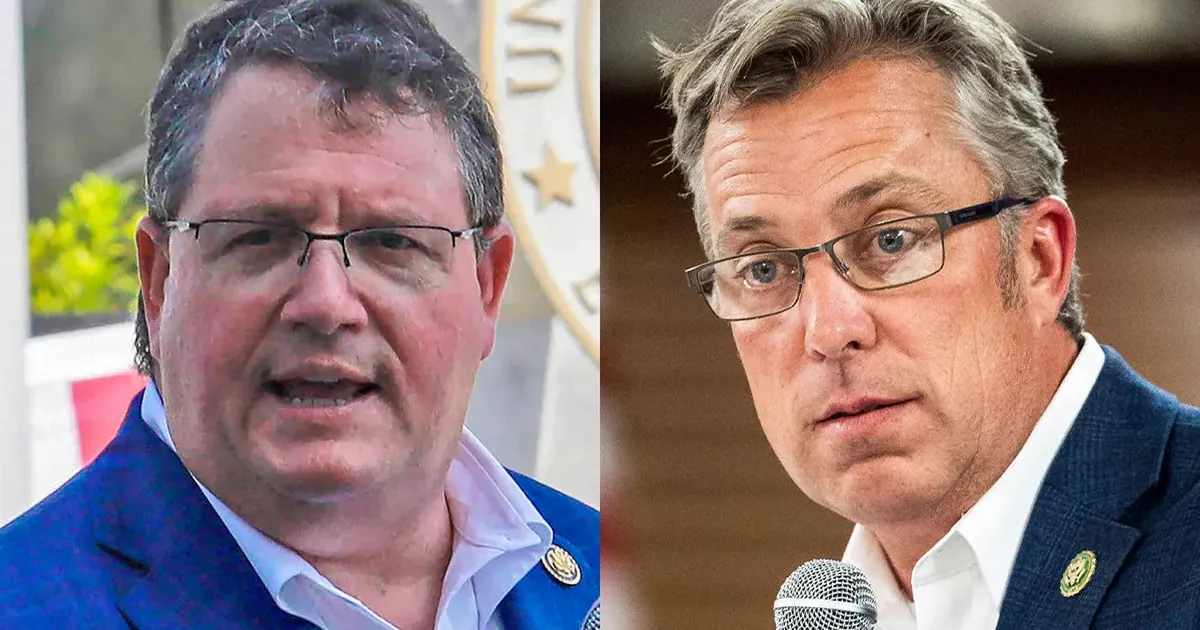
Staffers for the Speaker of the House and the Minority Leader remained largely unresponsive to inquiries regarding the recent posts from Rep. Randy Fine and Andy Ogles. Both lawmakers have been identified by monitors as frequent contributors to a digital environment that conflates the actions of foreign adversaries with the religious identity of millions of American citizens. In past sessions, such rhetoric would have triggered an immediate press conference or a caucus-wide memorandum reaffirming the party’s commitment to pluralism.
Still, the calculation for Republican leadership has changed as the party’s base reacts to the geopolitical fallout of the recent conflict in the Middle East. Internal polling suggest that base voters in deep-red districts view these aggressive stances as a sign of national strength rather than a breach of decorum. For one, the fear of a primary challenge from the right has silenced veteran lawmakers who once championed interfaith dialogue. The political cost of silence is now lower than the political cost of confrontation.
In fact, many junior members of the Republican caucus see the lack of pushback as an implicit green light to escalate their language. By refusing to police the boundaries of acceptable discourse, leadership has effectively outsourced the party’s moral compass to social media algorithms. This tactical retreat allows individual members to capture headlines while the party structure maintains a degree of plausible deniability. The result is a legislative body where the most extreme voices often set the tone for the entire delegation.
Social Media Posts Target Sharia Law and Immigrants
Social media platforms have become the primary staging ground for these attacks, which often focus on the perceived threat of sharia law infiltrating the American legal system. Lawmakers frequently share decontextualized videos and inflammatory headlines that portray Muslim immigrants as an existential threat to Western values. These posts frequently gain thousands of shares within minutes, creating a feedback loop that rewards provocation over policy. The rhetoric has shifted from criticizing specific foreign regimes to casting suspicion on domestic religious institutions.
But unlike in past years, their remarks have faced little public pushback from leadership.
And the data from digital watchdog groups indicates that this shift is accelerating. During the height of the Iran war, the volume of anti-Muslim posts from verified congressional accounts increased by nearly 400 percent. Most of these messages remain active on the platforms today, serving as a permanent record of the changing standards for public officials. No member has faced a loss of committee assignments or a formal letter of reprimand for these specific digital activities.
Meanwhile, the legal departments of major social media companies have struggled to balance their content moderation policies with the broad protections afforded to political speech. Lawmakers often claim their posts are essential updates for their constituents regarding national security threats. This defense has proven effective in shielding them from platform-wide bans that would apply to private citizens. The protection of a congressional office is shield for language that would otherwise trigger an immediate suspension.
Impact of the Iran Conflict on Domestic Political Tone
Violence in the domestic sphere often mirrors the intensity of rhetoric on the floor of the House. Since the Iran war began, hate crimes targeting individuals perceived to be of Middle Eastern descent have reached levels not seen in two decades. Community leaders in cities across the United States report that the verbal attacks from elected officials give a sense of permission to those looking to commit physical acts of aggression. The connection between the words of a congressman and the actions of a radicalized individual is becoming harder to ignore.
Yet the legislative focus remains squarely on foreign policy rather than domestic cohesion. Republicans argue that the necessity of a firm stance against the Iranian government justifies a broad rhetorical offensive. In particular, the blurring of lines between the Iranian state and the Islamic faith is a recurring theme in the speeches given on the House floor. The strategy aims to keep the electorate in a state of constant mobilization against a perceived external and internal foe.
By contrast, the Democratic response has been largely confined to floor speeches and press releases that do not change the underlying legislative reality. While some members of the opposition have called for formal censures, the Republican majority has successfully blocked these efforts from reaching a vote. The stalemate ensures that the rhetoric continues unabated while the public record remains largely one-sided. Political survival now demands the demonization of the other.
Shift from Post-9/11 Decorum in Republican Circles
Historical parallels illustrate how far the party has drifted from its previous standards. Following the attacks of September 11, 2001, George W. Bush visited a mosque to declare that Islam is peace and to warn against the targeting of Muslim neighbors. He understood that national security required domestic stability and the cooperation of Muslim allies. That consensus has evaporated in the face of a more populist, nationalist movement that views such gestures as a sign of weakness. Modern Republicanism has traded the diplomacy of the Bush era for the combativeness of the digital age.
Separately, the rise of fringe media outlets has provided a platform for lawmakers to test even more extreme language before bringing it to the halls of Congress. These outlets act as a testing ground for theories about demographic replacement and the inevitable clash of civilizations. Once a concept gains traction in the conservative media system, it quickly finds its way into the official talking points of congressional offices. The firewall between the fringes and the mainstream has been dismantled.
At its core, this evolution reflects a party that no longer believes in the utility of a big-tent strategy. The focus has shifted to the intense cultivation of a specific, motivated segment of the population that responds to identity-based grievances. In this environment, religious tolerance is viewed as an antiquated relic of a bipartisan era that no longer exists. No formal reprimands appeared on the House calendar for the upcoming session.
The Elite Tribune Perspective
Why do we pretend to be surprised when the guardrails of the Republic finally snap? For years, the Republican leadership has treated the xenophobic outbursts of its members as a manageable side effect of a populist energy they hoped to harness. But you cannot invite a wildfire into your living room and expect it to only heat the hearth. By refusing to discipline those who use their offices to preach religious bigotry, the GOP has effectively normalized it as a standard tool of American political life. The cowardice of the current leadership is not just a failure of morality; it is a failure of institutional stewardship that will haunt the nation for generations.
We are watching the death of the American civic ideal in real-time, replaced by a cynical, transactional politics where the most vulnerable are traded for a few extra points in a primary poll. If the party of Lincoln cannot find the courage to condemn a social media post that calls for the exclusion of an entire faith from the American experiment, then it has forfeited its right to lead. It is the predictable outcome of a movement that prizes loyalty to the base over loyalty to the Constitution. The silence coming from the Speaker’s office is not a strategic choice; it is a confession of irrelevance.