Smaller Appetites Reshape Menus
Connersville, Indiana, sits roughly sixty miles east of Indianapolis, a quiet town where the Daniel Girls Farmhouse Restaurant is a local hub. Beth Tipton, the co-owner, noticed a shift in her clientele late last year. Regulars started asking for smaller plates, not because they lacked an appetite, but because their bodies and budgets were changing. The story was dated March 12, 2026.
Customers using weight-loss drugs no longer felt satisfied by the mountain of food that defined the American dining experience for decades. Tipton responded by launching an eight-item Mini Meals menu last fall. This menu includes daily specials like a half piece of meatloaf paired with green beans, mashed potatoes, and gravy for eight dollars. It now accounts for about 20 percent of her total orders.
Tipton identifies a dual pressure on her patrons. Older adults make up half of her clientele and many found the regular menu a stretch for their fixed budgets. Separately, Tipton underwent weight loss surgery and understood the frustration of being barred from ordering off the children's menu as an adult. Dining rooms across the country are witnessing similar pivots as the restaurant industry grapples with the pharmaceutical revolution of GLP-1 drugs.
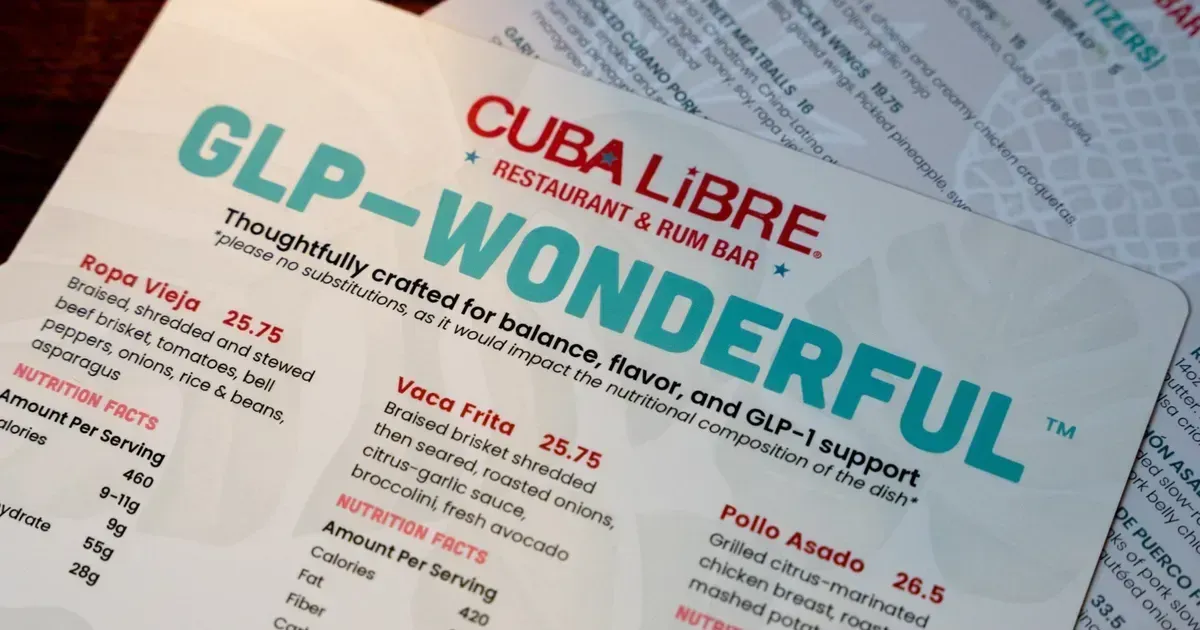
Large chains including Olive Garden and The Cheesecake Factory are introducing petite portions to cater to diners who simply cannot eat as much as they used to.
Chains Reprice the Plate
While these companies once thrived on the promise of leftovers and caloric excess, they now face a consumer base increasingly reliant on Ozempic, Wegovy, and Mounjaro. Maeve Webster, president of the culinary consulting firm Menu Matters, views this as a fundamental alteration in how Americans relate to food. Webster believes these changes stem from how people think about value and their physical health. The rise of weight loss medications has created a subset of diners who prioritize quality and manageable sizes over sheer volume.
These drugs suppress appetite and slow gastric emptying, making a standard pasta bowl from a national chain feel like an impossible task. Restaurant executives are not ignoring the data. Global markets have watched the shares of Eli Lilly and Novo Nordisk soar, while food and beverage companies scramble to adjust their projections. If 10 percent of the American population eventually takes these medications, the total caloric intake of the country could drop sharply.
Smaller menus offer a way for restaurants to keep these customers coming through the doors rather than losing them to home-cooked, portion-controlled meals. Inflation continues to play a secondary but key role in this downsizing. As the price of beef, poultry, and labor remains high, restaurants struggle to maintain their margins. Offering a smaller portion at a slightly lower price point allows a business to capture a sale that might have otherwise been lost to a fast-food window.
For a diner, an eight-dollar mini meatloaf feels like a bargain compared to a fifteen dollar full entree that would half go to waste.
Restaurant Margin Math
The math of the modern menu is changing. Younger consumers are also pushing this trend forward through their preference for snack-style dining. Gen Z diners often skip traditional three-course meals in favor of multiple small bites throughout the day. This demographic values variety and the ability to try three different small items rather than committing to one large plate.
Culinary teams are now designing menus that look more like a collection of appetizers than a list of heavy mains. The traditional structure of the American dinner is dissolving into a series of curated snacks. Portion sizes in the United States began their steady climb in the 1970s. Fast food chains led the charge, discovering that the marginal cost of adding more soda or fries was pennies compared to the perceived value it provided to the consumer.
By the 1990s, supersizing became the industry standard. Plate sizes in casual dining restaurants grew from ten inches to twelve inches, and caloric counts for single meals often exceeded the recommended daily intake for an adult. That era of expansion appears to have hit a ceiling. The Cheesecake Factory, long famous for its book-like menu and enormous cheesecakes, now finds itself offering petite versions of its classics.
Should we celebrate a menu that finally fits a human stomach or mourn the death of the American bounty? For decades, the restaurant industry functioned as a pusher of caloric excess, engineering plates designed to bypass our natural satiety signals. Now, the sudden intervention of GLP-1 medications has forced a corporate reckoning that decades of public health warnings could not achieve. It is a bitter irony that a weekly injection, rather than a collective desire for health, is what finally shrank the American dinner plate. We are seeing the death of the doggy bag, replaced by a clinical precision in eating that feels both necessary and slightly sterile. If these chains are truly committed to wellness, they would lower their prices in direct proportion to the calories they are cutting. Instead, they are leveraging a national health trend to mask their own rising costs and labor struggles. Such a move is not a revolution in culinary philosophy. It is a calculated retreat by an industry that realized its customers can no longer physically stomach its product. We should remain skeptical of any corporation that frames a smaller portion as a gift to the consumer while their margins widen with every ounce of steak they remove from the plate.