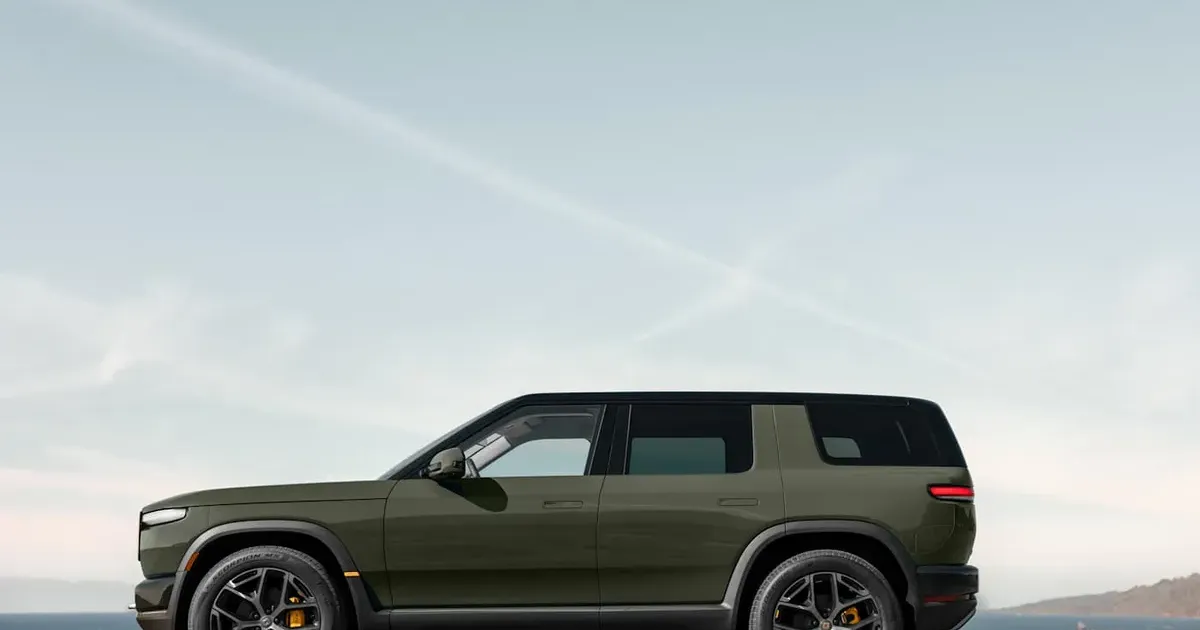
Rivian R2 is launching with a price tag near $58,000, testing whether the electric-vehicle maker can move beyond early adopters without sacrificing financial discipline. On March 12, 2026, that price became the center of the launch debate. The price drew attention because the R2 has been treated as Rivian's bridge to a larger audience. Buyers looking for a more affordable electric SUV were watching closely as the gap between a promised lower-cost model and the launch configuration became harder to ignore. Rivian is not simply selling another vehicle. It is trying to prove that its brand can scale.
Affordability Test
A $58,000 launch price keeps the R2 in premium territory for many households. That may help margins, but it also limits how quickly the vehicle can become a mainstream alternative to cheaper gas SUVs or lower-priced EVs. The delayed base version matters because Rivian R2 pricing is tied directly to the company's growth story. Investors want volume, but volume depends on customers believing the vehicle is attainable.
Rivian has to avoid a trap: pricing high enough to protect production economics but not so high that the R2 feels like another niche product.
EV Market Pressure
The EV market has become more competitive and more price-sensitive. Buyers are comparing range, charging access, tax treatment, software, service networks and resale expectations before committing. Rivian's advantage is brand identity. Its vehicles are associated with outdoors capability, design and a distinct alternative to Tesla. Its challenge is cost, because brand affection does not automatically overcome monthly payments.
A delayed cheaper model can also frustrate shoppers who waited for the R2 as a practical entry point. Some may hold off; others may choose a competitor if incentives or inventory make the math easier.
Production Discipline
Rivian's launch strategy will be judged by how quickly it can build the R2 consistently, control costs and avoid quality problems that would damage confidence in a higher-volume model. The company has learned that EV ambition is not enough. Manufacturing efficiency, supplier timing and service capacity can determine whether a strong product becomes a profitable platform.
The R2's first price therefore says something larger about the industry. The mass-market EV transition still depends on making desirable vehicles feel financially reachable, not only technologically impressive. The R2 also has to compete with consumer expectations created by years of EV price cuts and incentives. Buyers who once assumed electric vehicles would remain premium products now compare monthly payments, charging costs and resale value with far more discipline. A strong brand helps, but affordability determines whether a shopper moves from interest to reservation.
Rivian's challenge is sharper because it is still building trust in service coverage and production scale. A buyer paying nearly $58,000 will expect not only range and design but confidence that repairs, parts and software support will be handled smoothly. That is a different burden from selling a limited-volume adventure vehicle to enthusiasts willing to tolerate friction. The delayed base model could still work if Rivian uses the launch period to stabilize manufacturing and prove demand. But the company must be careful not to let the lower-price promise become a moving target. The phrase $58,000 electric SUV will shape perception because it tells consumers where the R2 really begins in practice, not where the marketing story once pointed.
For the broader EV market, the R2 is a useful test of the middle. The industry has luxury vehicles with strong margins and cheaper models competing on price. The hardest space is the one between them, where buyers want premium design but still make household-budget decisions. Rivian's launch price places the R2 squarely in that difficult territory. The timing also matters because EV buyers are more patient than automakers want them to be. A shopper who dislikes the launch price can wait for the base model, a lease deal, a tax-credit change or a rival discount. That weakens the power of a high-profile launch unless the first version feels compelling enough to overcome hesitation.
Rivian's investor story depends on proving that the R2 is not just smaller than its earlier vehicles but structurally easier to build and sell. If the model reduces cost complexity, it can support the company's path toward scale. If it arrives with premium pricing and production friction, critics will argue that Rivian has not solved the affordability problem at the center of EV growth.
The company also has to think about used EV competition. As more electric vehicles enter the secondhand market, buyers weighing a new R2 may compare it with discounted premium models that were once out of reach. That can make the launch price feel more exposed, especially if financing costs remain high.
For consumers, the central question is value. If the R2 feels durable, capable and well supported, the price may be accepted as premium but credible. If buyers see delays, compromises or cheaper alternatives gaining ground, the launch number will become a drag on the model's broader mission.