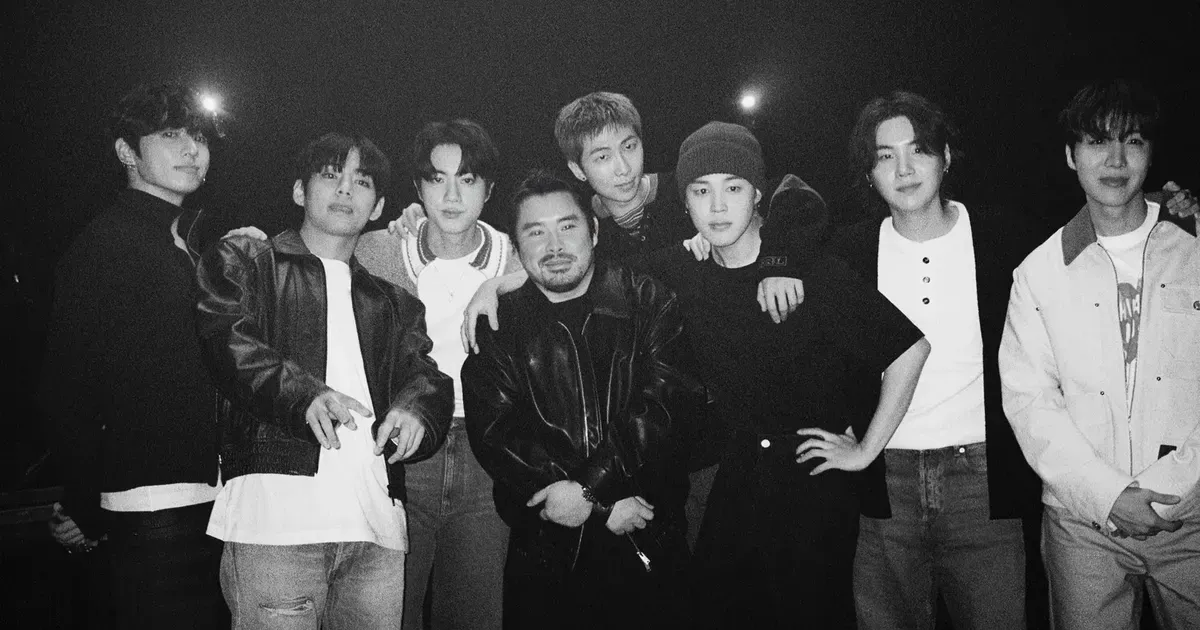
Vogue's late-March coverage put two very different celebrity items into the same seasonal current. One was a culture interview with Bao Nguyen, the filmmaker behind BTS: The Return, a Netflix documentary following the group's post-military reunion. The other was a short celebrity-style piece on Margot Robbie stepping out in West Hollywood in a black strapless romper, slouchy brown leather jacket, wide belt and cowboy boots just before Coachella season.
The subjects do not have equal weight. BTS's return is a global music event tied to military service, fandom patience, a new album cycle and Hybe's image system. Robbie's outfit is a lighter fashion signal, built from timing, paparazzi visibility and a revived boho vocabulary. But together they show the same editorial habit: fashion media now treats access itself as a product.
BTS Access Was The Main Product
The BTS interview worked because it was not only about a film. It was about permission. Nguyen was brought into a famously documented pop world at the moment the seven members had completed mandatory service and were trying to resume work as a group. Vogue noted his past work on The Greatest Night in Pop and Be Water, then framed The Return as a present-tense record of a group rebuilding momentum rather than looking back from a detached distance.
The distinction is important. BTS already has years of official footage, travel shows, concert films, self-shot material and fandom archives around it. Another camera has to justify why it is there. Nguyen's answer was trust, texture and proximity: studio work in Los Angeles, camcorders in members' hands, and a view of artists trying to find group rhythm after solo activity and enlistment.
Nguyen said he had to earn their trust.
That is the central tension. The documentary can bring fans closer, but it is still an authorized project. The camera may catch fatigue, uncertainty and process, yet the frame remains close to the institution that needs the comeback to feel meaningful. For a group of this scale, intimacy is never a neutral gift. It is also part of the launch.
Robbie's Boho Shift Was Small But Timed
The Robbie item was much lighter, but it operated with similar precision. Vogue's fashion story treated a West Hollywood sighting as an early spring signal because Coachella was two weeks away and celebrity festival dressing still drives image traffic. The outfit itself was simple: black romper, brown leather jacket, low-slung belt and cowboy boots. The meaning came from placement.
Robbie had recently been associated with Chanel polish and more dramatic press-tour looks. A boho turn gives her public style a different register: less architectural, more relaxed, more festival-adjacent. The reference points are familiar - 2000s Coachella, Chloe's recent boho revival under Chemena Kamali, Western accessories and undone hair - but the look did not need to be new to be effective. It needed to arrive at the right moment and give editors a clean language for a seasonal shift.
The outfit traveled because of that balance. It looked casual enough to seem personal, but specific enough to be legible as styling. Celebrity fashion rarely works by accident once it enters a major publication's frame. A street image becomes a trend note, a trend note becomes brand context, and brand context becomes a way to reset how the public reads a star between larger projects.
Two Stories Share One Editorial Machine
The BTS and Robbie pieces differ in scale, but they share the same machinery. Both ask the reader to feel close to a transition. BTS is presented at the point of reunion, with a documentary promising access to the difficult act of becoming a group again. Robbie is presented at the point of style movement, with one outfit standing in for a softer spring mood.
Neither story is fake because it is managed. BTS really did face a creative and emotional transition after service. Robbie really did move into a boho look that fit the season. The issue is how quickly professional systems turn those facts into narrative. A studio room becomes a symbol of maturity. A pair of cowboy boots becomes a signal of looseness after polish. The audience is invited to read evolution before much independent evidence has accumulated.
The Reader Has To Price The Access
Vogue is at its most credible when it does not pretend these moments are untouched. It is showing why they matter without hiding the image work behind them. The BTS article is most valuable when it treats access as a negotiated condition, not pure revelation. The Robbie item works when it names the fashion references instead of pretending a familiar boho cycle has appeared from nowhere.
Celebrity culture now sells the feeling of arrival before the arrival is complete. BTS's return asks fans to see renewal, unity and artistic adulthood through a sanctioned camera. Robbie's spring look asks fashion readers to see ease, looseness and festival timing through a photographed outfit. The products differ, but the method is close: personal transition becomes public material while the machinery is still warm.