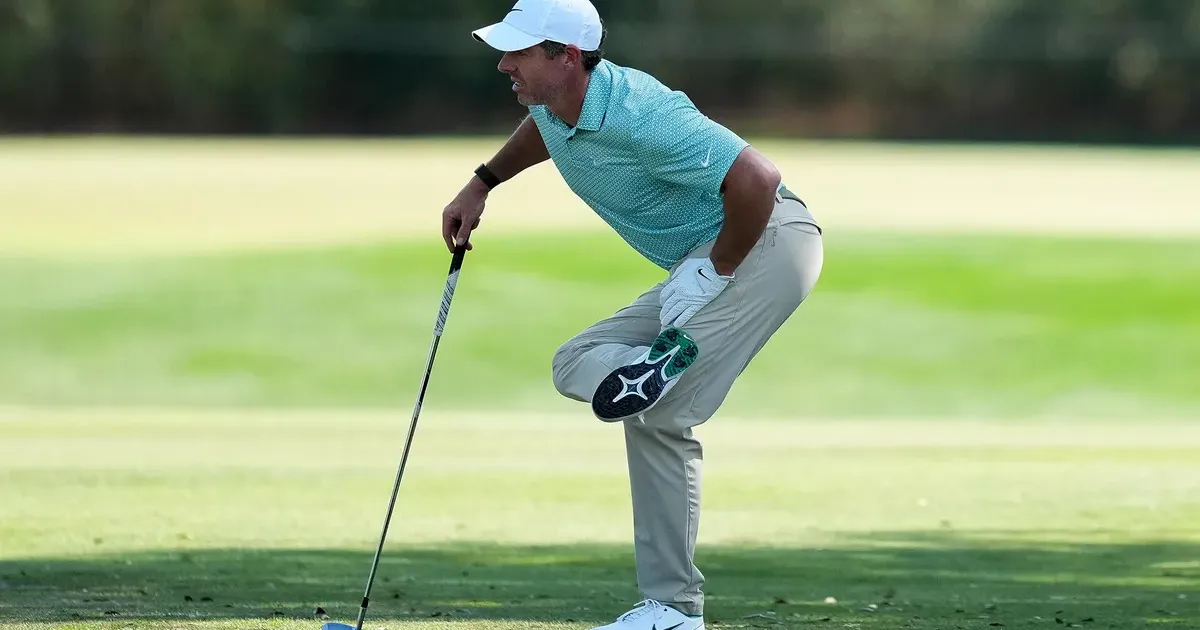
Rory McIlroy’s back spasms have turned a title defense at Sawgrass into a fitness story before the opening tee shot.
A Fitness Question Before Sawgrass
Ponte Vedra Beach usually hums with the quiet confidence of the world's best golfers preparing for their flagship event. March 2026 brings a different atmosphere as Rory McIlroy battles his own body. Back spasms forced him out of the Arnold Palmer Invitational last week. Questions now surround his ability to defend his title at TPC Sawgrass. The injury concern followed McIlroy into March 12, 2026, turning preparation at Sawgrass into a physical test before the first tee shot. BBC Sport described the golfer as hopeful regarding his chances. CBS Sports offered a more clinical view, labeling him a game-time decision. This lingering ailment highlights the physical toll exacted by decades of high-velocity play. McIlroy has long been the primary draw for the PGA Tour. His withdrawal from the Arnold Palmer Invitational last week sent ripples through the golf community. Medical staff at the tournament reported that the issues originated in the lower lumbar region. Such injuries are frequent among elite players who generate immense rotational force. While the spasms have reportedly improved, the recovery process for a 36-year-old athlete differs sharply from a younger rookie. McIlroy stated he is doing everything possible to prepare. Still, his presence on the first tee remains unconfirmed. Practice rounds scheduled for Tuesday and Wednesday saw him limited to light putting and short chips. Observers noted he avoided the full driver swings that define his dominant style.
Injury defines the modern era of professional golf. Reporting on the situation reveals a subtle divergence in how the media views his recovery.
The Margin Gets Smaller
BBC Sport sources suggest a positive trajectory, quoting McIlroy's optimism about returning to TPC Sawgrass. Their report emphasizes his desire to maintain momentum during a critical stretch of the season. Contrast this with CBS Sports, which provides a more cautious outlook based on recent practice sessions. Their analysis points to the volatility of back spasms, which can reappear without warning during the transition at the top of a swing.
Experts believe that a premature return could jeopardize his participation in the Masters next month. Choosing between a title defense in Florida and a chance at the career Grand Slam in Georgia is a dilemma no player wants. But McIlroy must balance immediate goals with long-term health. Sawgrass presents a unique challenge for a compromised player.
The course demands precision and power, especially on the finishing stretch of holes sixteen, seventeen, and eighteen. Historically, players with back issues struggle with the undulations and uneven lies found across the property. Doctors often warn that the repetitive motion of a golf swing is particularly brutal on the spine when inflammation is present. This medical uncertainty has shifted the betting markets sharply.
Odds that once favored the Northern Irishman are now drifting. Professional gamblers and casual fans alike are looking toward more stable options in the field. Scottie Scheffler has become the clear favorite in many circles because of his consistent ball-striking and lack of recent injury history. Predictions for the 2026 Players Championship suggest a wide-open race if the defending champion cannot compete.
CBS Sports identified nine golfers who could realistically claim the trophy this Sunday. Their list includes established names and rising stars who have performed well during the early swing of the season.
Talent Cannot Fully Hide the Back
Should we continue to pretend that the aging guard of professional golf can withstand the torque of the modern swing? Rory McIlroy is a victim of his own excellence and the relentless physical demands of a sport that increasingly prioritizes violent clubhead speed over longevity. We are watching the sunset of an era where a single icon can carry the pressure of an entire tour on his back. While the PGA Tour brass prays for his recovery, they should instead be terrified of their over-reliance on a few fragile stars.
Back spasms are not just a temporary nuisance. They are a loud, painful warning that the human body has limits that even millions of dollars in training cannot bypass. If the 2026 Players Championship proceeds without its defending champion, it will expose the hollow center of a sport that has failed to cultivate a new generation of equally magnetic personalities. Golf fans deserve better than a game-time decision.
They deserve a tour that is not one muscle tweak away from a ratings disaster. The obsession with distance has turned world-class athletes into glass cannons, and McIlroy is merely the latest, most high-profile casualty of this dangerous trend.