Public Praise and Private Friction

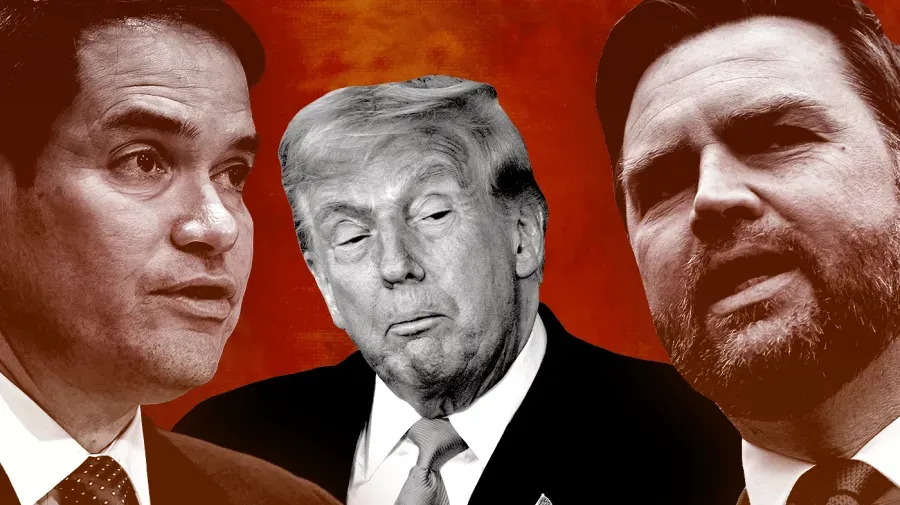
President Donald Trump stood at the White House podium Monday and fundamentally altered the perception of his administration's internal hierarchy. During his first press conference since the outbreak of hostilities with Iran, the commander in chief chose to elevate Secretary of State Marco Rubio at the expense of Vice President JD Vance. Trump ignored his second-in-command during several key exchanges, preferring to describe Rubio as perhaps the most effective diplomat in the history of the United States. Observers in the briefing room noted that Vance remained silent while Rubio received the highest possible accolades from a president who values public loyalty above all else.

Rubio has managed to transform himself from a 2016 primary rival into the chief architect of Trump's foreign policy in the Middle East. Success in this role has clearly paid dividends in the Oval Office. Trump told reporters that Rubio is doing a great job and predicted his legacy would eclipse all predecessors. Such high praise creates an immediate friction point within the executive branch. Vice presidents historically struggle to maintain relevance when a high-profile cabinet member captures the president's undivided attention. In this case, the shift feels more deliberate than accidental.

Vance finds himself in a precarious position as the 2026 midterm cycle approaches. He was selected for his ideological purity and his ability to channel the MAGA movement, yet Rubio is the one currently managing the most critical crisis of the second term. The Secretary of State's influence extends beyond mere diplomacy. He has become a fixture in the Situation Room, often seen whispering to the president during high-stakes briefings. This proximity to power has fueled speculation that the internal pecking order is undergoing a silent but significant reorganization.

The Legislative Void in the Senate

Senator Markwayne Mullin is preparing to depart the upper chamber to lead the Department of Homeland Security, leaving a vacuum in Republican leadership that few expected. Mullin occupied a unique niche in Washington. He functioned as an unofficial liaison to the House of Representatives, a role colleagues frequently called the House whisperer. Republican senators now wonder if anyone can replicate his ability to smooth over the often-volatile relationship between the two chambers. Mullin's move to the executive branch rewards his steadfast defense of the president but strips the Senate GOP of its most effective bridge-builder.

His departure comes at a moment when the party needs cohesion to pass a series of aggressive immigration reforms. Mullin used his personal relationships with House leadership to prevent legislative bottlenecks that have historically plagued the Republican agenda. Without him, the Senate leadership must find a new way to coordinate with a House majority that is increasingly skeptical of upper-chamber compromises. Several names have been floated to replace him in this informal capacity, but none possess the specific blend of House experience and Senate seniority that Mullin brought to the table.

Legislative success depends on these invisible gears of government.

Senate Republicans are also bracing for the political fallout of a special election to fill Mullin's seat in Oklahoma. While the state remains a deep-red stronghold, the internal battle to replace him could expose divisions between the populist and traditional wings of the state party. Trump's involvement in that primary is almost guaranteed, further complicating the efforts of Senate Minority Leader John Thune to maintain a unified front. The president’s habit of picking winners and losers in open primaries has often led to bruising intra-party conflicts that drain resources away from more competitive national races.

Buying Loyalty in the Peach State

Billionaire healthcare entrepreneur Rick Jackson is learning that a million dollars does not always buy a clean slate in the world of MAGA politics. Jackson recently entered the race for governor in Georgia with a massive seven-figure donation to the MAGA Inc. political action committee. He has publicly vowed to be the favorite governor of the president, hoping to secure an endorsement that would effectively end the primary before it begins. Federal Election Commission records, however, reveal a more complicated history. Jackson and his network of companies previously directed hundreds of thousands of dollars to Trump's rivals during the 2024 primary season.

Jackson Investment Group funneled at least 150,000 dollars to Nikki Haley through various fundraising committees. These donations continued even as it became clear that Trump was the presumptive nominee. Jackson also provided 100,000 dollars to Vivek Ramaswamy, another candidate who vied for the populist base that Trump commands. These financial disclosures have provided an opening for Lieutenant Governor Burt Jones, who is also seeking the governor's office. Jones has centered his campaign on the idea of authentic conservatism, pointedly noting that he fought for Trump when it was politically difficult to do so.

The math doesn't add up for those seeking to jump on the bandwagon late.

Jones has leveraged his long-standing relationship with the president to cast doubt on Jackson's sudden conversion. In the political climate of 2026, past opposition to Trump is treated as a permanent stain rather than a temporary disagreement. Jackson's team argues that his recent million-dollar contribution proves his current commitment, but the Trump inner circle is known for its long memory. The president has a history of punishing donors who backed Haley, often referring to them as the individuals who tried to stop the movement. Whether a late-stage check can overcome years of financial opposition remains the central question of the Georgia primary.

The Price of Past Opposition

Voters in Georgia are now caught between two versions of loyalty. On one side stands Jones, who represents the established MAGA guard in the state. On the other is Jackson, whose vast personal wealth allows him to saturate the airwaves with ads claiming he is the only candidate who can truly execute the president's agenda. The conflict highlights a broader trend within the party where personal wealth is being used to bypass the traditional path of political advancement. Jackson is betting that the electorate cares more about his business success than his previous support for Nikki Haley.

Trump appears to be enjoying the spectacle of two wealthy men competing for his approval. He has mastered the art of keeping candidates in a state of perpetual uncertainty, often withholding endorsements until the final weeks of a campaign to ensure maximum subservience. This strategy has turned the GOP primary process into a series of loyalty tests that prioritize personal devotion over policy positions. In Georgia, this dynamic could lead to a scorched-earth campaign that leaves the eventual nominee weakened heading into the general election against a unified Democratic opposition.

Money talks, but in this administration, past actions scream louder.

Political analysts suggest that the Georgia race will serve as a bellwether for how the president handles former detractors in 2026. If Jackson succeeds in buying his way into the president's good graces, it will signal to other wealthy donors that a late infusion of cash can wash away the sins of the 2024 primary. If Trump chooses Jones, it will reinforce the idea that early loyalty is the only currency that truly matters in the current Republican hierarchy. For now, the president remains silent, watching the two contenders trade blows while he focuses on the geopolitical crisis in the Middle East.

The Elite Tribune Perspective

Can a political party survive when its primary organizing principle is the shifting mood of a single leader? The current spectacle in Washington and Georgia suggests a movement that has traded institutional stability for a culture of performative fealty. Marco Rubio's sudden ascent over JD Vance is not a reflection of superior policy, but rather a reward for successful messaging during a time of war. It reduces the Vice Presidency to a decorative role while turning the State Department into a theater for presidential flattery. Meanwhile, the vacancy left by Markwayne Mullin illustrates the danger of a party structure that relies on personal relationships rather than functional systems. When the whisperer leaves, the silence between the House and Senate becomes deafening. The most egregious display of this decay, however, is the Georgia gubernatorial race. Watching a billionaire like Rick Jackson attempt to purchase a pardon for his past support of Nikki Haley is an insult to the intelligence of the electorate. It reveals a political environment where principles are negotiable and endorsements are sold to the highest bidder. If the GOP continues to prioritize these public displays of submission over coherent governance, it risks becoming a hollow vessel for personal ambition rather than a legitimate vehicle for national leadership.