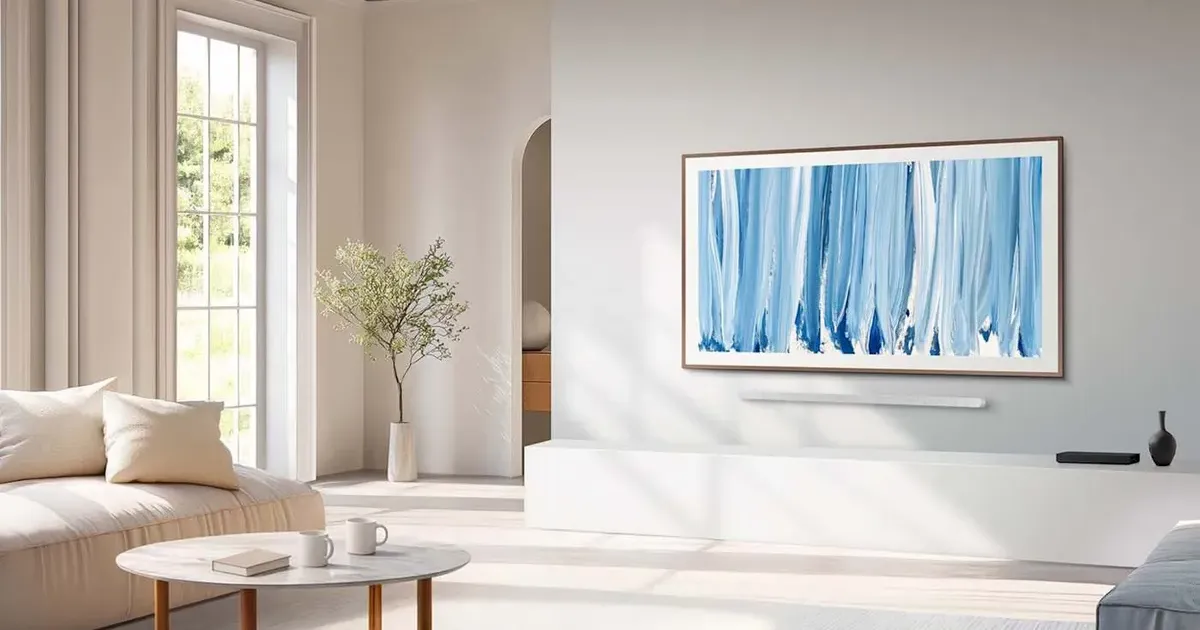
Samsung's 2026 Frame Pro pricing makes the art-TV category less easy to dismiss as a pure design indulgence. Retail listings now put the line across 55-, 65-, 75- and 85-inch sizes, with sale pricing on key models moving closer to mainstream premium televisions. The shift matters because The Frame has always asked buyers to pay for a television that behaves like part of the room before it behaves like a screen.
The decision is no longer only about whether a black rectangle looks ugly on the wall. It is about whether Samsung can make the design premium feel rational when OLED, Mini-LED and cheaper large-screen rivals are fighting for the same living room. Frame Pro gives Samsung a cleaner argument than the standard Frame, but it also invites a stricter comparison.
Lower Pricing Changes the Conversation
The 2026 Frame Pro sits in a more aggressive price band than earlier art-TV shoppers might expect. Current retail listings have shown the 55-inch model around the mid-$1,000 range, with the 65-inch and 75-inch models often competing near premium OLED and Mini-LED deals. The 85-inch version still reaches into expensive home-theater territory, but even there Samsung is trying to make the design category feel less isolated.
Lower pricing is the commercial move. Samsung does not want TCL, Hisense, LG or Sony to define value only through brightness, contrast and screen size. It wants buyers to count decor integration as part of the value equation. Lower entry points help because the art-TV pitch becomes weaker when the buyer feels punished for caring about how the room looks.
Design Remains the Main Product
Frame Pro is still a lifestyle television before it is a purist display. The matte presentation, wall-friendly form, Art Mode, Art Store access and customizable frame idea are the product's center of gravity. Those details matter for buyers who keep a screen in a living room, bedroom or open-plan space where the television is visible even when nobody is watching.
The use case is real. Many households do not want a theater-first setup. They want a screen that can show sports, streaming and family photos without dominating the wall all day. Samsung understands that job better than most TV makers, and The Frame line has benefited from treating the inactive screen as part of the ownership experience.
Wireless One Connect Is the Practical Hook
The Pro version adds a practical reason to look beyond the standard Frame: Wireless One Connect. Moving cables and external devices away from the panel can make installation cleaner, especially for wall-mounted rooms where visible wiring ruins the whole concept. For design-led buyers, that convenience can matter as much as a picture-spec upgrade.
Wireless One Connect also raises practical questions about placement, signal reliability, gaming latency and the actual distance between the box and the screen. A cleaner wall is valuable only if the setup remains stable in everyday use. Frame Pro does not promise to remove every compromise, only to move the most annoying one out of sight.
Picture Quality Still Has to Earn the Price
Samsung's art-TV pitch cannot avoid normal TV judgment. A buyer spending premium money should still ask about brightness, contrast, local dimming, motion handling, gaming features and viewing angles. The Frame Pro improves the argument with Neo QLED positioning, but it does not automatically replace a top OLED or a high-end Mini-LED set for people who care most about movies in a dark room.
The matte screen is part of that tradeoff. It helps the television sit naturally in a bright room and supports the art-display illusion, but any anti-glare treatment has to balance reflection control against image punch. Frame Pro should therefore be judged by room use, not only by spec sheets. It makes more sense in a bright multipurpose space than in a dedicated theater where black levels and cinematic contrast dominate.
Art Store Turns the TV Into a Service
The Art Store is more than decoration. It keeps the television inside Samsung's software relationship with the owner after purchase. For some buyers, that is a benefit: a rotating catalog of art makes the set feel alive rather than dormant. For others, it is another subscription-style layer attached to a device that already costs serious money.
The subscription tradeoff should be part of the buying decision. Frame Pro is most convincing when the owner will actually use Art Mode, change images, care about bezels and keep the screen visible between viewing sessions. If the art feature becomes a novelty after two weeks, the buyer is left comparing it against conventional televisions that may deliver stronger image quality for the same money.
Samsung Is Protecting a Category It Created
Samsung's pricing move is defensive, but not weak. The company knows the art-TV idea has escaped the niche stage. Once a category becomes visible, competitors and store brands begin to copy the surface of the idea: thin frame, art mode, gallery screensavers, lower price. Samsung has to protect the part of the product that is less easy to copy before cheaper versions make the category feel generic.
Frame Pro is not mainly for the person hunting the loudest HDR demo or the cheapest inch count. It is the person who wants a premium screen to disappear into a room and is willing to pay for that design discipline. Samsung's challenge is making sure the word Pro still means more than a nicer frame. At these prices, the television has to look calm on the wall, work cleanly every day and still perform like a serious screen when the art turns off.