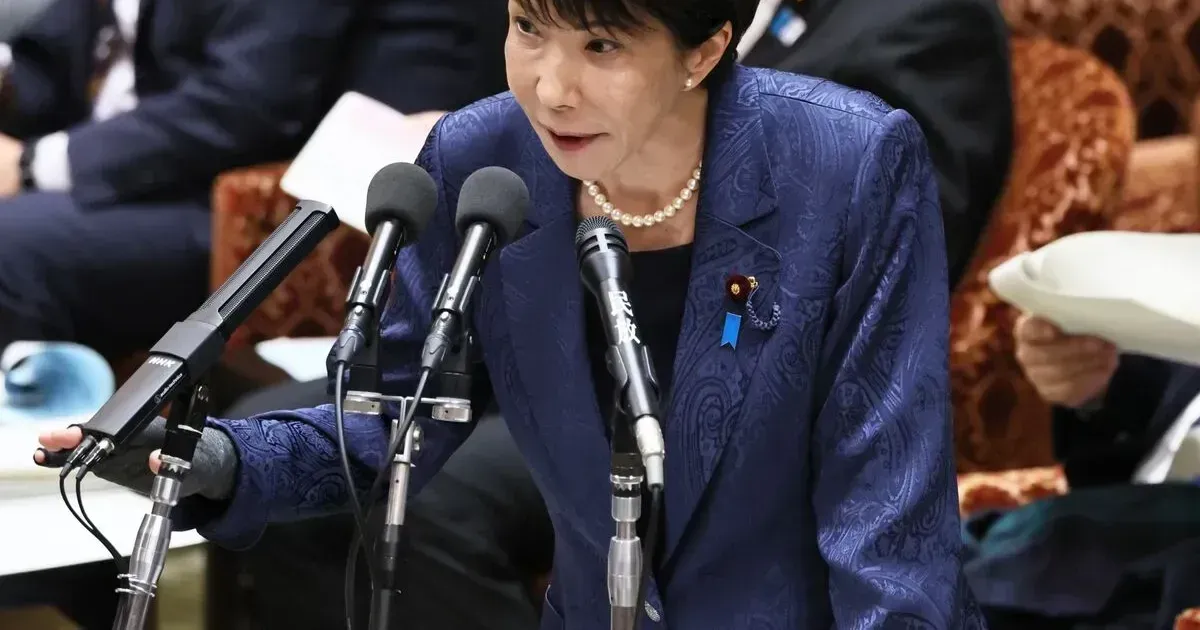
Tokyo officials entered a state of high alert Thursday when Prime Minister Sanae Takaichi abruptly withdrew from several high profile engagements. Her sudden absence from the public eye occurred just seventy-two hours before her scheduled departure for Washington to meet with President Donald Trump. The report was published March 13, 2026.
While the official statement from the Prime Minister's Office cited poor health, the lack of specific medical details sparked immediate volatility in the Nikkei 225.
Investors began pricing in the risk of a leadership vacuum within the Liberal Democratic Party, or LDP, which has long struggled with internal factionalism.
Takaichi, the first woman to lead Japan, has built her political identity on a platform of resilience and fiscal expansion.
This sudden withdrawal suggests a vulnerability that her detractors within the party are already beginning to exploit. Rumors regarding the Prime Minister's physical condition have circulated in Nagata-cho for months.
Some insiders suggest her rigorous travel schedule and the pressure of negotiating with a transactional Trump administration have taken a visible toll. Market analysts at Nomura noted that the Japanese Yen fluctuated wildly on the news, reflecting fears that Takaichinomics might lose its primary architect. Takaichi has consistently advocated for a delay in interest rate hikes, placing her at odds with more hawkish members of the Bank of Japan. If her health prevents her from attending the summit in the United States, the delicate balance of Japanese monetary policy could shift back toward normalization. Traders in London and New York are watching for any indication that a temporary deputy will be named.
The silence around the schedule carried market weight. Diplomacy depends on visible continuity.
The High Stakes of a Second Trump Partnership
Diplomatic circles in Tokyo view the upcoming White House summit as a make-or-break moment for Japanese security. Her absence would leave these negotiations in a state of suspended animation. Unlike her mentor, the late Shinzo Abe, Takaichi has not yet established the same personal rapport with the American president. Trump has frequently criticized Japan's trade surplus, and Takaichi intended to offer significant concessions in the automotive sector to stave off new tariffs. Without her presence, the Japanese delegation lacks the executive authority to sign off on sensitive trade compromises. Will the White House view a postponement as a sign of weakness or a genuine medical necessity? History suggests that health crises in the Kantei often precede significant political upheavals. The sudden resignation of Abe in 2020 due to ulcerative colitis remains a fresh memory for the Japanese electorate. Takaichi's supporters argue that she is merely suffering from exhaustion, yet the timing remains catastrophic. Preparations for the trip included a large entourage of business leaders and security advisors who now find their itineraries in limbo. Cancellation of the trip would not only be a diplomatic embarrassment but also a signal to regional rivals that Japan's leadership is in a state of flux. Does the LDP have a clear successor who can maintain the current hawkish trajectory?
Takaichi was expected to present a strong plan for increasing defense spending to 2.5% of GDP, a move designed to satisfy Trump's demands for greater burden-sharing.
Economic Consequences of Leadership Instability
Global markets hate uncertainty. The prospect of an incapacitated Prime Minister threatens to derail the fragile recovery of the Japanese economy. Takaichi's fiscal policies have centered on massive infrastructure projects and semiconductor subsidies, both of which require constant political shepherding. This fiscal aggression has been the cornerstone of her popularity among the Japanese working class. However, her opponents argue that such high spending is unsustainable in an era of rising global inflation. If she is forced to step down or take a long leave of absence, the LDP's more conservative fiscal hawks will likely move to slash these programs. Public debt in Japan already exceeds 250% of GDP, leaving little room for error. The cost of insuring Japanese sovereign debt rose by five basis points within an hour of the health announcement. Political analysts at the University of Tokyo suggest that the Prime Minister's health is more than a personal matter. It is a national security concern. Japan is currently managing a period of intense regional competition, and a leaderless Tokyo would be unable to respond to provocations. Takaichi's absence from Thursday's National Security Council meeting was particularly conspicuous. Officials denied that the meeting was canceled, though they admitted the Prime Minister participated only via a secure phone line. Such a move is rare for a leader who prides herself on being present for every strategic decision. The lack of video evidence from the call has only fueled further speculation among the Tokyo press corps.
Managing the Succession Minefield
Internal LDP dynamics are notoriously complex. If Takaichi is unable to fulfill her duties, several contenders are waiting in the wings. Toshimitsu Motegi and Yoshimasa Hayashi represent two different paths for the party. Motegi is seen as a continuation of the Takaichi-Abe doctrine, while Hayashi is viewed as a more moderate, pro-dialogue figure. This health scare has effectively launched an invisible primary before the current term has even reached its midpoint. Party elders are reportedly meeting in private clubs across Akasaka to discuss the viability of a temporary regency. That physical setback could provide the necessary opening for those who felt sidelined by Takaichi's rapid rise to power. The situation leaves little room for simple answers. White House aides have remained publicly supportive, stating that they look forward to welcoming the Prime Minister. Behind the scenes, the sentiment is more pragmatic. Trump's team is known for prioritizing strength and physical presence in its diplomatic partners. A virtual summit has already been floated as a possibility, but Japanese officials are hesitant. They believe that the nuances of trade and defense negotiations require face-to-face interaction to be successful. The optics of a sick leader trying to hold her own against a dominant American president would be disastrous for Takaichi's domestic approval ratings. How much longer can the Kantei maintain this wall of silence?
Beyond trade, the summit was intended to solidify the US-Japan-Australia trilateral security pact. Takaichi has been a vocal proponent of integrating Japanese technology into the AUKUS framework. Her health concerns put these technical discussions on ice. Defense contractors in both nations were expecting clarity on joint development projects for next-generation fighter jets. These projects involve billions of dollars in long-term investment. If Takaichi is sidelined, the momentum for these initiatives could stall, allowing competitors to gain a foothold in the regional arms market. The aerospace sector is particularly sensitive to these leadership shifts. Mitsubishi Heavy Industries saw its stock price dip by 3.2% following the Thursday announcement. The Kantei must provide a transparent medical update soon. Stability in Tokyo is the bedrock of the Western alliance in the Pacific. Without a healthy and decisive Prime Minister, the entire architecture of Indo-Pacific security feels less certain. Takaichi's rise was heralded as a new era of Japanese assertiveness. Now, that era faces its first major internal challenge. The next forty-eight hours will determine whether she boards the plane to Washington or remains in Tokyo to fight for her political life. For the Japanese people, the anxiety is not just about a person, but about the direction of their nation in an increasingly volatile world. Data from the Tokyo Medical Association indicates that the Prime Minister has not visited a public hospital, suggesting her treatment is being handled by private physicians at her residence.
Leadership Stability Test
Health secrecy is not a private inconvenience when it sits inside a security alliance. Tokyo cannot ask allies, markets and voters to trust a leader whose condition is treated like a court rumor. If Takaichi is fit, her office should say so plainly. If she is not, Japan needs continuity before Washington turns uncertainty into bargaining power.