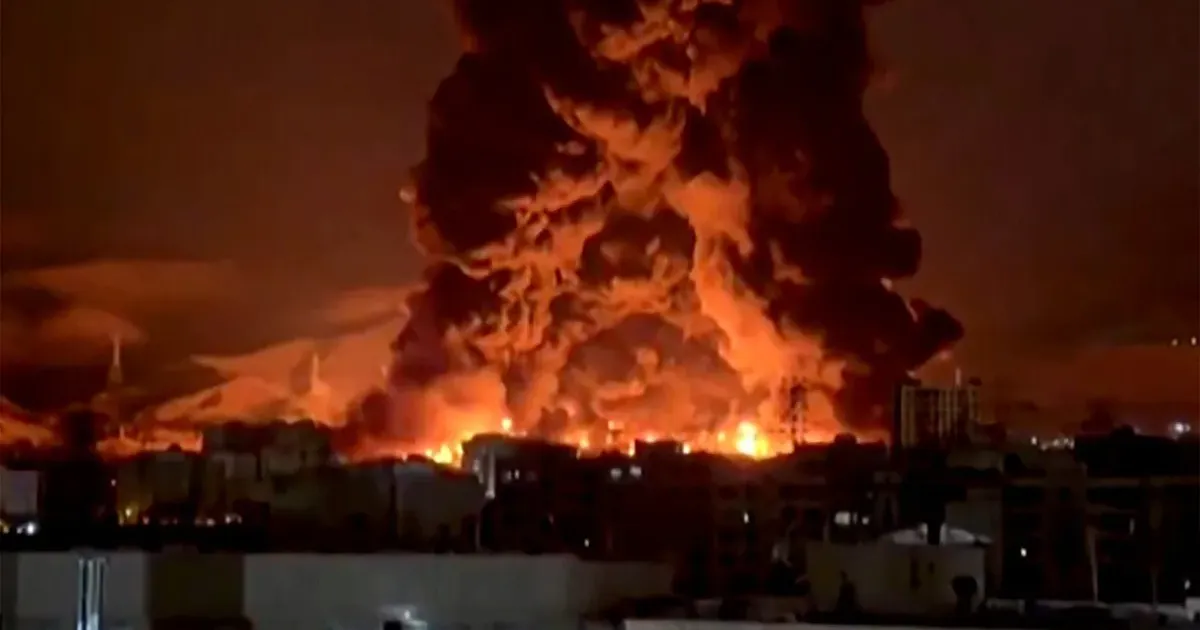
Japan’s unilateral oil-reserve release shows how quickly Middle East war risk can fracture coordinated energy policy among allies.
Tokyo Breaks Rank as Middle East War Chokes Energy Corridors
Tokyo's decision to tap strategic petroleum reserves without waiting for an international consensus sent a clear signal to global energy desks Wednesday morning.
Sanae Takaichi, the Japanese Prime Minister, announced the unilateral move as her administration attempts to blunt the impact of the widening conflict involving the United States, Israel, and Iran. By March 11, 2026, while the Group of Seven nations officially welcomed the prospect of a coordinated release, Japan's refusal to wait for the committee process suggests a growing panic among Asian energy importers. Crude prices have exhibited extreme volatility since the first missiles targeted Iranian infrastructure, forcing nations that lack domestic production to take emergency measures.
Maritime logistics are undergoing a radical transformation as the war cuts off traditional supply routes. Ships originally destined for European terminals like Rotterdam or Milford Haven are changing course toward the Sea of Japan and the South China Sea. Liquefied natural gas shipments are being bid away from Western buyers by Asian utilities willing to pay record premiums to keep their power grids operational. Bloomberg reports that this shift in cargo destination is a physical redirection of energy flows that could leave Europe shivering if the conflict persists through the spring. Traders in Singapore and Hong Kong describe a market where price discovery has been replaced by a raw scramble for available molecules.
Energy security has replaced profit margins as the primary driver of maritime logistics.
President Donald Trump attempted to soothe global markets on Monday, suggesting that the US-Israeli war on Iran might conclude very soon. Market participants remain skeptical of such optimistic timelines, especially since he clarified that a resolution is not expected within the coming week. Investors in South Korea and Japan have seen similar promises fail to materialize over the last month, leading to a breakdown in confidence. South Korea, one of the most exposed economies in the region, is currently racing to shield its manufacturing sector from a looming energy shock. Seoul officials fear that high input costs combined with stagnant growth will revive the spectre of stagflation, a condition that hasn't haunted the peninsula with this intensity for decades.
A draft G7 plan points toward an extraordinary reserve release, but Japan is no longer waiting for the group to move at committee speed. Yet Japan's unilateralism highlights a rift in how quickly different nations believe they must act. Washington remains focused on the military campaign, while Tokyo is focused on the literal survival of its industrial base. Japan's move to release oil on its own terms indicates that Prime Minister Takaichi no longer trusts the slow-moving multilateral machinery of the International Energy Agency to provide relief in time. Still, the G7 leadership has publicly maintained a united front, stating they welcome any action that stabilizes the global benchmark. This decision by the Japanese government could set a precedent for other resource-poor nations like India or Vietnam to follow suit.
Internal G7 documents suggest the group is preparing for a record release of oil reserves to counter the price surge.
LNG tankers are currently the most sought-after assets in the global shipping fleet.
Asia's vulnerability stems from its massive reliance on the Strait of Hormuz, a waterway that is now effectively a combat zone. While some tankers are attempting the long journey around the Cape of Good Hope, the added time and insurance costs are pushing prices to unsustainable levels. Reuters sources indicate that insurance premiums for tankers in the region have increased by 400 percent since the commencement of hostilities. Such costs are being passed directly to consumers at the pump and on their utility bills. Business leaders in Seoul have warned that if the war continues for another month, many small and medium-sized enterprises will be forced to suspend operations indefinitely.
South China Morning Post analysis highlights that the regional anxiety is not just about current prices but about the total breakdown of the global supply chain. If Iran manages to permanently damage shipping infrastructure in the Persian Gulf, the world faces a multi-year recovery process regardless of when the fighting stops. This week, Trump suggested that his administration is pushing for a rapid ceasefire, but the tactical reality on the ground in the Middle East suggests otherwise. Iranian retaliation against regional energy hubs remains a constant threat, keeping the risk premium high despite any political rhetoric coming from the White House. The math doesn't add up for a quick recovery.
Strategic petroleum reserves were designed for short-term disruptions, not for sustained regional warfare between major powers. Japan's reserves are among the largest in the world, yet even they are finite. If the unilateral release fails to depress prices, Takaichi will have few options left to protect the Japanese yen from further depreciation. A weak yen makes energy imports even more expensive, creating a vicious cycle that threatens to hollow out the Japanese middle class. Other Asian nations are watching Tokyo's experiment with a mix of hope and dread, knowing that their own reserves are far less substantial. The regional race to secure supplies has turned into a zero-sum game where Europe's loss is Asia's gain.
Economists at the BBC have noted that the divergence of LNG from Europe to Asia could trigger a diplomatic row between the two regions. European nations are already struggling with the transition away from Russian gas, and losing access to Middle Eastern supplies to higher Asian bids would be a secondary blow they can ill afford. But the market dictates that the highest bidder wins, and right now, Asian governments are showing a much higher tolerance for pain than their Western counterparts. The shift in physical supply flows is a reminder that the geopolitical center of gravity is moving toward the Pacific, even when the bombs are falling in the Middle East.
Energy Security Test
Energy independence is a lie sold to voters by politicians who lack the courage to admit our global interdependence is a permanent cage. Washington and Jerusalem might believe they can surgically remove threats in the Middle East without collapsing the global economy, but the frantic actions of Sanae Takaichi prove them wrong. Japan's move to act alone is a vote of no confidence in the American-led world order. It is an admission that the G7 is a talking shop that cannot keep the lights on in Tokyo or Seoul. Trump's casual assurance that the war will end soon is the height of geopolitical arrogance, ignoring the fact that energy markets move on reality, not campaign rhetoric. We are entering an era where every nation will hoard what it has and steal what it needs, and the traditional alliances that supposedly guaranteed stability are dissolving under the heat of high fuel prices. If this conflict does not end within the next fourteen days, the resulting stagflation will destroy more Western political careers than any military defeat ever could. The market is not waiting for a peace treaty; it is already pricing in a new, darker world where the cheapest barrel goes to the person with the fastest ships and the fewest scruples.