Kelly Rebukes War Messaging
Scott Kelly did not hold back when he saw the digital propaganda flowing from 1600 Pennsylvania Avenue. Kelly, a former NASA astronaut and US Navy veteran, used social media on Thursday to voice his disgust with the administration.
The cause of his ire was a video titled Undefeated, which depicted joint US-Israeli military strikes on Iran with an aesthetic more suited to a movie trailer than a military announcement. Kelly reminded the public that American service members are dead while the White House treats the conflict like a big joke. By March 12, 2026, the political argument had moved beyond the video itself and into the economic cost of the Iran conflict. His twin brother, Senator Mark Kelly of Arizona, has often walked a fine line in supporting administration policy, but Scott Kelly appears finished with diplomacy.
Grainy footage of explosions in Tehran flashed across the screen during the three-minute montage, set to an upbeat soundtrack that felt jarringly out of place. White House officials chose to open the sequence with a recognizable clip from the video game Grand Theft Auto: San Andreas. Modern warfare has entered a phase where digital engagement metrics seem to carry as much weight in Washington as tactical success on the ground.
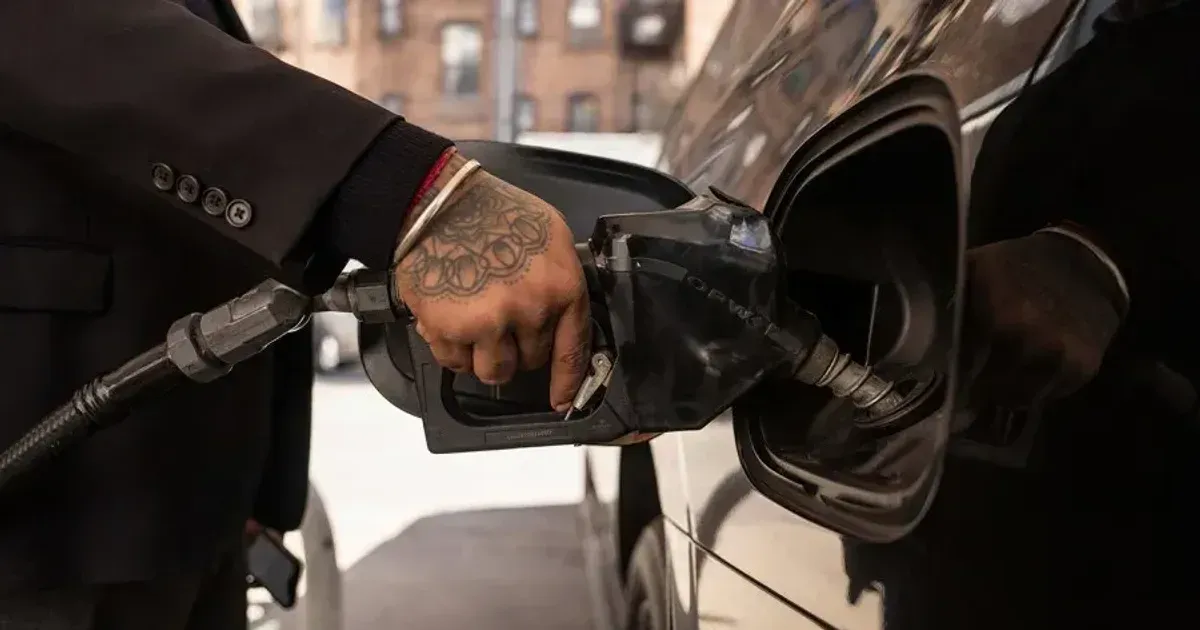
Military veterans and families of the fallen expressed immediate outrage on social media platforms, arguing that the memeification of actual combat diminishes the sacrifice of those in uniform. American service members are returning home in caskets while Washington treats the theater of war like a digital playground. Economic consequences are mounting just as quickly as the political blowback. Brent crude values shattered the 100 dollar threshold on Tuesday morning, trading at approximately 101 dollars as markets braced for a prolonged regional struggle. Energy analysts at several major firms warn that the 100 dollar mark is a psychological and structural tipping point. Rising fuel costs threaten to pull the United States into a recession before the year ends. Families already struggling with high inflation now face a surge at the pump that erases any gains in household income. This price surge could prove fatal for the administration's claims of economic stability.
Voters Connect Conflict to Costs
Backlash in the Rust Belt Michigan residents are signaling deep dissatisfaction with the current trajectory of the conflict. Michigan focus groups show swing voters increasingly describing the war as senseless and economically punishing.
Focus groups conducted in Grand Rapids and Detroit reveal that swing voters, who are important for any path to victory in 2026, find the war increasingly senseless.
Participants in these sessions highlighted the disconnect between the high-tech videos produced by the White House and the high prices at the grocery store. Many participants who supported the initial response now believe the escalation has gone too far. Their primary concern remains the domestic economy, but the perceived flippancy of the Undefeated video has added a layer of cultural resentment.
Voters in Grand Rapids and Detroit are not laughing. Trump finds himself in a precarious position as he attempts to maintain his image as a strong leader without alienating the working class base that is most sensitive to fuel spikes. Historical parallels to previous long-term involvements in the Middle East are being drawn by political observers on both sides of the aisle. While Bloomberg suggests that the military-industrial complex is seeing a boost from increased munitions orders, Reuters reports indicate that consumer confidence has hit its lowest point in eighteen months. Disparity between these two economic indicators highlights a growing chasm in American life. Recession fears are no longer confined to academic circles or Wall Street boardrooms. Ordinary Americans see the direct causality between missiles in the Persian Gulf and the cost of commuting to work. Economists at the University of Michigan noted that every ten-cent increase in the price of gas acts as a tax on the American consumer. When gas prices move toward four or five dollars a gallon, discretionary spending drops across the board. Small businesses are already reporting a slowdown in foot traffic as customers prioritize basic necessities over luxury items.
Digital War Optics
Administration officials seem convinced that reaching younger voters requires a specific visual language borrowed from gaming and viral memes. This marketing tactic assumes that the demographic most likely to be called to serve will be more supportive if the imagery is familiar.
Critics argue that this approach backfires by making the administration look desperate and disconnected from the gravity of combat. The use of a Grand Theft Auto clip was meant to be a humorous nod to internet culture, yet it has become a symbol of a White House that is fundamentally out of touch with the reality of war. Military analysts suggest that the strikes on Iran were intended to degrade Tehran's nuclear capabilities, but the narrative has shifted toward the cost of the operation.
National security experts are questioning the long term strategy if the domestic front begins to crumble. Support for foreign interventions typically follows a predictable curve, starting high and tapering off as costs rise and casualties mount. The Trump administration is seeing this curve sharpen more aggressively than previous presidents, largely due to the immediate visibility of economic pain and the perceived lack of seriousness in public communications. Navy veterans like Scott Kelly represent a demographic that the Republican party cannot afford to lose. Kelly’s public rebuke carries a weight that traditional political commentary lacks because it comes from a place of service. His refusal to accept the memeification of death is a focal point for a broader national conversation about how we discuss war in the digital age. This strategy of blending entertainment with statecraft may have permanently damaged the administration’s credibility with the military community.