Legislative Chaos Over Middle East Intervention
Washington awoke to a sharpening divide inside the Capitol on March 11, 2026. Senate Democratic leaders are now insisting that Pete Hegseth and Marco Rubio appear before Congress to justify the intensifying military engagement with Tehran. President Donald Trump has framed the conflict as an opportunity to reshape the region, but lawmakers remain skeptical of the administration's long-term objectives. Senate Minority Leader Chuck Schumer and other high-ranking Democrats issued a formal request for the Secretary of Defense and the Secretary of State to provide a thorough briefing on the war's progress and cost.
Democratic strategists believe the public deserves a clear explanation for the escalating violence. They argue that the current trajectory lacks a clear exit strategy. Critics of the administration point to the rapid deployment of resources without a formal declaration or a specific authorization for the use of military force. These demands for transparency come at a time when military operations are expanding beyond initial surgical strikes into a broader campaign. Democratic leaders seek to put Hegseth and Rubio on the record regarding the specific goals of the mission and the expected duration of the deployment.
Political survival in Washington often requires more dexterity than military victory in the field.
Republican Friction Over Post-War Vision
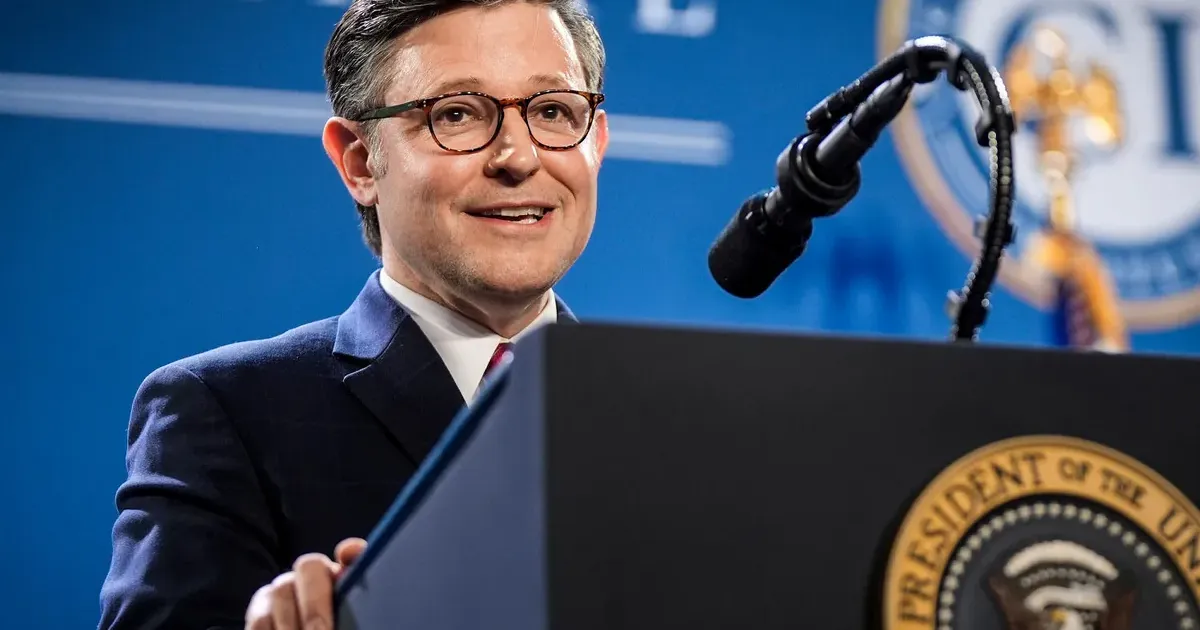
Speaker Mike Johnson and several key House Republicans have signaled a significant departure from the White House's rhetoric. While they support the initial military objectives, Johnson explicitly stated that he does not support nation-building in Iran. Donald Trump recently characterized the war as the beginning of building a new country, a phrase that triggered immediate pushback from fiscal conservatives. These lawmakers are wary of repeating the multi-decade entanglements that defined the early 21st century. Johnson noted that the primary focus must remain on dismantling immediate threats rather than overseeing the governance of a foreign state.
Internal GOP polling shows that the base is increasingly divided on the issue of foreign intervention. Many voters who supported the America First platform are hesitant to endorse a massive reconstruction project in the Persian Gulf. Conservative think tanks have warned that a protracted occupation would drain the Treasury and strain the military's readiness for other global challenges. Trump's vision of a transformed Iran clashes with the pragmatic isolationism that has gained ground within his own party. Republican leadership in the House wants to ensure that the mission remains limited in scope and focused strictly on U.S. security interests.
This rift between the White House and the Speaker's office creates a unique opening for legislative oversight.
Global Energy Markets and the Russian Advantage
Russia has emerged as a primary beneficiary of the volatility in the Middle East. The ongoing conflict between Iran and the U.S.-Israeli partnership has led to a blockade of the Strait of Hormuz, a critical chokepoint for global energy supplies. Moscow's calculation of its own resources suggests that the Kremlin will see a massive windfall as oil prices climb. Analysts at major financial institutions have observed a steady increase in Brent crude prices, which benefits Russian exports that bypass Western sanctions. Even if the U.S. achieves a decisive military outcome, the economic disruption has already shifted the balance of power in the energy sector.
European nations are feeling the pressure of rising energy costs as the blockade continues. Supply chains for liquefied natural gas and oil are being rerouted, adding significant costs to transportation. Russia is leveraging this situation to strengthen its economic ties with Asian markets that are desperate for stable energy sources. Energy security has become the central concern for global leaders, yet the current conflict shows no signs of easing the pressure on the Strait of Hormuz. Moscow remains the only capital where champagne corks are likely popping over the closure of the world's most key waterway.
This geopolitical reality complicates the administration's claims that the war will enhance global stability.
The Mounting Cost of Regional Transformation
Military expenditures are surpassing initial estimates as the Pentagon shifts toward a sustained presence. Hegseth has advocated for a strong military posture to ensure that Iranian leadership cannot reconstitute its nuclear or conventional capabilities. Rubio has echoed these sentiments from a diplomatic perspective, arguing that only a fundamental change in Tehran will secure the interests of the United States and its allies. But the cost of such a change is becoming a central theme in the halls of Congress. Legislators are questioning how the administration plans to fund a project of this scale without ballooning the national debt further.
Economic data from the first quarter of 2026 indicates that the war is contributing to inflationary pressures across the domestic economy. Fuel costs at American pumps have reached levels not seen in years, impacting the transport of goods and services. Senate Democrats are using these economic indicators to strengthen their case for a change in policy. They believe that the administration has underestimated the resilience of the Iranian military and the impact of the conflict on the global financial system. Public support for the intervention is beginning to erode as the financial burden becomes more apparent to the average citizen.
This economic shift provides the Kremlin with a key lifeline during a period of international isolation.
Strategic analysts warn that the lack of consensus in Washington could lead to a vacuum in leadership. If the President and the Speaker cannot agree on the definition of victory, the troops on the ground may find themselves in an ambiguous mission. Historical precedents suggest that vague objectives lead to mission creep and long-term instability. The upcoming hearings, if they occur, will likely be a theater of intense partisan conflict. Rubio and Hegseth will face grueling questions about the administration's end-game and the potential for a peaceful resolution. Without a unified front, the United States risks a strategic failure that could reverberate for decades.
Moscow remains the only capital where champagne corks are likely popping over the closure of the world's most key waterway.
The Elite Tribune Perspective
History suggests that the White House has a short memory for desert graveyards. The current administration's flirtation with building a new country in Iran is a dangerous revival of the hubris that decimated American prestige in the early 2000s. It is a delusion to believe that a society as complex and ancient as Iran can be dismantled and reconstructed from the rubble of a bombing campaign. Speaker Mike Johnson is right to be terrified of the nation-building trap, even if his party leader is the one setting it. The reality is that the United States cannot afford a trillion-dollar social experiment in the Middle East while its own infrastructure and social fabric are fraying. Russia is laughing at this strategic blunder, counting its oil profits while Washington burns through its remaining credibility. If Hegseth and Rubio cannot provide a concrete, limited plan for withdrawal, they are merely presiding over the next great American quagmire. The American public should be outraged that their tax dollars are being used to spike global oil prices and line the pockets of the Kremlin. We are watching a predictable tragedy unfold where the winners are in Moscow and the losers are the taxpayers in Ohio and Florida.