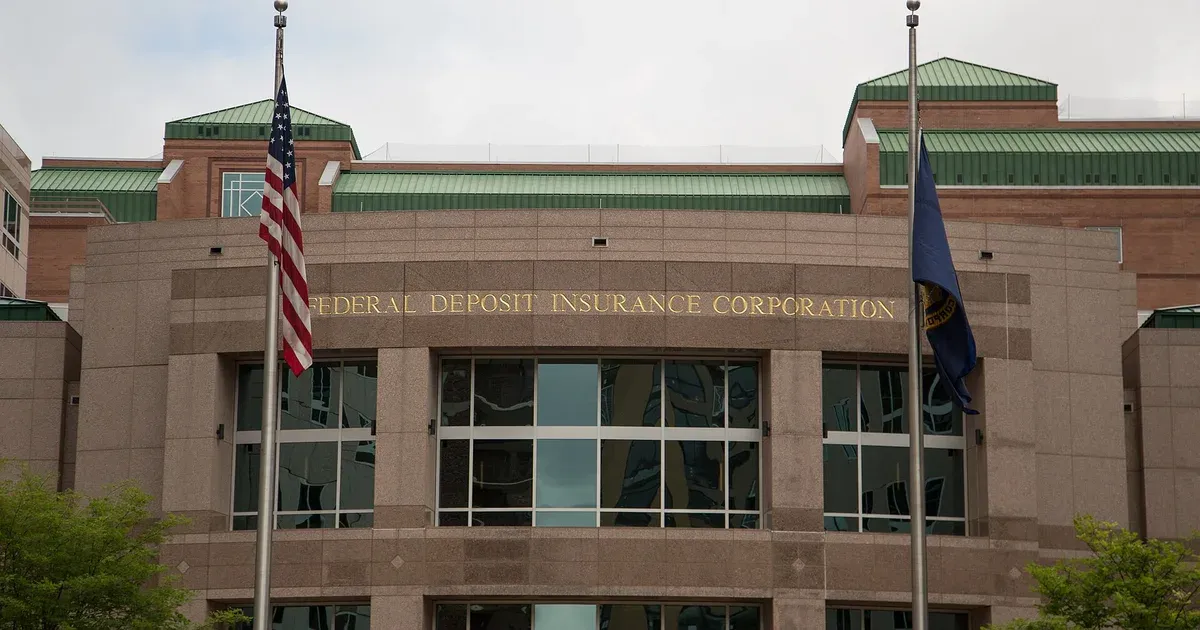
Senators in both parties are targeting executive pay after bank failures, trying to close the moral-hazard gap that lets leaders profit before collapse. The development was reported March 11, 2026.
A bipartisan Senate push to seize executive pay after bank failures is aimed at the moral hazard that keeps rewarding collapse.
FDIC Clawback Powers Expand
Capitol Hill negotiators have unveiled a refined bipartisan framework designed to strip bank executives of their compensation when their institutions collapse. Lawmakers in both parties are pushing for the Federal Deposit Insurance Corporation (FDIC) to gain expansive new powers to claw back bonuses, stock sale profits, and incentive-based pay earned in the years leading up to a bank failure. Senator Sherrod Brown, a Democrat from Ohio, and Senator Tim Scott, a Republican from South Carolina, have found rare common ground on the issue of executive accountability. Their alliance targets the perceived moral hazard that allows bank leadership to profit from aggressive risk-taking while leaving taxpayers and the federal deposit insurance fund to manage the fallout.
Financial stability remains the primary goal of the proposal, which builds upon the structural weaknesses exposed during the regional banking crisis of 2023. Greg Becker, the former head of Silicon Valley Bank, became the face of this frustration when it was revealed he sold millions in stock just weeks before his bank imploded. Regulators currently struggle to recover such funds because existing laws require a high burden of proof involving gross negligence or intentional misconduct. Existing statutes often leave the FDIC toothless when attempting to recover compensation from failed bank leadership.
Current rules mainly target individual actions that are clearly illegal, yet they frequently ignore the broader failures of management that lead to liquidity traps and interest rate mismatches. This legislation seeks to lower the threshold for recovery, allowing the government to seize pay when an executive is deemed to have failed in their primary duties of risk management. Federal authorities would be able to look back across a two-year window to identify compensation tied to the bank's performance. Bankers who oversaw the collapse of Signature Bank and First Republic Bank also kept the vast majority of their earnings, a reality that galvanized public support for more aggressive oversight. Senator Brown noted that the current system essentially rewards failure.
Accountability should not be optional for those managing billions in public deposits. Washington often remains paralyzed by partisan gridlock, but the optics of wealthy bankers walking away from wreckage with golden parachutes have forced a different dynamic. Republicans like Tim Scott emphasize the need for market discipline, arguing that clawbacks are a free-market solution to ensure executives have skin in the game. Democrats focus on the protection of the insurance fund and the prevention of future bailouts. Still, the bill faces a gauntlet of industry opposition.
Wall Street lobbyists argue that such measures will drive talented leaders away from the banking sector and toward private equity or hedge funds where such rules do not apply. They claim that the threat of retrospective pay seizures will make executives overly cautious, potentially choking off credit to small businesses. American Bankers Association representatives have expressed concerns that the definitions of mismanagement are too vague.
Bipartisan Pressure on Bank Executives
Regardless of these complaints, the momentum for the bill appears to be growing as the 2026 election cycle approaches. Voters across the political spectrum have expressed a visceral distaste for executive immunity in the financial sector. Compensation committees at major banks would be forced to rewrite their bylaws to comply with the new federal mandate. Instead of simple cash bonuses, more pay would likely be deferred or held in escrow until the long-term health of the bank is verified. The FDIC would serve as the arbiter of these recoveries.
If a bank enters receivership, the agency would automatically trigger an audit of the top three tiers of management. Stock options exercised within twenty-four months of the failure would be subject to immediate forfeiture. The math doesn't add up for the public when a bank's net worth vanishes while its C-suite grows wealthier. One sentence from the proposal clarifies that even 'negligent' oversight could be enough to trigger a clawback. This move is a significant departure from the post-2008 era where very few individual executives faced financial penalties.
Public anger over the 2023 failures has proven more durable than industry analysts originally predicted. Bank stocks showed modest volatility as news of the bipartisan deal leaked to the press. Investors are weighing whether these new rules will change the fundamental profitability of regional lenders. Some analysts suggest that the increased personal risk for CEOs will lead to higher base salaries to compensate for the potential loss of bonuses. Others believe the bill will finally end the era of reckless growth-at-all-costs strategies that defined the early 2020s.
The legislation also includes provisions to bar executives of failed banks from working in the financial industry again. Such a ban would be permanent for those found to have ignored repeated warnings from federal examiners. Regulatory reports from the 2023 crisis showed that supervisors at the Federal Reserve had warned Silicon Valley Bank about its interest rate risks for months before it failed. The executives ignored those warnings. Under the new proposal, that specific failure to act would be the primary evidence used to seize their wealth.
Why Failure Pay Finally Became Toxic
Imagine a world where a pilot crashes a plane and keeps his salary while the passengers pay for the wreckage. Banking is the only industry where catastrophic failure is treated as a minor professional hiccup rather than a financial crime. For decades, the American public has been fed a diet of 'market discipline' and 'personal responsibility,' yet these concepts seem to vanish the moment a balance sheet turns red. This bipartisan plan is not an act of radicalism; it is a desperate attempt to restore a shred of sanity to a system that has become a playground for the reckless. We should be skeptical of the industry's claims that this will cause a talent drain.
If the only 'talent' willing to run our banks is the kind that requires a guaranteed multi-million dollar exit regardless of performance, then that talent is not worth the price. The real danger is not that we will scare away the geniuses of finance, but that we will continue to subsidize the incompetence of the elite. Lawmakers must ignore the inevitable whining from the donor class and pass a law that finally puts the cost of failure where it belongs. It is time to treat bank leadership like the public stewards they claim to be.