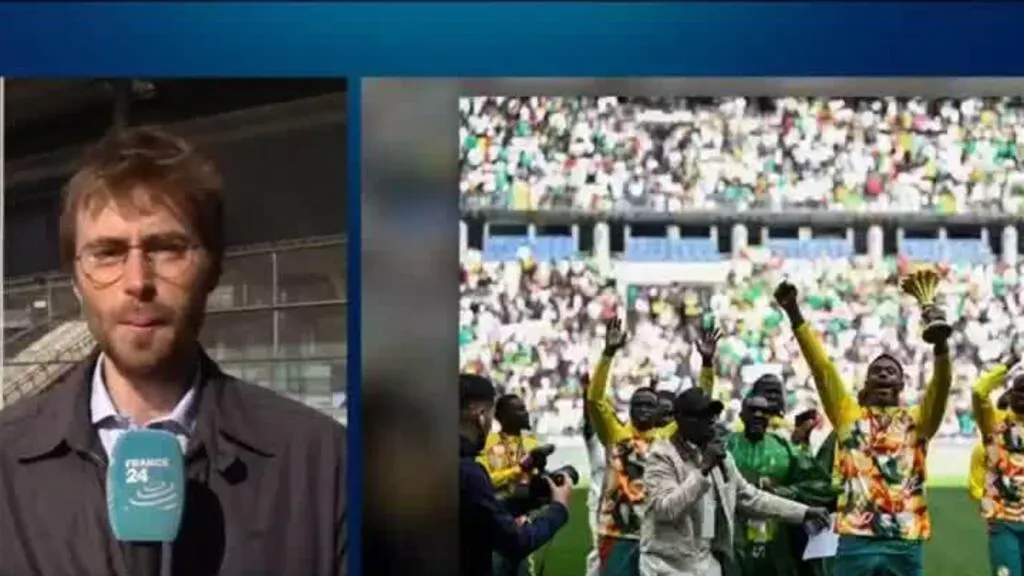
Senegal turned an AFCON trophy ceremony into an act of defiance. The trophy display turned an administrative dispute into a public image problem. On March 28, 2026, players carried the silverware at the Stade de France before a match in Paris even though the Confederation of African Football had stripped the team of the title and awarded the championship to Morocco. The image was powerful because it collapsed a legal dispute into a public spectacle: one governing body says the trophy is no longer Senegal’s, while the players and fans behaved as if it still is.
The dispute traces back to the January final in Rabat, where Senegal originally beat Morocco 1-0. Morocco later challenged the result over eligibility and administrative issues, and CAF’s disciplinary process produced an extraordinary remedy. The governing body reversed the result to a 3-0 Morocco victory, effectively removing Senegal’s title and ordering the trophy returned. Senegal’s federation has appealed to the Court of Arbitration for Sport, which means the final status of the title may not be settled quickly. The Paris parade therefore functioned as both celebration and legal messaging. Senegal was telling supporters, CAF and Morocco that it does not accept the ruling as the final word.
CAF Ruling Turns a Final Into a Legal Fight
Sports governing bodies can punish eligibility breaches, but reversing a continental final is a severe act. It changes history after the match has already been played, celebrated and recorded. That is why the ruling has generated such intensity. CAF is asserting regulatory authority; Senegal is asserting sporting legitimacy from the field.
The key issue is whether the alleged breaches justify overturning the result rather than imposing a lesser sanction. If CAF’s evidence is strong, it will argue that competition integrity required a decisive remedy. If Senegal can show procedural flaws or disproportionate punishment, the appeal could become a test of how far administrators can go after a tournament ends.
For Morocco, the ruling offers official vindication but also an awkward form of victory. Being awarded a title through a disciplinary process is not the same as lifting the trophy after the final whistle. That does not make the claim invalid, but it does make the symbolism contested.
Paris Ceremony Keeps Senegal’s Claim Alive
The Stade de France setting mattered. Paris has a large Senegalese diaspora, and the public display allowed the team to stage the dispute before a friendly crowd far from CAF offices. Fans cheering the trophy were not parsing legal filings. They were affirming the memory of a team they believe won on the pitch. That emotional dimension is why trophy custody is not a small detail. A physical cup gives a legal dispute visual force. If Senegal retains and displays it, the federation can keep its version of the story alive. If CAF regains custody, the governing body can reinforce its authority while the appeal proceeds.
The risk for Senegal is that defiance may harden CAF’s position or complicate the appeal optics. The benefit is that it prevents the ruling from becoming normalized before CAS reviews the matter. In sports politics, public memory often matters as much as paperwork.
Appeal Process Will Decide More Than This Title
The Court of Arbitration for Sport will likely focus on procedure, evidence and proportionality. It will not simply decide which fan base feels wronged. The appeal could examine whether the disciplinary process respected Senegal’s rights, whether the alleged eligibility issues were proven and whether changing the final result was a lawful remedy.
The outcome will matter beyond one tournament. African football has repeatedly faced disputes over eligibility, administration and federation politics. A ruling that upholds CAF would strengthen the confederation’s hand in future cases. A ruling for Senegal would warn governing bodies against rewriting results without airtight process. There is also a player-welfare element. Athletes played the final, received medals and became part of a national celebration. Removing that title weeks later does not only affect administrators. It alters careers and public memory. That is why the case feels larger than a technical dispute.
The emotional layer is why the Paris parade became more than a photo opportunity. Supporters were not only celebrating a past result; they were rejecting the idea that a disciplinary ruling had already settled the team's identity as champion. In football governance, symbols matter because legal timelines move slowly. A trophy held in public can keep a disputed claim alive while documents move through formal channels. That strategy also increases pressure on the institutions handling the appeal. If CAS ultimately sides with CAF, Senegal will have turned the defeat into a public grievance. If CAS changes the outcome, the parade will look like an early act of resistance rather than defiance for its own sake. The case also warns federations that administrative disputes can become public legitimacy battles if decisions are not explained clearly. Fans may accept a defeat on the field more easily than a title removed through paperwork, especially when national pride is attached to the original result. That is why the argument has moved from a result dispute into a governance story. The parade made that governance dispute impossible to treat as private paperwork. The legal result will decide the title, but the public argument is already reshaping the memory of the tournament.
The Meaning of a Trophy Under Appeal
Senegal’s parade was provocative, but it was not irrational. The federation is fighting on two fronts: the legal appeal and the public narrative. Displaying the trophy in Paris told supporters that the team has not surrendered either one. It also forced CAF to confront the fact that authority over a competition does not automatically create emotional acceptance of a ruling.
The danger is that symbolism can outrun law. If CAS ultimately upholds CAF, Senegal’s display may be remembered as denial rather than resistance. If CAS reverses or softens the sanction, the Paris ceremony will look like a refusal to let administrators erase a sporting achievement before the appeal was heard. For now, the trophy sits in an unusual category: physically held by one side, officially awarded to another and emotionally claimed by a fan base that watched its team win the final. That tension is the story. Until the appeal is settled, every photograph of Senegal with the cup is also a challenge to the system that says the cup has already moved on.