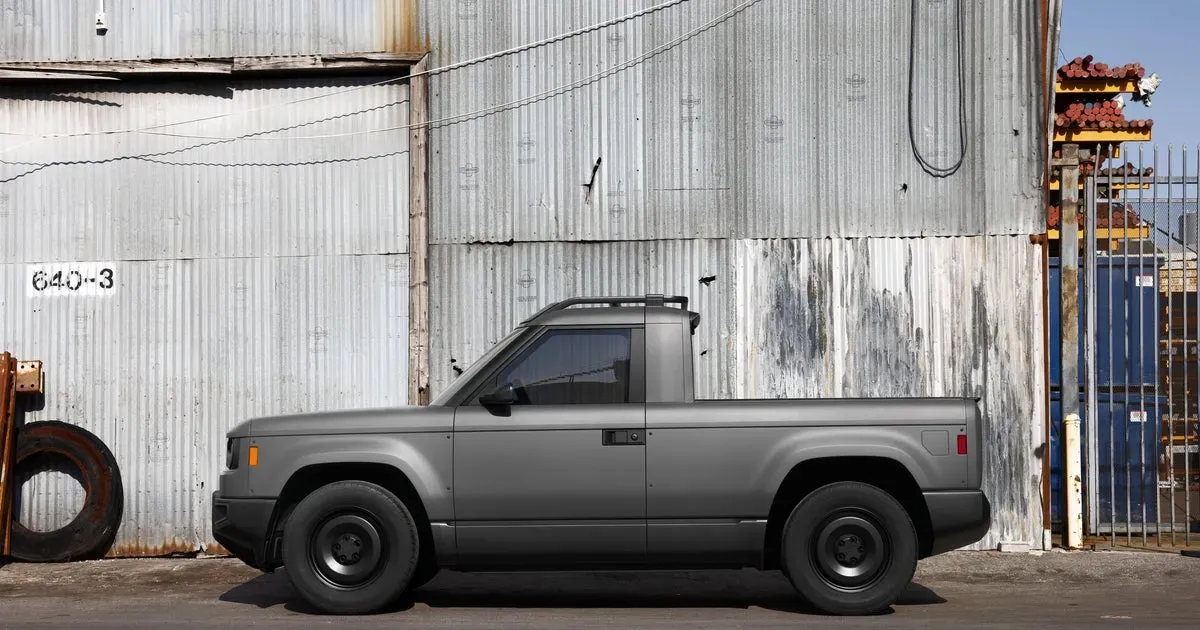
Slate is trying to answer a question that has bothered the electric vehicle market for years: whether a cheaper, simpler truck can win buyers who have been priced out or turned off by luxury EVs. Its proposed $24,950 pickup is a direct challenge to the idea that electric trucks have to start as expensive technology showcases. By June 24, 2026, the company had turned simplicity itself into the product claim.
CBS News reported that Slate, backed by investors including Jeff Bezos, is pitching a bare-bones electric pickup designed around customization and a lower starting price.
The company is betting that some drivers want an EV workhorse more than a giant touchscreen, long list of premium options or six-figure performance story. That bet challenges the recent habit of treating electric trucks as symbols of power and status rather than as basic transportation tools.
On June 24, 2026, that pitch stood out because the broader EV market is still trying to reach buyers who see electric vehicles as too expensive, too complicated or too dependent on charging habits they do not yet trust.
Affordability Becomes The Feature
Slate EV pickup strategy starts with price. A sub-$25,000 sticker, before options and incentives, would put the truck closer to mainstream used-vehicle math than the high-end EV pickups that have dominated attention.
That price point could matter for small businesses, younger buyers and households that need basic utility but cannot justify a luxury truck payment. It also gives Slate a way to speak to EV skeptics without asking them to buy into the full technology lifestyle around existing electric pickups.
The tradeoff is that simplicity has to feel intentional rather than cheap. If buyers read the stripped-down cabin as practical, Slate gains a clear identity. If they read it as unfinished, the price advantage may not be enough.
The truck's biggest feature is not a gadget; it is the attempt to make an EV feel financially reachable.
Customization Carries The Risk
The company's model depends heavily on customization. Buyers can start with a basic truck and add what they need, which may appeal to people who dislike paying for features they never use.
EV customization can also create confusion. A low advertised price may look less compelling if practical options, accessories or range-related upgrades push the final cost higher. Automakers have learned that shoppers react badly when a simple price story becomes complicated at checkout.
Slate also has to overcome concerns that affect the whole EV sector: charging access, battery durability, repair networks and resale value. A cheaper truck may reduce the risk of trying electric, but it does not erase those questions.
The timing is important because investors have become more selective about expensive technology bets. Recent pressure on technology valuations has made companies prove that demand is real, not only that a product looks novel. For an automaker without an established dealer network, that means early interest will have to convert into orders, deliveries and repeatable production rather than social media curiosity.
The Test Is Broader Than One Truck
If Slate succeeds, the lesson for the EV industry will be that affordability can be a stronger adoption tool than another round of bigger batteries, faster acceleration and luxury interiors. That would push competitors to think harder about basic models rather than only premium margins.
Low-cost EVs remain difficult because battery costs, safety requirements and manufacturing scale leave little room for error. A startup promising a cheap truck has to manage expectations carefully, especially before production, service and delivery networks are proven.
The vehicle therefore carries two tests at once. The first is whether buyers actually want a stripped-down electric pickup. The second is whether Slate can build it at the promised price without turning simplicity into a compromise that shoppers reject.
That makes the pickup an important market signal even before it reaches scale. If demand is strong, EV growth may move toward plain utility. If demand is weak, it will suggest that skepticism is not only about price, but about whether electric trucks fit how drivers actually use their vehicles. The company will need to prove that a lower sticker price can survive real-world ownership questions about charging, service, weather performance and resale value. Buyers in this part of the market are often less able to absorb surprise costs, which means reliability and transparent option pricing may matter more than futuristic branding. Slate also has to show that a simplified truck can still meet everyday expectations for safety, comfort and durability. If it can do that, the company may create a new lane for practical EV adoption. If it cannot, skeptics will treat the low price as another promise that did not survive production reality, a familiar concern for shoppers who have watched several EV startups overpromise on price, delivery dates and support networks after launch, especially outside early enthusiast markets and urban launch regions nationwide.