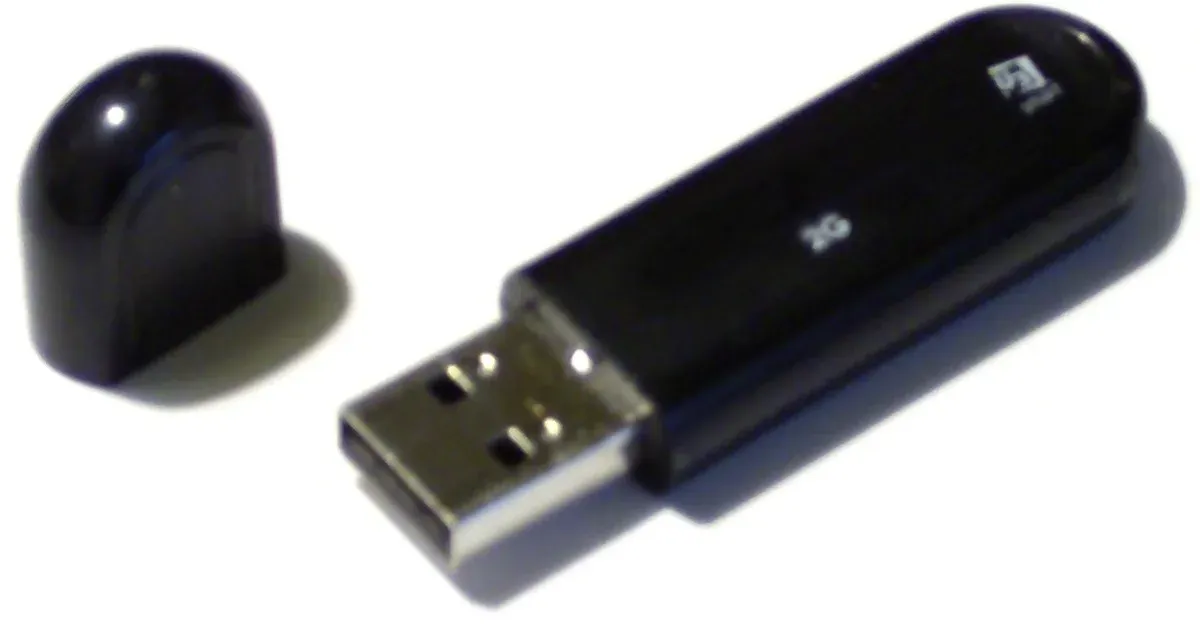
The Social Security Inspector General probe into a former DOGE engineer has turned a federal modernization project into a data-security crisis with possible consequences for millions of citizens. Federal investigators inside the Social Security Administration are scrutinizing the movements of a former software engineer who served within the Department of Government Efficiency, according to sources familiar with the inquiry. Evidence provided by a whistleblower suggests that the individual, whose name has not been released pending formal charges, transferred sensitive files onto a portable thumb drive shortly before departing for a position in the private sector. The Social Security Inspector General's office launched the probe earlier this week to determine the scope of the potential breach and whether personal identification data of millions of American citizens was compromised. March 11, 2026, marks a tense period for the Department of Government Efficiency, commonly known as DOGE, as its aggressive mandate to modernize federal systems encounters its first major legal hurdle regarding data sovereignty. Established with the intent to slash bureaucratic waste, the department recruited high-level engineers from Silicon Valley and gave them unprecedented access to legacy federal databases. Critics of the agency previously warned that the collision of fast-moving tech culture and slow-moving federal privacy law would lead to exactly such a crisis. Security protocols failed at a fundamental level if these allegations prove true. Engineers within the DOGE unit worked closely with the Social Security Administration to streamline the distribution of benefits and identify fraudulent accounts. While their mission was fiscal responsibility, the level of administrative access granted to these consultants allowed them to bypass traditional oversight hurdles. Witnesses claim the engineer in question spent several nights late at the office in late February, accessing encrypted servers that house social security numbers, birth records, and banking information for beneficiaries.
The Intersection of Disruptive Tech and Federal Privacy
Whistleblowers rarely act without significant provocation, and the individual who came forward provided a detailed account of the alleged theft. The report indicates that the engineer boasted about the value of the 'raw data' for his new venture in the financial technology sector. Most federal computers are equipped with software to block the use of external storage devices, but members of the DOGE task force often operated on specialized hardware designed to circumvent existing security constraints in the name of speed and technical optimization. This culture of rapid disruption ignored the safeguards built into the Privacy Act of 1974.
Legal experts in Washington note that the penalties for such a breach are severe. If the individual utilized government records for personal gain or transferred them to a private entity, they could face multiple counts of theft of government property and violations of the Computer Fraud and Abuse Act. The Department of Justice has been briefed on the Social Security Inspector General's findings, though no arrests have occurred. Such a delay in prosecution often signals that investigators are attempting to track exactly where the data went after the thumb drive left the building.
Investigators are currently tracing the digital breadcrumbs. Legacy systems at the Social Security Administration still rely on COBOL, an aging programming language that modern engineers often find cumbersome. DOGE members were tasked with translating this ancient code into modern frameworks, a process that required the mass migration of data. During these migrations, data is often at its most vulnerable. The whistleblower claims the engineer exploited a window of time during a server migration to copy a massive subset of the master beneficiary record.
Comparing Past Breaches and Current Risks
While Bloomberg suggests the breach might be contained to a specific regional database, sources at Reuters indicate the scope could be national. Such a discrepancy highlights the difficulty of auditing the activities of a department that was essentially designed to be an outsider within the federal system. Unlike standard civil servants, many DOGE members were brought in under temporary contracts that lacked the rigorous multi-year vetting processes typical for those with 'Top Secret' access to citizen records.
This inquiry focuses on a single individual, yet the implications reach every corner of the executive branch.
Internal memos from the Inspector General emphasize that the stolen data represents more than numbers on a screen. Social security records are the bedrock of American identity, and their presence on an unsecured, private thumb drive creates a permanent risk of identity theft for the affected individuals. The administration has not yet notified the public because the full extent of the compromised list remains unknown. Officials worry that premature notification could tip off the suspect or allow them to further conceal the location of the stolen hardware.
The Pressure on DOGE Leadership
Leadership within the Department of Government Efficiency has remained largely silent since the story broke. Their silence draws a sharp contrast to the vocal, public-facing personas they maintained during the first year of the agency’s existence. Behind the scenes, the tension between DOGE leadership and the Social Security Administration has reached a boiling point. Social Security officials had warned as early as October 2025 that DOGE engineers were handling data too recklessly, only to see those concerns dismissed as typical bureaucratic resistance to progress.
Social Security officials had complained as early as October 2025 that DOGE engineers were being too reckless with data handling, but those concerns were dismissed as typical bureaucratic resistance to progress.
Bureaucracy, in this instance, might have been the necessary shield that was discarded too quickly. Contractors from the private sector often view government data as a resource to be mined rather than a public trust to be guarded. The engineer allegedly sought to use the data to train proprietary machine-learning models for a new fintech startup focused on wealth management and credit scoring. If true, the use of citizen data to build a private product would represent one of the most significant ethical violations in the history of the federal government.
Evidence suggests the thumb drive was taken to an office in San Francisco, where the engineer began his new role on March 2. Federal agents have already served a subpoena to the company, though the firm claims it was unaware of the origin of the data provided by its new hire. The company’s legal counsel issued a brief statement denying any wrongdoing and promising full cooperation with the Inspector General. Still, the damage to public trust in DOGE’s mission remains the most difficult outcome to repair.
Politics will undoubtedly play a role in how this investigation proceeds. Lawmakers on Capitol Hill are already calling for emergency hearings to determine if DOGE should continue to have direct access to sensitive databases. Some representatives argue that the agency should be dissolved immediately, while others maintain that the actions of one 'bad actor' should not derail the broader effort to save taxpayer money. But the debate over efficiency versus security has shifted decisively in favor of those who prioritize the latter.
Data remains the most valuable currency in the modern age.
Federal Data Trust
Did anyone truly believe that giving a group of 'move fast and break things' tech enthusiasts the keys to the Social Security database would end in anything other than a disaster? We are seeing the inevitable outcome of a government that confuses technical proficiency with ethical reliability. For years, the mantra of the Department of Government Efficiency has been that the private sector knows best, yet here we have a private-sector recruit allegedly treating the personal identities of millions of Americans like a proprietary asset for his next venture. This isn't just a failure of security, but a failure of philosophy. The Social Security Administration was built on the idea of a social contract, a promise of stability and privacy between the state and the citizen. By outsourcing the stewardship of that contract to individuals who view data as a commodity to be exploited, the administration has effectively sold out the public. We must stop pretending that efficiency is a virtue when it comes at the cost of our most intimate personal information. If DOGE cannot operate without compromising the security of the American people, then it has no business existing at all. The Inspector General must not only prosecute this engineer but also investigate the leadership that allowed such a reckless environment to flourish.