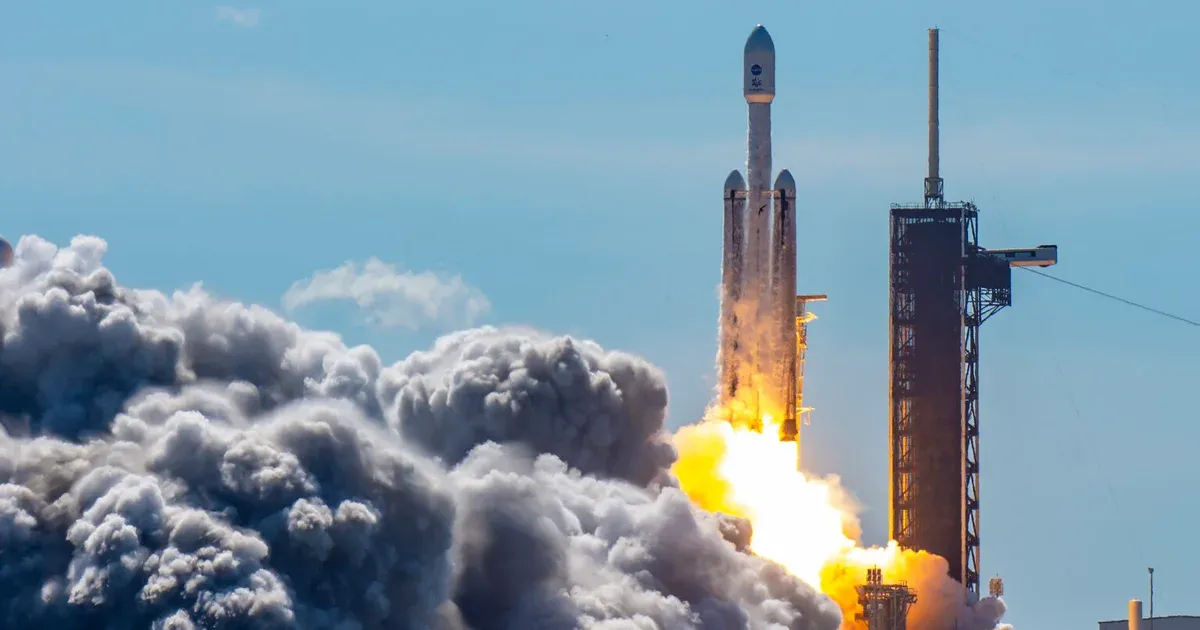
The US Space Force tripled the maximum value of its more accessible national-security launch contract, lifting the ceiling from $5.6 billion to $17 billion. The service announced the change on July 17, 2026, as military planners prepared for a larger stream of satellite missions. The increase applies to Lane 1 of the National Security Space Launch Phase 3 program rather than to a single purchase or rocket company.
The NSSL framework divides launches according to the sensitivity of the payload and the amount of technical assurance required. Lane 1 handles missions that can accept more operational risk and allows a broader field of commercial providers. Lane 2 carries the government’s most demanding spacecraft and requires launch systems to complete an extensive military certification process.
Lane 2 already has a contract ceiling of $13.7 billion. Combined with the revised Lane 1 limit, the two pools now exceed $30 billion in potential orders. A ceiling is not a guarantee that the entire amount will be spent, but a threefold revision so early in the procurement cycle shows that the original estimate no longer covers the mission pipeline officials expect to manage.
Lane 1 Expansion Opens More Missions to Seven Providers
Lane 1 includes medium-lift flights, experimental payloads and rideshare missions used to place groups of surveillance or data-relay satellites in orbit. Providers can compete without completing every review required for the military’s most sensitive payloads. The structure gives the Space Force a way to buy launches from a growing commercial market while matching oversight to the consequences of a failure.
SpaceX, United Launch Alliance and Blue Origin entered the Phase 3 Lane 1 pool in 2024. Four later additions completed the seven-company roster: Rocket Lab, Stoke Space, Relativity Space and Impulse Space. Eligibility only permits those companies to bid; it does not divide missions evenly among them. Competition occurs at mission level: qualified firms answer periodic solicitations, and winners receive separately priced work packages.
SpaceX has secured most Lane 1 orders so far, while Blue Origin received its first award earlier this year. The original plan anticipated at least 30 task orders during a five-year period, with $5.6 billion considered sufficient for that workload. Officials did not disclose a revised mission count when they raised the ceiling to $17 billion, leaving launch volume, payload mix and schedule as important unresolved variables behind the larger number.
Strategic Launches Remain Concentrated in Two Rocket Families
Lane 2 covers large spy satellites, radiation-hardened communications spacecraft and other strategic payloads for which the government demands the highest assurance. Certification presently leaves the strategic lane with three operational choices: ULA’s Vulcan and SpaceX’s Falcon 9 and Falcon Heavy. The narrower field reflects years of technical review, but it also concentrates a critical part of the national-security manifest among two companies and three launch vehicles.
The initial planning baseline through 2029 covered 54 Lane 2 flights. An April update added 25 missions to that baseline. The revision takes the identified Lane 2 requirement to 79 flights, an increase of almost half over the original count. It preceded the separate Lane 1 increase and shows that demand is rising on both sides of the program, even though the service has not published a complete list of the spacecraft assigned to the added flights.
Several programs explain part of the pressure. The Pentagon has awarded SpaceX multibillion-dollar work on two satellite efforts: the Space Data Network and the Airborne Moving Target Indicator program. They are intended to supply military connectivity and targeting information. The proposed Golden Dome missile-defense system could add orbital warning sensors and interceptors, but its final architecture and the number of launches it would require have not been made public.
Contract Ceilings Reveal Demand Before They Reveal Spending
Fiscal 2027 White House planning put the service at $71.1 billion. The fiscal 2026 allocation was roughly $40 billion. A House appropriations draft set the service at $55.5 billion, below the administration’s figure, and the Senate had not released its corresponding Pentagon bill. Even the House figure would add $15.5 billion over the prior allocation, while leaving a large gap from the White House plan. Those figures place the launch ceilings inside a broader budget negotiation rather than converting them into funded missions automatically.
Task orders will provide the firmer measure. Each award identifies a mission, provider and price, allowing the government and launch market to be judged against the capacity implied by the headline ceiling. If satellite programs are delayed, redesigned or reduced by Congress, authorized room may go unused. If the planned constellations and missile-defense elements proceed together, another revision could arrive before the current Phase 3 period ends.
The procurement structure also separates nominal competition from proven access to the hardest missions. Seven Lane 1 providers can pressure prices and establish flight records, yet only Falcon and Vulcan currently serve Lane 2. The $17 billion expansion can broaden the commercial base if newer entrants win and execute task orders successfully. Without that distribution, a larger contract would increase launch spending while leaving the military dependent on the same small group of operational systems.