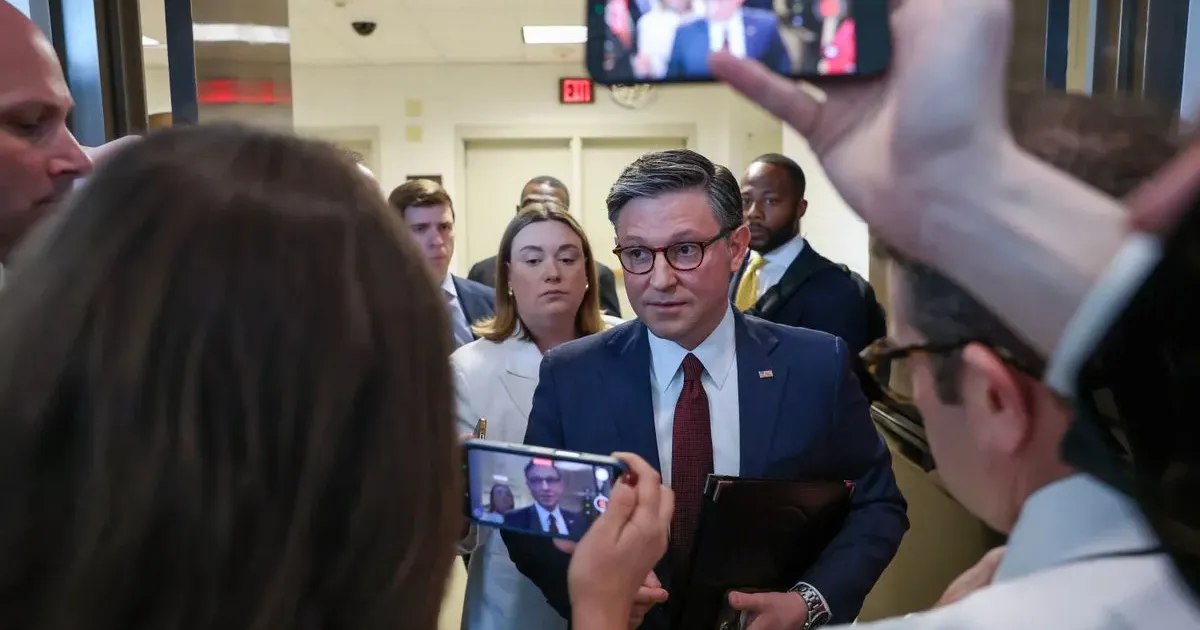
Speaker Mike Johnson halted a legislative package for airport staff on March 27, 2026, creating a fresh deadlock over federal aviation security. Republican leadership in the House of Representatives moved to dismiss the bill despite warnings of worsening travel delays across major transit hubs. Republican dissenters argued that the proposed spending levels exceeded fiscal boundaries established earlier this year. Travelers already face wait times exceeding three hours at primary gateways like O'Hare and Heathrow.

Meanwhile, Donald Trump issued a sudden intervention by signing an executive order to stabilize the workforce. White House officials confirmed that the president instructed the Department of Homeland Security to ensure salary payments reach essential personnel despite the legislative gridlock. This administrative move effectively bypasses the House blockade for the immediate future. Staffing shortages at security checkpoints have reached critical levels in ten major cities. The executive action seeks to prevent a total collapse of the aviation screening process.

House Republican Opposition to Aviation Funding

Republican lawmakers rejected the funding measure during a closed-door session that lasted several hours. They contended that the legislation included provisions unrelated to security, which they refused to support. Speaker Mike Johnson stated that his decision aligned with the preferences of the executive branch. Critics in the chamber noted that the rejection occurred just as spring travel volume reached its seasonal peak. Budget hawks maintained that any new spending must be offset by cuts in other federal programs.

“Donald Trump agreed with [this move],” according to a public statement released by Speaker Mike Johnson.

As it turns out, the internal rift within the party grew more visible as the vote approached. Several members of the Freedom Caucus insisted that the bill represented an unnecessary expansion of federal authority. They argued that the TSA should undergo a structural audit before receiving additional taxpayer funds. By contrast, moderate members warned that a failure to act would lead to economic damage in the tourism sector. The measure ultimately failed to reach the floor for a final vote.

Still, the logistical pressure on the Department of Homeland Security continues to mount. Agency leaders warned that without a permanent legislative fix, the temporary funds provided by the executive order would dissipate within thirty days. Payroll systems require a steady appropriation to function beyond emergency contingencies. In turn, regional directors reported a spike in sick leave among agents who are frustrated by the financial uncertainty. Security lanes in Atlanta and Los Angeles closed early on Friday due to staff shortages.

White House Response and DHS Executive Action

White House advisors distributed a memo on March 27, 2026, outlining the legal basis for the president's intervention. Donald Trump moved to decouple the pay of security workers from the broader political fight in the House. According to Al Jazeera, the memo clarifies that funds from existing agency reserves will be diverted to cover the TSA payroll. This maneuver provides a temporary shield for nearly 45,000 federal employees. Aviation unions remained skeptical about the long-term viability of this funding source.

For instance, the diverted funds were originally earmarked for technology upgrades at airport perimeters. Delaying those upgrades could leave facilities vulnerable to different categories of security risks. And yet, the administration focused on immediate personnel retention to keep the lines moving. Donald Trump signaled that he would rather use executive authority than negotiate with a recalcitrant House majority. The move demonstrates a shift in how the executive branch interacts with congressional leadership during fiscal disputes.

That said, the Department of Homeland Security must now navigate a complex regulatory path to execute these payments. Accountants within the agency are working to ensure the transfers comply with federal law. Any misstep could result in legal challenges from congressional committees overseeing government spending. To that end, the White House legal counsel spent the morning reviewing the statutory limits of the $11 billion aviation security budget. Lawyers from the Justice Department were also consulted to verify the president's emergency powers.

Impact on TSA Operations and Passenger Safety

Aviation experts warned that temporary pay measures do not solve the underlying recruitment crisis. The TSA has struggled to fill vacancies for the past three years as private-sector wages outpace federal pay scales. For one, baggage handlers and screening officers often find better compensation in local logistics hubs. The lack of a permanent funding bill makes it impossible for the agency to offer competitive signing bonuses. Passenger throughput at major airports has dropped by 15% because of the resulting bottlenecks.

Apart from that, the Federal Aviation Administration noted that the tension at security checkpoints is creating a wider effect across flight schedules. Airlines are forced to hold planes for passengers stuck in security lines, leading to missed connections and late departures. In particular, the delays are most acute during the early morning rush when international flights arrive. Carriers have already begun canceling flights to avoid further cascading delays. Financial losses for the airline industry are estimated at several million dollars per day.

But the human cost is becoming the primary concern for airport administrators. Overworked screening officers report higher rates of exhaustion and errors. At the same time, passengers are becoming increasingly agitated as wait times grow. Security incidents involving unruly travelers have increased sharply since the funding dispute began. Airport police in Denver reported three physical altercations in a single afternoon. These incidents divert resources away from core security missions.

Political Friction Between Johnson and Thune

The legislative failure exposed a deep divide between the House and Senate Republican leadership. The Independent reported that Senate Leader John Thune had previously brokered a compromise that he expected the House to honor. Speaker Mike Johnson effectively torpedoed that agreement by refusing to bring the bill to a vote. This move suggests that the Speaker is focusing on the demands of his right flank over the consensus reached by the Senate. John Thune expressed frustration with the lack of coordination between the two chambers.

According to sources familiar with the discussions, the Senate leader believes the House is making a tactical error by blocking the bill. John Thune argued that the party will be blamed for any major travel disruptions during the upcoming holiday season. He had spent weeks crafting a bipartisan version of the bill that could pass with a meaningful majority. And yet, the Speaker chose to align himself with the executive branch's alternative strategy. The breakdown in communication has stalled other pieces of essential legislation as well.

Republican strategists are now analyzing the political fallout of this decision. Some believe that the president's executive order gives the House cover to maintain its hardline stance on spending. Others fear that the executive branch is encroaching on the power of the purse. Speaker Mike Johnson remains defiant, insisting that the House will not be pressured into passing flawed legislation. The internal power struggle is likely to persist through the next budget cycle.

The Elite Tribune Perspective

Congressional paralysis has reached a point where the executive branch must resort to accounting tricks to keep the nation's airports functioning. Speaker Mike Johnson is currently engaged in a performance of fiscal responsibility that ignores the reality of a modern, high-volume aviation system. By blocking a negotiated bill, he is not saving money, he is merely shifting the cost onto the traveling public and the private sector. The reliance on executive orders to pay federal workers is a sign of a legislature that has surrendered its most basic function.

If the House cannot agree on how to fund the people who prevent planes from being destroyed, it is hard to imagine what they can agree on. Donald Trump is happy to step into the vacuum, but his temporary fix is a band-aid on a systemic wound. The dynamic creates a dangerous precedent where the president, not Congress, decides which agencies deserve to be funded in a crisis. The friction between Johnson and Thune is more than a personality clash. It is a fundamental disagreement over whether the Republican party wants to govern or simply protest.

Until the House decides to focus on national infrastructure over ideological purity, the lines at the airport will only get longer.