Syracuse’s decision to fire Adrian Autry closed a succession experiment that never escaped the weight of the program it inherited.
The Breaking Point in Greensboro
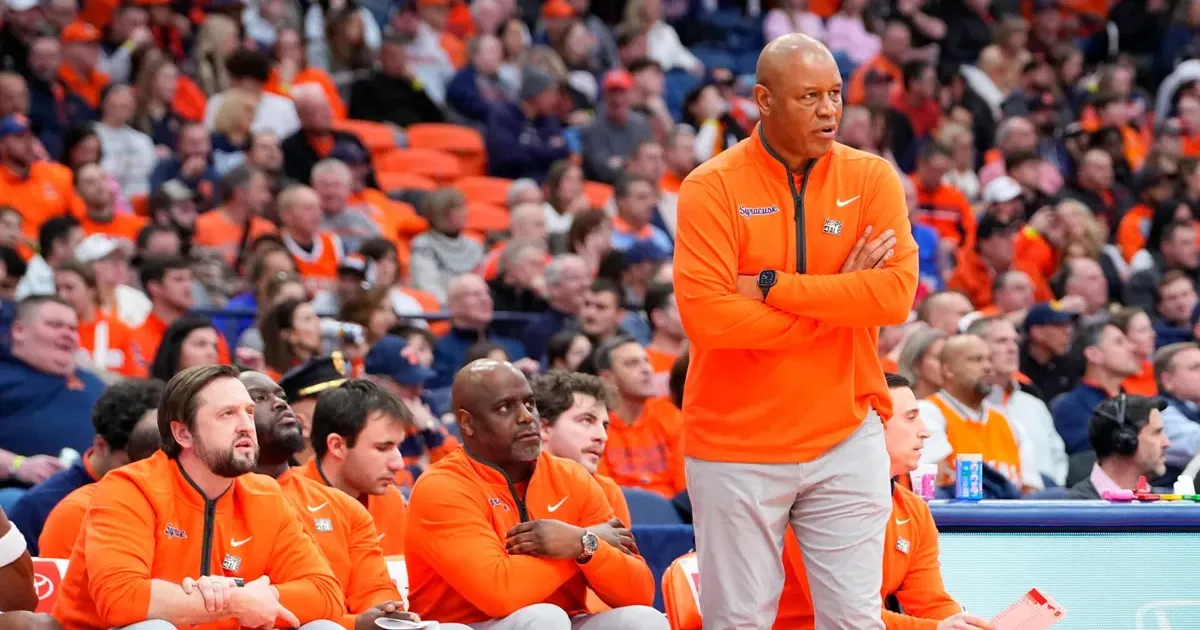
Adrian Autry stood on the sidelines of the Greensboro Coliseum for the last time on Tuesday, his arms folded while the scoreboard told a story of decline. Syracuse suffered a lopsided 86-69 defeat to SMU in the ACC tournament, an exit that felt less like a stumble and more like a final collapse. By March 12, 2026, minutes after the buzzer sounded, the reality of the situation became clear to those within the program. Syracuse athletic director John Wildhack made the decision to terminate Autry’s contract on Wednesday morning, effectively ending a three-year tenure that failed to recapture the glory of the Jim Boeheim era. One blowout loss decided the fate of a man who spent decades in the shadow of a legend. Syracuse officials confirmed the firing through a brief statement that thanked Autry for his service but emphasized a need for immediate direction. Success at a program with the history of the Orange is measured in NCAA tournament appearances and deep March runs, metrics that Autry simply could not meet. Athletic department insiders suggest that the lack of competitive fire in the SMU game served as the catalyst for the move. Adrian Autry was tasked with replacing a Hall of Fame figure, yet he struggled to stabilize the roster or establish a unique identity on the hardwood. His dismissal marks a notable moment for the Atlantic Coast Conference as a flagship program enters the market for a new leader. SMU, a relative newcomer to the conference, dominated Syracuse from the opening tip in Greensboro. Syracuse looked disorganized on defense, allowing easy buckets in the paint while failing to generate consistent offense from their backcourt. Players seemed to lack the cohesion required for postseason play, a criticism that followed Autry throughout the current campaign. Many fans had hoped that Autry, a former star player for the Orange, would bring a modern twist to the traditional 2-3 zone. Instead, the team often looked caught between eras, neither mastering the legacy defense nor successfully implementing a man-to-man scheme.
Shadow of the 2-3 Zone
Jim Boeheim coached Syracuse for 47 seasons, a run of longevity that redefined college basketball. When he retired in 2023, the university chose continuity by elevating Autry, his long-time assistant. Local boosters initially praised the move, believing it would preserve the recruiting pipelines in New York and the D.C. area. Recruiters did land several high-profile talents, but those individual wins did not translate into cohesive team performance. The Syracuse identity, once built on an impenetrable defensive wall and fast-break efficiency, became muddled under the new leadership.
Critics often pointed to the lack of defensive intensity as the primary reason for the program’s slide. During the Boeheim years, the zone was a psychological weapon that forced opponents into bad shots. Under Autry, the Orange frequently gave up high shooting percentages to mid-tier ACC opponents. Statistics from the current season show Syracuse ranked in the bottom third of the conference in defensive efficiency, a jarring reality for a fan base accustomed to elite play. This decision reflected the growing impatience of a university that sees its basketball program as a central pillar of its global brand.
Syracuse must now look outside its own family for the first time in nearly half a century. The school has historically relied on internal promotions, a strategy that fostered loyalty but may have also bred stagnation. Success in the modern NIL environment requires a different kind of administrative and tactical agility. Autry struggled to balance the demands of the transfer portal with the need for developmental stability. His roster saw several key departures over the last two seasons, leaving the team thin at the forward position during critical stretches of the schedule.
Administrative Pressure and NIL Realities
John Wildhack faces immense pressure to get this hire right. The athletic director has overseen a period of transition across multiple sports, but basketball remains the primary revenue generator for the school. Financial donors have reportedly grown vocal about the empty seats at the JMA Wireless Dome, formerly the Carrier Dome. Attendance figures dipped slightly this year, a trend that administrators are desperate to reverse. Winning is the only cure for a cooling ticket market, and the university leadership believes Autry had reached his ceiling.
Reports from Bloomberg and Reuters highlight the changing economics of college sports, where a coach is now as much a CEO as a tactician. Autry’s inability to secure a top-tier NIL collective backing for his frontcourt targets hampered the team’s size in the paint. While other ACC schools like Duke and North Carolina thrived in the player-acquisition market, Syracuse often found itself settling for secondary options. Such a gap in resources and execution made it difficult for the Orange to compete at the highest level of the conference.
Syracuse fans are not known for their patience. The expectation at Syracuse is not just participation in the Big Dance, it is relevance on the national stage. Autry finished his tenure without an NCAA tournament bid, a reality that made his position untenable. The school’s brass watched as programs with fewer resources surpassed them in the standings. SMU’s 17 point victory on Tuesday was merely the final piece of evidence in a case that had been building since mid-January.
Speculation regarding Autry’s successor began almost immediately after the news broke. High-profile names from the coaching ranks are already being linked to the vacancy, including several current head coaches with Big East and ACC experience. The search committee is expected to prioritize a candidate with a proven track record of rebuilding programs through the transfer portal. Syracuse needs a coach who can modernize the offense while restoring the defensive grit that made the program a perennial threat. Whoever takes the job will inherit a storied history and a fan base that is hungry for a return to the Final Four.
Basketball in Central New York is more than a sport; it is a cultural touchstone that unites the community during the long winter months. The decline of the program has felt like a loss of local pride. Students at the university expressed mixed emotions about the firing, with many acknowledging Autry’s deep ties to the school while admitting that the results on the court were insufficient. The next coach will have to navigate a difficult path, balancing the expectations of the old guard with the needs of a new generation of players.
The search will define Wildhack's tenure.
What Syracuse Must Solve
Syracuse now has to separate nostalgia from roster construction. The next hire must protect the program identity while building a cleaner transfer plan, a steadier NIL pitch and a staff that can make the Orange look modern again without treating the Boeheim era as a script.