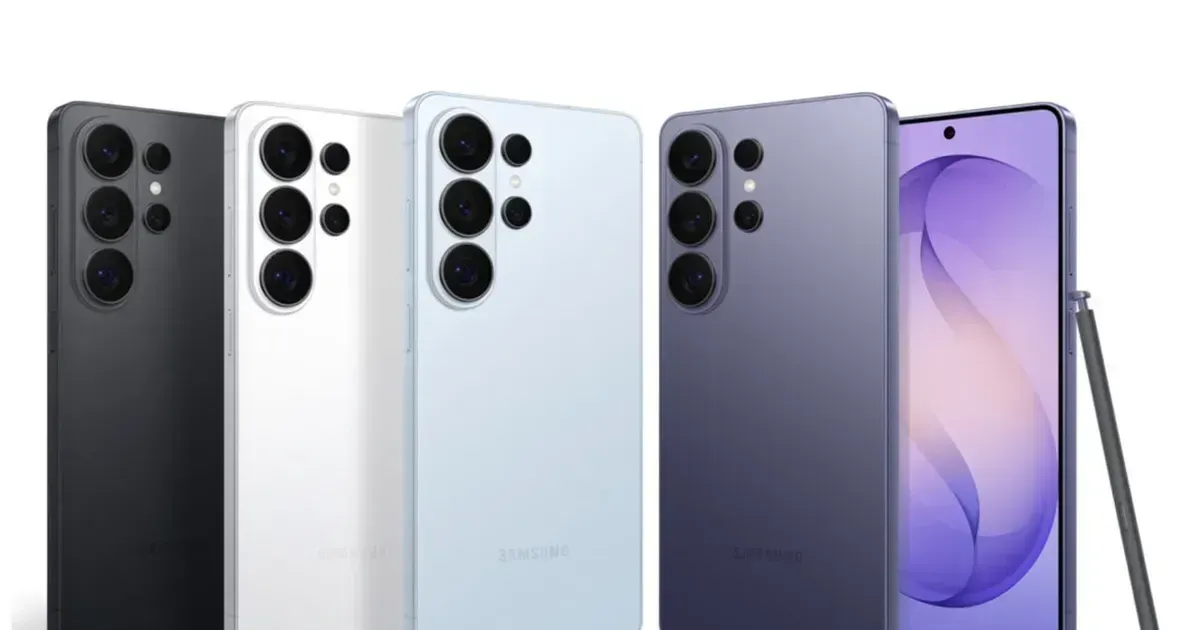
Free Phone Offers Hide the Plan Cost
T-Mobile effectively declared war on its rivals by slashing the entry price of the most sought-after mobile hardware on the market to zero. Bellevue-based executives authorized a promotion that permits customers to secure a Samsung Galaxy S26 Ultra, a device retailing for $1,299.99. On March 13, 2026, the promotion made the monthly plan more important than the sticker price of the phone, without requiring a trade-in device. Such a move departs from years of industry standard practices where the most valuable discounts were reserved for those surrendering recent, high-value handsets.
Customers opting for the 256GB version of Samsung's flagship now bypass the typical $1,300 financial barrier entirely. This strategy forces consumers into premium tiers that guarantee long-term revenue for the carrier despite the immediate loss on hardware. Subscribers must commit to the Experience Beyond plan for 24 months. Total costs at checkout include standard sales tax on the full $1,300 retail value and a $35 connection fee.
Apple devices are facing similar downward pricing pressure as T-Mobile attempts to lock in market share following a flurry of hardware releases earlier this month. The newly debuted iPhone 17e, priced between $599 and $799 depending on storage capacity, is now available for free to any customer opening a new line on virtually any T-Mobile service plan. Trade-ins remain unnecessary for this specific model, targeting a broader demographic than the ultra-premium Samsung promotion. Those eyeing the iPhone 17 Pro can also obtain the device at no cost, though T-Mobile maintains a trade-in requirement and an Experience Beyond plan commitment for that specific tier.
Apple recently expanded its ecosystem with the MacBook Neo, a $599 entry-level laptop that analysts believe has forced carriers to reconsider how they bundle mobile and computing hardware. Internal T-Mobile documents suggest the company is using these free handset offers to insulate its subscriber base against aggressive poaching from cable-owned mobile virtual network operators (MVNOs). Mint Mobile is mounting its own defense with a pricing structure that challenges the traditional 24-month contract model. New subscribers to the Ryan Reynolds-affiliated brand can receive over $600 off the Samsung Galaxy S26 series if they pay for 12 months of unlimited service upfront.
The Mint offer favors consumers who prefer lower monthly overhead, with unlimited service priced at $15 per month during the promotional period. While T-Mobile offers the phone for free, the required Experience Beyond plan carries a sharply higher monthly price tag than the $15 Mint offering. Savings at Mint Mobile apply to the entire S26 lineup, positioning the MVNO as a viable alternative for users who want the hardware without a two-year tether to a major carrier. Financial analysts at Bloomberg note that Mint's discount model requires more liquidity from the consumer upfront, whereas T-Mobile's $0 down offer appeals to the credit-heavy American consumer.
This financial reality complicates the 'free' marketing claim when calculated over a 24-month window. Device specifications remain a primary driver for these high-value promotions. The Samsung Galaxy S26 Ultra features a refined 256GB base storage and upgraded camera sensors that Samsung claims outperform any previous mobile optics. By contrast, the iPhone 17e targets efficiency and affordability, utilizing a modified chip architecture to reach its $599 price point.
Mint Mobile Presses the Contract Model
T-Mobile's decision to offer both extremes for free indicates a desire to dominate every segment of the consumer hardware market simultaneously. The Experience Beyond plan itself includes high-speed international data and premium streaming subscriptions, justifying its price to power users while inflating the carrier's Average Revenue Per User (ARPU) metrics. Industry trackers at Reuters suggest Verizon and AT&T may be forced to respond with similar no-trade-in offers before the end of the fiscal quarter. Current promotional data indicates T-Mobile is absorbing roughly $1,100 in hardware costs per new S26 Ultra subscriber. Administrative fees and taxes remain the only immediate hurdles for buyers. State laws require sales tax to be calculated on the $1,299.99 MSRP rather than the discounted price, meaning a customer in a high-tax jurisdiction like California or New York could still pay over $100 at the point of sale. The $35 connection fee is a non-negotiable charge applied to every new line or upgrade under these terms.
Credit requirements for the Experience Beyond plan also remain stringent, as the carrier essentially acts as a lender for the $1,300 device value over two years. Defaulting on the service plan results in the remaining balance of the phone becoming due immediately. Samsung and Apple have both increased production yields to meet the expected surge in demand caused by these aggressive carrier subsidies. March 2026 is becoming one of the most volatile periods for mobile pricing in the last decade.
Market analysts suggest the rise of the MacBook Neo at $599 has disrupted the perceived value of high-end smartphones. If a consumer can purchase a fully functional Apple laptop for less than half the price of a Galaxy S26 Ultra, the $1,300 smartphone price point becomes harder to defend. T-Mobile's pivot to 'free' hardware effectively removes the price tag from the consumer's decision-making process, shifting the focus back to network features and monthly plan perks. This dynamic explains why carriers are pivoting away from hardware profit to focus entirely on service retention.
T-Mobile's Experience More and Experience Beyond tiers are designed to be sticky, offering features that consumers find difficult to abandon once integrated into their daily workflows. These plans often include generous data roaming and high-definition streaming capabilities that lower-tier plans lack. Samsung's partnership with T-Mobile for the S26 launch includes exclusive marketing spend to ensure the Ultra model remains the centerpiece of the Android ecosystem. The 256GB storage capacity is now considered the minimum standard for flagship devices in 2026.
Subsidies Reshape Device Competition
Tell a consumer something is free and their critical thinking faculties usually vanish. T-Mobile's current promotion for the Samsung Galaxy S26 Ultra is less a gift and more a high-interest loan where the interest is paid in the form of a bloated monthly service plan. By forcing customers onto the 'Experience Beyond' tier, the carrier ensures it recoups the $1,300 hardware cost and then some over a two-year period. It is a brilliant, if predatory, bit of financial engineering that targets the cash-flow sensitivity of the middle class. We are seeing the death of the independent consumer who owns their hardware outright. Instead, we are entering an era of digital sharecropping where your phone is a rental and your loyalty is coerced through bill credits. Mint Mobile's approach is marginally more honest, but even they require a year of upfront payment to unlock meaningful savings. The reality is that if you aren't paying for the product, you are the product's recurring revenue stream. The MacBook Neo's $599 price point should have been a wake-up call that smartphone prices are inflated, yet consumers are lining up to sign 24-month loyalty oaths for the privilege of a 'free' upgrade. Stop falling for the zero-dollar down-payment trap.