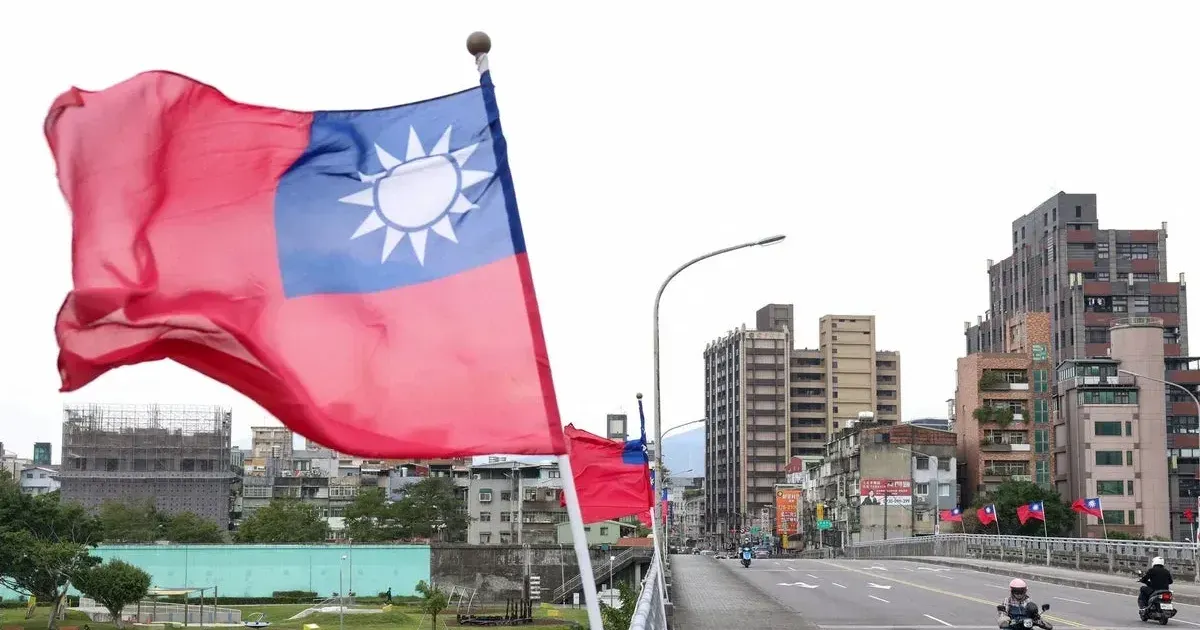
Beijing's Great Hall of the People echoed with a familiar set of grievances on Friday morning as the Chinese government launched a diplomatic offensive against Washington. Foreign Ministry spokesman Guo Jiakun stood before a room of international reporters to issue a stern warning directed at the White House. He made it clear that any interference in the judicial proceedings of Hong Kong activists or continued military support for Taipei would carry severe consequences. President Donald Trump is scheduled to arrive in the Chinese capital for a state visit later this month. The development was reported March 13, 2026. Guo specifically targeted American calls for the release of Jimmy Lai Chee-ying, the former media mogul currently serving time in Hong Kong.
Taiwan Defense Timing Context
Security planning moved before the diplomatic calendar. Foreign ministry officials described the case as a matter of internal sovereignty that brooks no outside intervention. Guo stated that Lai should be severely punished according to the law. He accused the United States of using human rights as a pretext to destabilize the administrative region. This friction intensified just hours after legislators in Taipei moved to solidify their own defense posture. The timing suggests a coordinated effort by both sides to establish negotiating pressure before the upcoming presidential summit in Beijing.
Legislators in Taipei ratified a massive $11 billion arms package on Friday. This legislative victory for the ruling administration follows months of domestic political debate regarding the cost of national defense. The package originated from an announcement made by Washington in December 2025. It includes a sophisticated array of hardware designed to turn the island into an impenetrable fortress. Military analysts point to the inclusion of advanced Harpoon anti-ship missiles and MQ-9B SkyGuardian surveillance drones as evidence of a shift toward asymmetric warfare. Taipei aims to raise the cost of any potential cross-strait intervention to a level that Beijing would find unacceptable.
Defense experts in London and Washington are monitoring the situation with heightened scrutiny. While the $11 billion deal is now official, rumors of a second, even larger package have begun to circulate through diplomatic channels. Reports from sources close to the White House indicate that President Trump could approve an additional $14 billion weapons sale during his upcoming trip. Such a move would nearly double the value of military transfers to Taiwan within a single fiscal year. The proposed new package reportedly focuses on F-16 Block 70 fighter jets and long-range precision strike capabilities. Deterring conflict over Taiwan has remained a stated priority in the latest National Security Strategy documents released by the Trump administration.
Beijing remains unmoved. Guo Jiakun reiterated that China views the self-ruled island as its own territory. He argued that American arms sales do not provide security but instead invite shock for the people of Taiwan. The spokesperson claimed that the United States is essentially treating the island as a vacuum for its own military-industrial complex. Internal documents from the Chinese Ministry of National Defense suggest that the People's Liberation Army has already factored these new American weapon systems into its 2026 tactical simulations. Beijing continues to hold the position that military hardware cannot alter the historical inevitability of reunification.
Beijing sees the Jimmy Lai situation as a separate but equally vital front in this geopolitical contest. Lai, the founder of the now-defunct Apple Daily, has become a symbol of the struggle between Western democratic values and the legal framework of the Chinese Communist Party. Washington's insistence on his release is viewed by Guo Jiakun as a direct violation of international law. The spokesman accused American officials of hypocrisy, noting that the US frequently uses its own legal system to pursue political ends. He warned that using the Lai case as a bargaining chip during the March summit would be a miscalculation.
Trump appears ready to lean into the confrontation. His previous statements regarding the Pacific region suggest a transactional approach to defense where allies must pay for protection. The $11 billion and potential $14 billion deals represent a significant financial commitment from Taipei. This strategy ensures that the American defense industry remains the primary beneficiary of regional tensions. Critics in the US Congress have questioned whether the rapid acceleration of arms sales could inadvertently provoke the very conflict the administration claims to be deterring. Still, the White House maintains that strength is the only language Beijing respects. Money alone cannot secure the Strait.
Military planners in Taipei are dealing with the logistical reality of integrating such a large volume of new equipment. Procurement is only the first step. The island faces a persistent challenge in training enough personnel to operate high-tech systems like the SkyGuardian drones. Reports from the Taiwanese Ministry of National Defense suggest that recruitment targets for 2026 have fallen short by nearly fifteen percent. If the hardware arrives but there are no skilled technicians to maintain it, the $11 billion investment could lose much of its effectiveness. Taipei is currently seeking expanded training programs on American soil to bridge this capability gap.
Future stability in the region depends on the outcome of the high-stakes meeting in Beijing. If President Trump moves forward with the $14 billion package while standing in the heart of the Chinese capital, it would be viewed as an unprecedented diplomatic challenge. Some analysts believe such a move is unlikely, suggesting the rumors of the second package are merely a tactic to force concessions on trade. Others argue that Trump's unpredictable nature makes a massive arms announcement a distinct possibility. The Chinese government has already begun pre-emptively tightening export controls on rare earth minerals. These materials are essential for the production of the very electronics found in the F-16s and Harpoon missiles Washington plans to ship to Taiwan.
Records from the United States Department of State show that arms sales to the region have reached their highest levels since the late twentieth century. The current administration has bypassed traditional slow-moving bureaucratic processes to expedite deliveries. That sense of urgency is driven by intelligence reports suggesting that the window for a peaceful resolution is closing. While Beijing publicly calls for dialogue, its naval activity in the South China Sea tells a different story. Satellite imagery has confirmed that China is expanding its deep-water port facilities in the Fujian province directly opposite Taiwan. The infrastructure is designed to accommodate large amphibious assault ships.
Beijing remains committed to its legal path regarding Hong Kong. Guo Jiakun concluded his briefing by stating that the judicial independence of the city is a cornerstone of its success. He insisted that the prosecution of Jimmy Lai is based on evidence of collusion with foreign forces. The international community continues to watch the proceedings with apprehension. For the White House, the fate of Lai and the defense of Taiwan are now inextricably linked. Every dollar spent on missiles and every diplomatic cable sent regarding Hong Kong adds another layer of complexity to a relationship that defines the modern age. The meeting between Trump and the Chinese leadership later this month will likely determine the trajectory of the Pacific for the remainder of the decade.
Taiwan Defense Timing
The dangerous part of this arms race is not the headline price. It is the assumption that invoices can substitute for readiness. Taiwan can buy Harpoons, drones and fighter jets, but those systems only matter if the island can train crews, maintain equipment and survive the first shock of a blockade. Washington is selling deterrence; Taipei still has to build the muscle to use it.
Beijing understands that weakness. Every delay in recruitment, every dependency on American parts and every diplomatic stunt before Trump reaches Beijing becomes part of China’s calculation. The $11 billion package may be necessary, but it is not a shield by itself. A weapons sale without operational depth is just a very expensive press release.