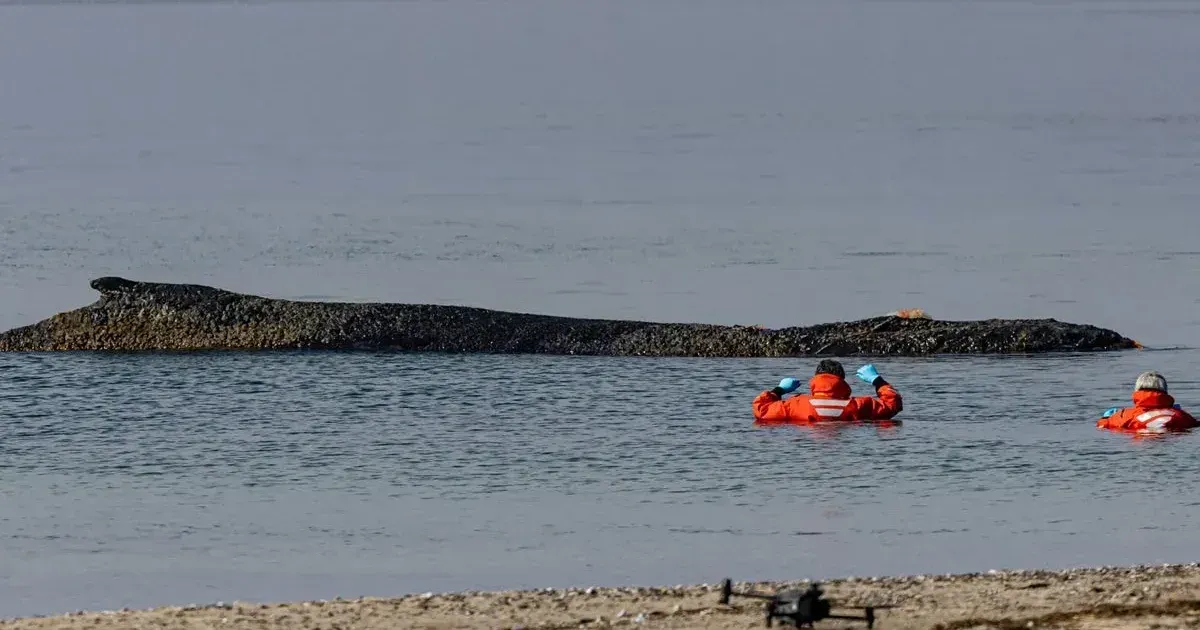
German emergency teams and marine specialists launched another attempt to free a juvenile humpback whale stranded on a sandbank in Lubeck Bay. The March 27, 2026 operation continued after earlier efforts failed to move the animal back into deeper water. Rescuers were racing against the tide, the whale's declining strength and the physical danger created when a large marine mammal is no longer supported by water. By March 27, 2026, officials were treating the rescue as a narrow biological window rather than a routine refloat.
Humpback whales are uncommon in the Baltic Sea, and the region's shallow bays can become traps for animals that wander through narrow passages from the North Sea. Sandbanks shift with storms and tides, creating channels that are difficult for a stressed whale to navigate. Once stranded, the animal's own body weight becomes part of the emergency.
Divers, veterinarians and local authorities tried to use slings, flotation support and tide timing to reduce pressure on the whale. Those methods are difficult even in ideal conditions. In shallow, brackish water, teams have limited room to maneuver and must avoid causing further injury while attempting to pull or guide the animal.
The public visibility of the stranding can help and hinder the response. Attention brings urgency and resources, but crowds near a rescue zone can slow vehicles and distract teams that need quiet access. Authorities therefore have to manage both the animal and the human perimeter around it. Specialists will also examine why the whale entered the bay. Illness, navigation error, prey movement or acoustic disturbance can all contribute to unusual cetacean movements, and understanding the cause may help prevent future strandings.
Lubeck Bay Complicates the Rescue
The geography of the bay is working against the operation. A whale needs enough depth to float and turn, but a sandbank can leave only narrow windows when the tide provides partial relief. Heavy equipment also has limited access because the wrong movement can churn sediment or push the animal into a worse position. Marine biologists are watching for signs of exhaustion, dehydration and respiratory stress. A stranded whale can appear calm while its internal condition deteriorates. The longer the animal remains immobilized, the harder it becomes to recover even if it is eventually refloated.
"The physical strain on a marine mammal of this size when its body weight is no longer supported by water leads to rapid organ failure and circulatory collapse," the Schleswig-Holstein State Agency for Coastal Defense said.
Veterinarians must also decide when intervention becomes more harmful than helpful. Moving a whale with slings or pontoons can save its life, but the process can damage skin, fins or internal organs if the animal is already weakened. That is why rescue teams often proceed slowly even when the public wants immediate action. The Baltic setting adds another uncertainty because the animal may not be familiar with the route back to deeper feeding grounds.
Even a successful refloat would not end the monitoring. Authorities would need to watch whether the whale swims steadily, avoids the same shallows and shows enough strength to clear the bay. In some strandings, the most dangerous period comes after the apparent rescue, when exhaustion returns and the animal beaches again. The operation is therefore both a rescue and a field assessment of the animal's ability to survive independently.
Weather can still change the calculation. Wind direction, water level and visibility all affect whether divers can work safely near the animal. A rescue plan that looks viable in the morning can become too risky by the next tide cycle.
If the whale survives, the episode will likely be reviewed by regional marine authorities as a coordination case. The useful lessons will be practical: which equipment arrived fastest, which access points worked and how quickly expert teams could make decisions under public pressure.
Rescuers Face a Narrow Window
The best outcome is a controlled refloat during a favorable tide, followed by guidance toward deeper water. Even then, success is not guaranteed. Whales sometimes restrand if they are disoriented, injured or too weak to swim steadily away from the coast. The operation has also become a public event, which adds pressure on authorities to communicate clearly. Crowds can interfere with access routes and increase stress around the site, so officials usually restrict close viewing while specialists work.
The rescue now depends on timing and the whale's remaining strength. If teams can create enough buoyancy and direction at the right moment, the animal may still return to open water. If not, the stranding will become another reminder that rare wildlife encounters can turn into emergencies very quickly. The case will also feed into marine-response planning along the Baltic coast. Strandings are rare enough to strain local resources, but visible enough that the public expects expertise immediately. Each operation becomes a rehearsal for the next emergency, from crowd control to veterinary triage.