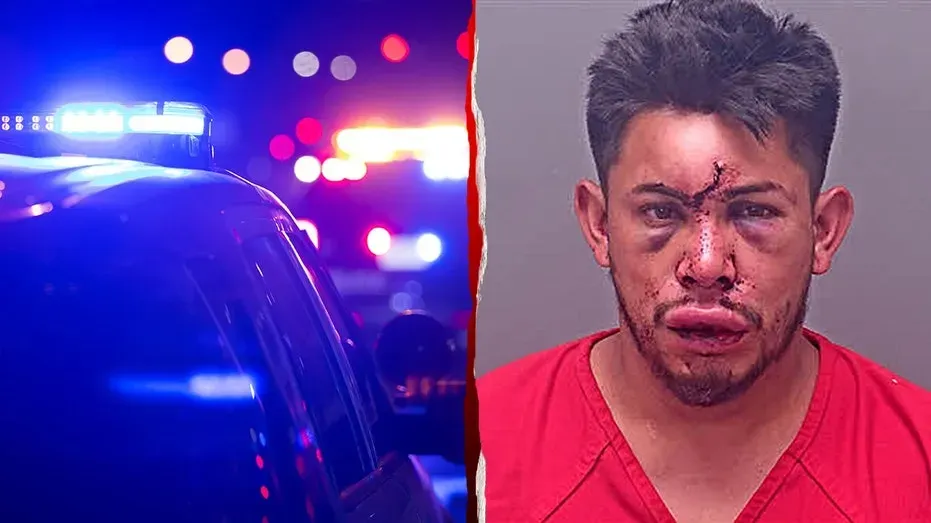
Recent attacks have put teenagers in moments where public safety failed and bystanders had to make impossible decisions. The civilian interventions drew attention on March 12, 2026
Teenagers Step Into Violent Moments
Foley, Alabama, became the scene of a brutal struggle on a recent Monday night that ended only when a child took matters into his own hands. Daniel Hernandez-Lopez, 32, allegedly attempted to strangle his wife during an argument that spiraled out of control around 8 p.m. Records from the Baldwin County Sheriff's Office detail a harrowing sequence where domestic disputes turned life-threatening. Monday night changed the trajectory of this family when the woman's 13-year-old son decided he would not be a passive witness. Police reports indicate that Hernandez-Lopez was likely intoxicated or under the influence of narcotics when the violence began. Domestic violence calls often present the most dangerous environments for responding officers, yet this intervention happened before authorities could even pull into the driveway. Hernandez-Lopez lunged at his teenage stepson when the boy confronted him. Seeking to inflict injury, the older man grabbed a bicycle and attempted to strike the boy. His stepson, only thirteen years old, did not retreat. Multiple punches landed on the suspect's face in quick succession. One specific strike ended the confrontation entirely. He saved her life.
Civilian Intervention Carries Real Risk
Deputies arrived to find Hernandez-Lopez unconscious on the floor. Paralyzed by the suddenness of the defense, the suspect remained incapacitated until he was booked into the Baldwin County Jail the following morning. Hernandez-Lopez now faces charges of domestic violence strangulation. Investigative sources confirmed that the suspect is not a United States citizen, adding a layer of complexity to his impending legal proceedings. This act of defense by a minor is a blunt reminder of the volatile nature of domestic friction in the region.
Marion County, Florida, provided another stage for teenage heroism under far more public circumstances. Video released by the local Sheriff's Office captured a chilling scene at a local car wash where a man armed with an ax approached two young workers. Bryce Thayer, 36, allegedly targeted 18-year-old Leodan Pino and his 16-year-old brother. While many would have fled the sight of a sharpened blade, Pino relied on his background as a military recruit and his training in mixed martial arts. Training often dictates how a person reacts when the adrenaline of a life-or-death encounter kicks in.
Pino did not let the ax-wielding suspect close the distance. Instead of waiting for Thayer to swing, the 18-year-old executed a precise MMA takedown that brought the 36-year-old to the pavement.
Public Safety Cannot Depend on Bystanders
The 16-year-old brother assisted in the restraint, holding the suspect down until law enforcement arrived to secure the scene. Responsibility fell on the youngest shoulders in the room. While Bloomberg suggests that public violence is often met with the bystander effect, these brothers proved that individual initiative remains a potent force in American communities. Thayer was subdued without any of the victims suffering major injuries from the ax. Such outcomes are rare when edged weapons are involved, but the technical proficiency of the teenage recruit turned a potential massacre into a standard arrest.
Witnesses at the car wash described the intervention as disciplined and swift, lacking the panic usually associated with civilian defensive actions. Combat sports and military preparation are increasingly becoming the secondary education of American youth. Leodan Pino's ability to neutralize an armed man stems from hours of grappling and tactical drills that are becoming common among Gen Z and Gen Alpha males. Parents across the country are enrolling children in Brazilian Jiu-Jitsu and Muay Thai classes, not for trophies, but for the utility of self-preservation. This reality reflects a growing skepticism in the ability of institutional systems to provide immediate safety.
Law enforcement response times in rural or suburban areas can range from five to fifteen minutes, a window of time where a domestic strangulation or an ax attack reaches its conclusion. Foley and Marion County incidents show that the first sixty seconds are the only seconds that matter.
Bravery Is Not a Safety System
Teenagers tackled armed attackers during a wave of civilian interventions. The incidents drew attention to bravery under extreme risk, but public safety cannot rely on untrained civilians to stop violence. Intervention can save lives, but it can also increase danger without training or backup.
The teenagers may deserve praise, but the pattern should worry everyone. A society is failing if public safety increasingly depends on the fastest bystander in the room.