Tehran’s promise of continuous strikes has moved the conflict from retaliation language into a sustained campaign threat. The threat hardened on March 12, 2026
Tehran Moves From Warning to Campaign
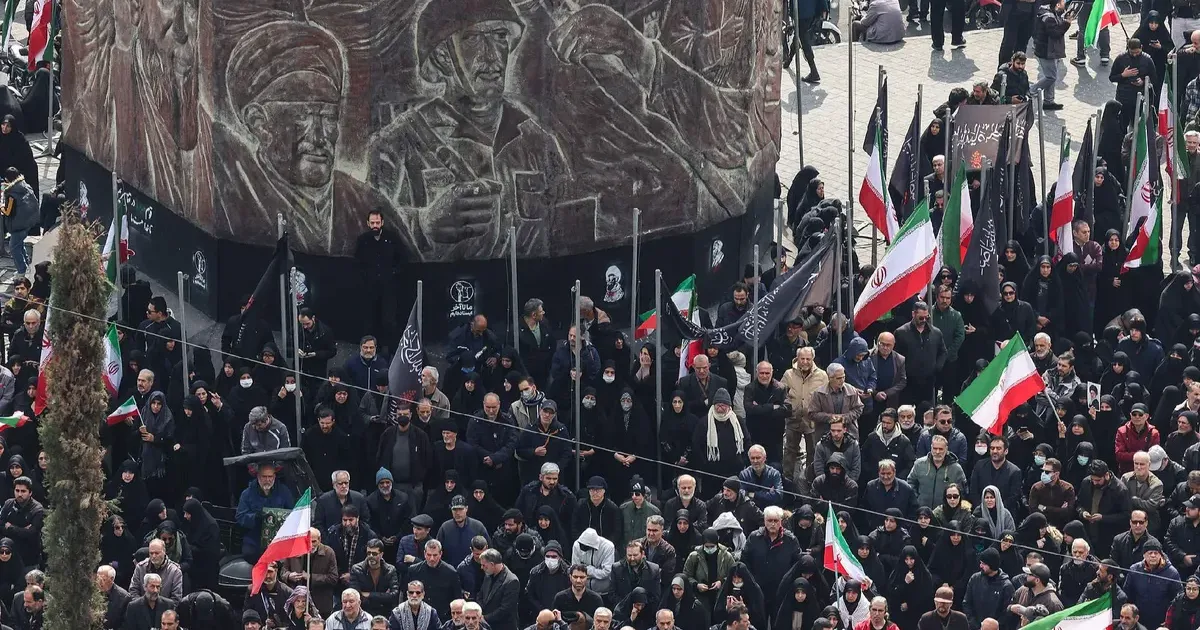
Mourners flooded the streets of Enghelab Square on Wednesday, carrying the remains of Revolutionary Guard commanders lost during the initial wave of joint air strikes. Thick clouds of incense mixed with the rhythmic chanting of thousands as the funeral procession wound through the heart of the Iranian capital. By March 12, 2026, the atmosphere in Tehran had hardened from shock into a calculated, lethal resolve. This change in doctrine marks the end of what officials previously called proportional retaliation. Iranian military leaders now speak of a world where one for one is no longer the rule. Khatam al-Anbiya military command headquarters issued a directive that fundamentally alters the maritime security of the Persian Gulf. A spokesperson for the command stated that any vessel or cargo belonging to the United States, Israel, or their regional partners is now a legitimate target for Iranian forces. Previously, Tehran might have waited for a specific provocation before launching a single, calibrated response. Continuous strikes are the new reality. Military planners in the Islamic Republic appear to have decided that a prolonged, low-intensity war of attrition serves their interests better than waiting for the next round of American ordnance. Ships in the Strait of Hormuz now face an environment where an attack could come at any hour, from any direction, regardless of recent activity.
US and Israeli Targets Stay Exposed
Oil markets reacted with predictable volatility, though the full extent of the disruption is still unclear. These maneuvers suggest that Tehran is prepared to gamble with global energy supplies to force a cessation of Western military pressure. Such a strategy carries enormous risks for the global economy. If the Strait is choked, the price of crude could reach levels unseen in decades. Pentagon officials have been vocal about their immediate military goals, which focus on degrading the Islamic Revolutionary Guard Corps and its missile infrastructure, as Tehran framed retaliation as a continuing campaign rather than a single answer. While these tactical objectives are clear, independent analysts point to a vacuum in the long-term political strategy. Dafydd Townley, a Teaching Fellow in US politics and International Security at the University of Portsmouth, observed a significant gap between the kinetic success of the air strikes and the absence of a diplomatic end game. The military math might result in destroyed hangers and silenced radar sites, but it does not inherently lead to a stable regional order. Washington seems to be operating on the assumption that sheer force will eventually compel Tehran to the negotiating table. History suggests otherwise.
Force alone rarely produces lasting stability unless it is backed by a coherent political vision that all regional players can accept.
Retaliation Logic Becomes Hard to Stop
This lack of clarity has left allies in London and Paris wondering exactly where the exit ramp is located. Jerusalem continues to push for a more aggressive posture, with some officials suggesting that the current strikes are merely the opening chapter of a much larger campaign. Experts at the South China Morning Post noted that Israel is expected to continue to fan the flames of the conflict to ensure that Iranian nuclear and conventional capabilities are permanently crippled. Prime Minister Benjamin Netanyahu has made it clear that a return to the status quo is unacceptable. However, his insistence on total victory might lead to a quagmire that the United States is not prepared to sustain.
If the conflict broadens, the Biden administration may find itself tethered to an Israeli security agenda that diverges from American national interests. The friction between the two allies is becoming harder to ignore in the halls of the United Nations. Experts warn that if Israel continues to escalate without a clear off-ramp, the United States could be dragged into a ground war that it has spent two decades trying to avoid. Beijing has rejected the notion that a distracted United States in the Middle East is a net benefit for Chinese interests. Chinese diplomats have expressed concern that the instability in the Strait of Hormuz will directly impact their energy security, as China remains one of the largest importers of Iranian and Saudi oil.
While some Western commentators argue that the US pivot back to the Middle East gives China a free hand in the Pacific, the economic reality is more complex.
Civilian Risk Expands with Every Round
Beijing prefers a predictable global trade environment where its Belt and Road initiatives can flourish without the threat of naval blockades or soaring insurance premiums for tankers. Shipping lanes are the lifeblood of the Chinese economy. Any prolonged disruption to the flow of crude through the Persian Gulf could trigger an industrial slowdown in East Asia that outweighs any temporary geopolitical advantage. This interventionist stance by the West has forced China into a difficult balancing act between its partnership with Iran and its need for global economic stability. The joint strikes that began in February 2026 have successfully neutralized several key Iranian assets, yet the primary threat remains.
Iranian missile batteries are highly mobile, and the shift to continuous strikes indicates that their command-and-control structures are still operational. Regional players like Saudi Arabia and the United Arab Emirates are watching with growing trepidation as the rhetoric from Tehran becomes increasingly bellicose. The math doesn't add up for a quick victory. If the United States cannot define what victory looks like in political terms, the military might find itself fighting a war that has no discernible end. The next few weeks will determine if the conflict remains confined to aerial exchanges or if the maritime domain becomes a graveyard for global trade.
A Continuous Strike Doctrine Is a Trap
Tehran vowed continuous strikes against US and Israeli targets. The threat raised concern that retaliation could become an open-ended campaign. Regional bases, shipping corridors and civilian infrastructure face higher risk. Each round of retaliation makes diplomatic off-ramps harder to use.
Continuous strikes create a cycle in which every attack demands an answer, reducing space for negotiation. Military bases, energy routes, nearby civilians and allied states are all exposed to escalation. The phrase continuous strikes should alarm everyone. It promises momentum instead of strategy and revenge instead of a political end state.
Once governments build legitimacy around retaliation, stopping can look like defeat.