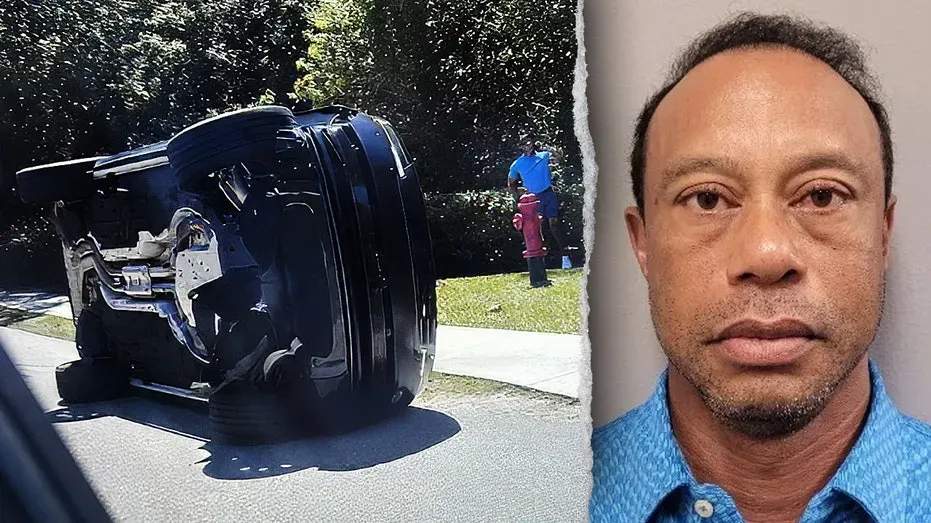
Martin County investigators released a detailed probable cause affidavit regarding the DUI arrest of professional golfer Tiger Woods. Records indicate the crash occurred near his home on Jupiter Island around 2:00 p.m. when his Land Rover collided with a slower-moving pickup truck. Impact from the collision forced the vehicle onto its driver’s side, forcing the 50-year-old athlete to climb out of the passenger side to escape the wreckage. By March 31, 2026, the Florida crash had become both a legal matter and a new test of Woods’s future. No injuries were reported for either party involved in the two-car accident, but the subsequent investigation shifted focus toward the physical state of the 15-time major champion.
While looking at a mobile phone and adjusting the radio station, Woods allegedly failed to notice the traffic slowing in front of him.
Deputies arriving at the scene reported immediate concerns regarding the driver's sobriety and cognitive awareness. Deputy Tatiana Levenar observed Woods sweating profusely and described his movements as lethargic and slow. Initial questioning revealed that the golfer was unaware of how the collision began, citing only the distraction of his electronic devices. Investigators performed a search of his person once the suspicion of impairment grew. This search yielded two white pills located inside his left pant pocket, which were later identified by authorities as hydrocodone. Hydrocodone is a powerful prescription opioid used for pain management, though it frequently causes side effects like dizziness and delayed reaction times.
Martin County Probable Cause Affidavit Details
Deputy Levenar requested a field sobriety test after noting several visual indicators of impairment. Woods agreed to the evaluation but struggled with physical coordination throughout the process. Documentation describes him limping and stumbling to the right while attempting to walk. Upon removing his sunglasses at the deputy's request, his eyes appeared bloodshot and glassy. Reports further state that his pupils were extremely dilated, a common physiological response to certain narcotics. These observations formed the basis for the probable cause required to transition the traffic stop into a criminal arrest for driving under the influence.
Woods reportedly cited a long history of physical ailments when asked about his stumbling and lack of balance. He informed the Martin County Sheriff’s Office that he had undergone seven back surgeries and twenty operations on his leg throughout his career. These chronic issues have defined much of his later professional life, requiring a heavy reliance on medical intervention. Despite these explanations, law enforcement proceeded with the arrest based on the combination of the rollover accident, the presence of opioids, and his performance during field evaluations. He was subsequently transported to the Martin County Jail for further processing and testing.
"Woods stated he was looking down at his cell phone and changing the radio station and did not notice the vehicle in front of him slowing down," deputies noted in the affidavit.
Breathalyzer testing performed at the jail facility produced a result of 0.00 for both samples provided by the athlete. This specific data point confirms that alcohol was not a contributing factor in the Friday afternoon crash. Proving impairment in the absence of alcohol often requires chemical analysis of blood or urine to detect prescription medications. Woods declined to submit to a blood alcohol level test, a decision that carries immediate legal weight under Florida law. Refusal to cooperate with such testing usually results in an automatic suspension of driving privileges for one year regardless of the court’s final verdict on the DUI charge. Following the high-profile DUI arrest, industry stakeholders are already debating the impact on professional tournament coverage.
Prescription Opioids and Driver Distraction
Distracted driving through the use of a cell phone creates a level of cognitive load that rivals chemical intoxication. Combining this distraction with the potential side effects of hydrocodone sharply increased the danger on the Jupiter Island roadways. Hydrocodone belongs to a class of medications that depress the central nervous system, which can lead to a lack of awareness of one's surroundings. Woods told law enforcement that he takes several prescription medications to manage his persistent pain from years of professional competition. This admission provides a direct link between his medical regimen and the physical state observed by Deputy Levenar at the crash site.
Public reaction to the arrest has drawn comments from various high-profile figures. Donald Trump, describing the golfer as a very close friend, acknowledged the incident following the release of the arrest records. The political and social gravity of the situation has placed the focus back on the intersection of professional sports and pharmaceutical use. Many athletes find themselves in a cycle of injury and recovery that requires the use of strong analgesics. The Martin County Sheriff's Office maintains that the law must be applied consistently regardless of the celebrity status of the driver. His vehicle, the Land Rover, sustained property damage but remained intact enough for him to exit without medical assistance.
Legal Fallout of Refusing Blood Tests
Choosing to refuse a blood test often creates a difficult hurdle for the prosecution in a DUI case. Prosecutors must rely on the testimony of the arresting officer and the visual evidence of impairment rather than a definitive chemical lab result. The strategy is frequently employed by defense attorneys to prevent the entry of specific drug concentrations into the court record. Despite this, the refusal itself can be introduced as evidence of a consciousness of guilt during a trial.
The Martin County Sheriff's Office has processed the charges for DUI with property damage based on the damage to the pickup truck's trailer. The misdemeanor charge focuses on the impairment of the driver while operating a motor vehicle that results in harm to the belongings of another.
Woods was released from the Martin County Jail after the booking process was finalized. The legal proceedings will now move toward an arraignment where a formal plea will be entered. Florida’s strict stance on impaired driving ensures that the 15-time major winner will face serious scrutiny during the upcoming hearings. Investigative documents suggest the state will prioritize the testimony regarding the cell phone distraction alongside the physical signs noted by Levenar. The case highlights the ongoing challenges of regulating prescription drug use among individuals with chronic pain conditions. His status as a global icon does not exempt him from the administrative penalties associated with refusing the lawful request for a blood sample.
Legal and Career Stakes
The case would test Woods beyond golf because DUI proceedings focus on evidence, timelines and medical explanations rather than reputation. Refusing or contesting tests can shape both legal exposure and public interpretation.
For his career, the issue is uncertainty. Sponsors, tournaments and fans may wait for court records before judging what the crash means for another attempted return.