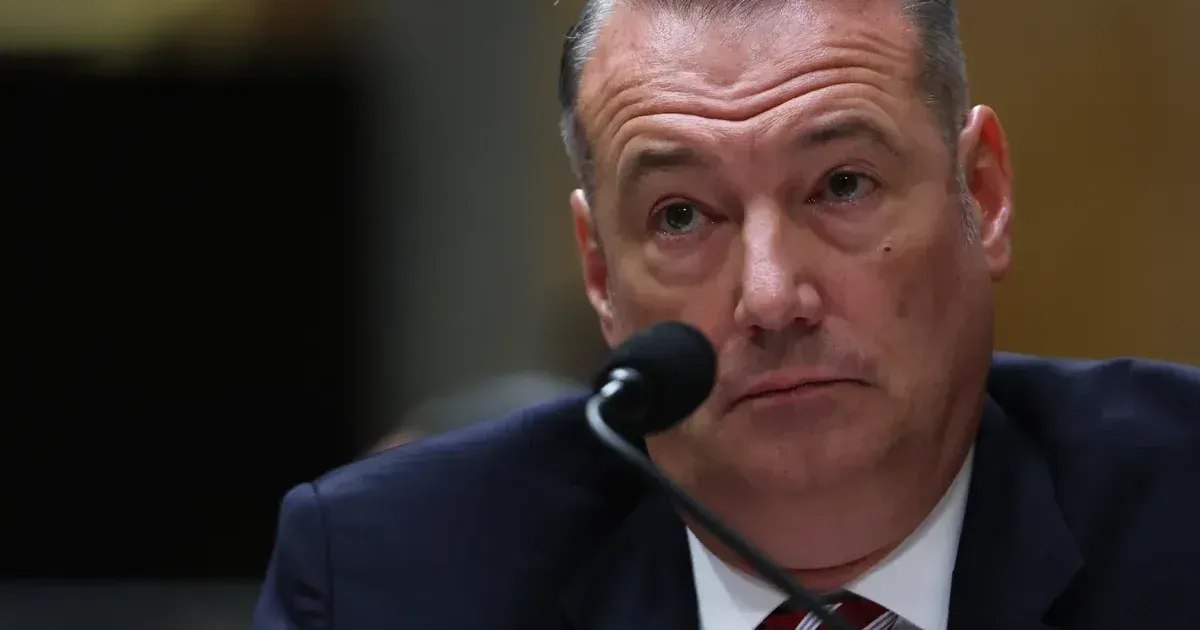
Todd Lyons will step down as acting director of U.S. Immigration and Customs Enforcement at the end of May, closing a tenure defined by the logistics of expanded removals across the interior of the United States. His departure lands during a period of high operational intensity for the agency. Department of Homeland Security officials announced the decision on April 17, 2026, noting that Lyons had used his field-operations background to streamline the movement of detainees through federal channels.
Policy experts view this resignation as a transition point for an agency that has operated without a Senate-confirmed director for several years. Administrative records show that Todd Lyons relied heavily on the existing infrastructure of the Enforcement and Removal Operations (ERO) division, which he previously led before ascending to the top position at ICE. His familiarity with the specific mechanics of detention and removal enabled a rapid increase in the frequency of enforcement flights and interstate transfers.
Lyons became a central figure in the administration's efforts to expand the footprint of federal immigration enforcement. Within the Department of Homeland Security, the announcement of his exit triggered immediate discussions regarding the stability of agency leadership. Lyons managed a sprawling organization with more than 20,000 employees and a budget exceeding $9 billion, focusing primarily on the removal of individuals with criminal records and those who had recently crossed the border. Bureaucratic shifts of this magnitude often lead to temporary lulls in field activity as new leadership establishes priorities.
Todd Lyons and the Mass Deportation Infrastructure
Executing a large-scale deportation strategy requires more than political will; it demands a complex network of transportation, legal processing, and international diplomacy. Lyons used his experience as the former Field Office Director in Boston to navigate these complexities. His approach involved strengthening partnerships with local law enforcement through programs that allow state and local officers to assist in federal immigration tasks. This integration allowed the agency to expand its reach without a corresponding increase in federal headcount.
Logistical hurdles frequently slowed the pace of removals during his term. Some countries refused to accept their citizens back, leading to prolonged detention periods in U.S. facilities. Lyons worked closely with the State Department to pressure these nations into cooperation, often citing the need for regional stability. Data from the first quarter of 2026 indicates that these efforts were partially successful, as the number of repatriation flights to several Central American nations reached record levels.
"Todd Lyons has been a dedicated public servant who implemented the administration priorities with professional precision," a spokesperson for the Department of Homeland Security stated on April 17.
Resources within the agency were often diverted from long-term investigative work to support immediate removal operations. This shift created tension between the two primary branches of the organization: Enforcement and Removal Operations and Homeland Security Investigations (HSI). While ERO focused on the physical act of deportation, HSI agents often found themselves pulled away from transnational crime investigations to provide support for administrative arrests.
Department of Homeland Security Leadership Volatility
Vacancies at the highest levels of the American bureaucracy have become a standard feature of federal governance in recent years. Lyons held the acting director title under the Federal Vacancies Reform Act, a legal framework that limits how long an unconfirmed official can lead an agency. His resignation at the end of May aligns with the expiration of certain administrative timelines, though officials did not explicitly link his departure to these legal constraints. Increased operational intensity has led to significant scrutiny regarding the safety and conditions of those held in ICE detention.
Critics of the current system argue that a lack of permanent leadership hinders long-term planning and morale. Career employees within ICE have expressed concerns about the revolving door of leadership, which can lead to inconsistent application of enforcement memos. Lyons, however, managed to maintain a high degree of operational continuity by promoting from within the ranks of career civil servants.
Stability in leadership remains elusive for the immigration agency. Internal memos suggest that the search for a permanent successor has stalled despite a divided Congress. Any nominee for the director position must undergo a rigorous vetting process and a public hearing before the Senate Judiciary Committee. Given the political sensitivity of immigration policy, the administration has often preferred the flexibility offered by acting appointments, even if such roles carry less formal authority.
Implementation Costs of U.S. Immigration Enforcement
Financial oversight of the deportation machine has come under increased scrutiny as the cost of operations continues to climb. The average cost to deport a single individual includes legal processing, detention housing, and the fuel for chartered aircraft. Under the leadership of Todd Lyons, the agency sought to optimize these expenses by consolidating detention centers in regions with lower overhead costs. This strategy occasionally drew criticism from legal advocates who noted that moving detainees far from their lawyers complicated the due process requirements of the immigration courts.
Private contractors play a large role in the maintenance of this infrastructure. From the management of detention facilities to the provision of medical services for detainees, the agency relies on a network of for-profit entities. Lyons oversaw the renewal of several multi-year contracts that ensure the continued availability of bed space, a move that provides the logistical backbone for the mass deportation agenda.
Recent audits revealed that the price of aviation contracts increased by 15% due to rising fuel costs and limited competition among specialty carriers. Lyons defended these expenditures as necessary for the maintenance of national security and the rule of law. He argued that the deterrent effect of a visible and efficient removal system outweighed the immediate fiscal burdens.
Senior staff at agency headquarters are preparing for a transition period that could last through the summer. The departure of an acting director often leads to a chain reaction of reassignments among the senior executive service. Lyons cultivated a tight-knit group of advisers who are also expected to see their roles changed or eliminated under his successor.
Field agents have reported a sense of uncertainty regarding the future of enforcement priorities. While the mass deportation agenda is a core foundation of current policy, the specific tactics used to achieve those goals can vary sharply between directors. Lyons was known for his support of workplace enforcement actions, a tactic that had fallen out of favor in previous years but was revived under his tenure.
Operations in major cities like New York and Chicago saw a marked increase in activity during the early months of 2026. Lyons frequently visited these field offices to personally oversee the launch of new initiatives aimed at fugitives who had ignored final orders of removal. His hands-on approach won him the respect of many rank-and-file officers who viewed him as a leader who understood the dangers of the job.
Oversight Questions
Bureaucratic stability is a ghost in the halls of modern federal agencies, and the resignation of Todd Lyons is evidence of the fragility of the acting-director model. By relying on temporary appointments to execute the most controversial facets of the immigration agenda, the administration has effectively shielded its highest-ranking enforcers from the scrutiny of a Senate confirmation hearing. The avoidance of legislative oversight creates a dangerous precedent where the most powerful law enforcement tools in the country are wielded by individuals who lack the formal mandate of the American people’s representatives.
Lyons was more than a manager; he was the primary designer of a logistics chain that prioritized speed and volume over the complex realities of individual legal cases. His departure suggests a potential exhaustion of the current operational strategy or perhaps a calculated move to install a new face before the next political cycle begins. Regardless of the motivation, the machine he helped build is now self-sustaining, supported by billions in private contracts and a career workforce that has been conditioned to treat deportation as an industrial process. The next director will inherit an agency that is more efficient but arguably more detached from the traditional safeguards of the justice system. The system survives the man.