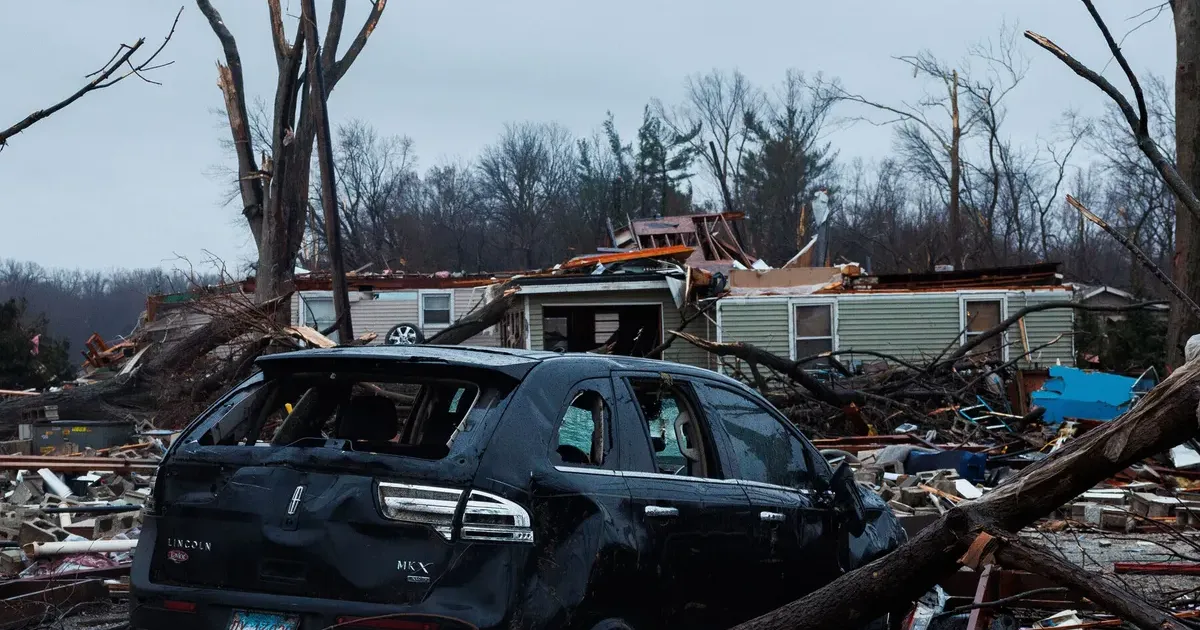
Deadly tornadoes tore through parts of the Midwest, killing at least two people and leaving small communities to measure damage house by house. The storms struck late Tuesday before first light revealed collapsed roofs, snapped trees and power lines draped across rural roads. By March 21, 2026, emergency teams in Illinois, Indiana and neighboring areas were still searching damaged structures while utilities worked to restore service. The first hours after a tornado outbreak are often defined by uncertainty. Local officials must confirm casualties, clear roads, open shelters and decide whether damaged buildings can be entered safely. Families looking for missing relatives often have to wait while search teams move through unstable debris.
Search Teams Move Through Wreckage
The hardest-hit towns face a practical sequence that feels slow to residents: rescue, assessment, utility repair and debris removal. Firefighters and volunteer crews usually begin with homes where neighbors reported people trapped or unaccounted for. After that, attention shifts to gas leaks, blocked roads and structures at risk of collapse. Rural geography complicates the response. Damaged homes can sit miles apart, cell service may fail and emergency vehicles can be delayed by fallen trees or flooded roads. That makes local knowledge essential. Neighbors often become the first responders before state resources arrive. Midwest tornado damage also carries a housing problem. A destroyed roof is not only a cleanup task; it can displace a family for weeks if rental stock is limited and insurance adjusters are backed up.
Warnings and Nighttime Risk
Meteorologists had warned that the atmosphere could support rotating storms, but warnings do not remove the danger of nighttime tornadoes. People may be asleep, away from televisions or unable to hear sirens indoors. Mobile homes and older houses add another layer of risk because safe interior spaces can be limited. The outbreak will likely renew attention to shelter access, siren coverage and alert redundancy. Communities across the Midwest have improved warning systems over the years, yet severe weather still exposes gaps between receiving an alert and reaching a safe place in time.
Recovery Will Outlast the Storm
Once the search phase ends, the financial phase begins. Insurance claims, federal disaster assessments and rebuilding permits will determine how quickly the affected towns can recover. Small businesses may reopen slowly if employees are displaced or roads remain blocked. Farmers may also face equipment, barn and livestock losses that do not fit neatly into residential damage counts. The emotional recovery is less visible. Tornado survivors often describe the seconds of impact vividly and the weeks afterward as a blur of paperwork, temporary lodging and repeated cleanup. Local churches, schools and volunteer groups usually become the support system that keeps daily life functioning. The final toll may change as inspections continue. What is already clear is that the outbreak left more than a weather headline. It left communities balancing grief, logistics and the long work of making damaged streets feel livable again.
State emergency managers will also need to document damage in a way that qualifies communities for assistance. That process can feel bureaucratic after a disaster, but it shapes whether public money becomes available for debris removal, road repair and temporary housing. Local officials often spend the days after a storm translating visible destruction into the categories required by state and federal programs.
Power restoration is another measure of recovery. Downed lines can keep homes uninhabitable even when walls remain standing. Utility crews must work around flooded ground, unstable poles and road closures, while residents try to preserve food, medication and access to heat or cooling depending on the weather that follows the outbreak.
Schools may become part of the response as well. Buildings that survive can serve as shelters, meal sites or distribution points. If school roofs, buses or athletic facilities are damaged, districts have to decide whether classes can resume while families are still displaced.
The storms will also leave questions for insurers and builders. Rebuilding to the same standard may be cheaper in the short term, but stronger safe rooms, better roof connections and clearer shelter plans can reduce risk in the next outbreak. Those choices are expensive, which is why many communities postpone them until disaster makes the trade-off unavoidable.
Mutual-aid crews may remain in the area for days because tornado damage rarely follows municipal lines. One town can lose power while a neighboring county loses roads, ambulances or water service. Coordinating those needs is the quiet work that determines how quickly the emergency phase ends.
Officials will also have to watch for secondary hazards. Broken glass, exposed nails, damaged propane tanks and unstable trees can injure residents after the skies clear. Public warnings after a tornado often sound repetitive, but they prevent people from turning cleanup into another wave of emergency calls.
The National Weather Service will also survey the damage path to assign tornado ratings. Those findings matter for engineering records and public understanding, but residents do not wait for a rating to know the scale of loss.